

DAILY LIFE & LOGISTICS
Living in Hawaii
The vacation ends. The routine begins. Living here isn't about where you sleep - it's about how you integrate into a culture that values connection over convenience. The people who stay learn this fast. The people who leave never do.
A different country that happens to be a US state
Hawaii is legally American but culturally Pacific Islander and Asian. There is no racial majority. The overthrow of the Hawaiian Kingdom in 1893 still shapes daily attitudes toward mainlanders. Understanding this context isn't optional - it's how you earn the right to belong.
People who thrive here share a few traits: they listen more than they talk, they learn the local customs before asserting their own, and they understand that relationships matter far more than credentials. "Island time" isn't laziness - it's a value system that prioritizes people over productivity.
This page covers the day-to-day reality of living in Hawaii - from groceries and healthcare to weather, neighborhoods, and the social dynamics that no travel blog prepares you for. Read it before you commit. It could save you a very expensive mistake - or confirm that this is exactly where you belong.
Hawaii at a glance
The fundamentals that shape life in the islands. Updated for 2026.
Ready to picture the day to day? Tell us how you want to live and we will send homes that fit it.
Find me a homeThe honest reality: more people leave than arrive
Hawaii has experienced net negative domestic migration for over a decade. The top three reasons people leave: the relentless cost of living (housing, groceries, and electricity that never gets cheaper), "island fever" — the psychological weight of geographic isolation from family, career options, and mainland conveniences — and limited career growth outside tourism, military, healthcare, and government sectors.
Most who leave do so within their first two years. The people who stay tend to share a common trait: they came with realistic expectations, built local relationships early, and aligned their lifestyle with what the islands actually offer rather than what they imagined from vacation.
What daily life actually looks like
The routines, rhythms, and realities that define an average week in the islands.
Groceries and food
Your relationship with food changes the moment you move here. Everything costs more, but locals have the system figured out.
- Costco is the unofficial state grocery store - nearly every household has a membership
- Farmers' markets are significantly cheaper for produce, eggs, fish, and honey
- Chinatown on Oahu has weekend deals that rival mainland prices on produce and seafood
- Dining out is expensive - a basic plate lunch runs $12-18, sit-down is $25-45/person
- Many residents grow their own avocados, papayas, bananas, and herbs year-round
Getting around
A car is essential on every island except maybe downtown Honolulu. Plan for gas, traffic, and salt air damage.
- Gas averages ~$5.65/gallon - hybrids and EVs are extremely popular for a reason
- Oahu traffic is brutal: a 22-mile commute can take nearly 2 hours on the H-1
- TheBus covers most of Oahu ($3/ride, $80/month pass); the new Skyline rail is expanding
- Neighbor islands have minimal public transit - you need your own vehicle
- Inter-island flights run $80-150 roundtrip. No ferry service currently operates
Weather and microclimates
The weather is why most people come. But it's more complex than "always sunny."
- Two seasons: kau (dry, May-Oct) and ho'oilo (wet, Nov-Apr)
- Temperature drops ~3.5F per 1,000 feet of elevation - upcountry Maui gets sweater weather
- Windward (east) sides get significantly more rain than leeward (west) sides
- Mt. Waialeale on Kauai gets 400+ inches of rain/year; Kona coast gets less than 20
- You don't need AC in most homes - ceiling fans and trade winds handle it
- Hurricane season runs June-November but major hits are rare
Culture and community
Hawaii's roots are Pacific Islander and Asian, not Western European. That shapes everything - from social norms to how you're perceived as a newcomer.
What newcomers need to understand
The cultural differences that surprise (and sometimes alienate) mainland transplants.
- Statehood Day is a state holiday - but there are no celebrations. There are sometimes demonstrations against statehood
- The overthrow of Hawaii's government in 1893 by Americans remains a sore, unresolved issue
- Independence Day is observed but not widely celebrated - you won't see many American flags
- There is no racial majority. Caucasians (Haole), Asians, and Pacific Islanders each form minorities
- Respect, humility, and relationship-building matter far more than credentials or wealth
- "Island time" is a real cultural value, not a joke - patience is essential
Building community
The people who stay long-term are the ones who invest in relationships first.
- Volunteer early - it's the fastest way to earn trust and meet people who can help
- Attend community events: talk story sessions, farmers' markets, school fundraisers
- Learn basic Hawaiian words and Pidgin phrases - it signals respect
- Don't lead with where you're from or what you did on the mainland
- Show up to the same places consistently - regularity builds familiarity
- The "6-month wall" is real - homesickness, isolation, and culture shock peak around month 6. Push through it
Military life in Hawaii
Hawaii has a significant military presence, but the relationship between military and local communities is complex.
- Major installations: Pearl Harbor, Schofield Barracks, Marine Corps Base Hawaii, Hickam AFB
- Military families make up a significant portion of Oahu's population
- BAH (Basic Allowance for Housing) rates are high but still don't fully cover Oahu market rents
- PCS moves to Hawaii require special planning - see our moving pillar for logistics
- Local sentiment toward the military is complicated - economic reliance and cultural tensions coexist
Healthcare, schools, and services
The infrastructure that determines whether your family can make it work long-term.
Healthcare
Hawaii's employer health insurance mandate is unique in the US - and it makes a difference.
- The Prepaid Health Care Act mandates employer-sponsored insurance for 20+ hours/week
- Two dominant insurers: HMSA (Blue Cross affiliate) and Kaiser Permanente
- Specialist access varies by island - neighbor islands often require flying to Honolulu
- Medicare works but provider networks are smaller than on the mainland
- Hawaii residents have among the highest life expectancies in the US
Schools and education
Hawaii has a single statewide school district - the only state in the US structured this way.
- Public school quality varies dramatically by location - research specific schools, not just districts
- Charter schools are an alternative with smaller class sizes and specialized focus areas
- Private schools are popular: Punahou, Iolani, Mid-Pacific, Kamehameha Schools
- Private tuition: $15,000 - $28,000/year depending on grade and school
- Childcare waitlists can be 6-12 months - start early
Utilities and internet
Electricity is the big one. Everything else is manageable.
- Electricity: ~40 cents/kWh - the highest in the nation. Expect $300-450/month bills
- Most local homes don't use AC - ceiling fans and trade winds are the norm
- Internet: Hawaiian Telcom (fiber) or Spectrum (cable), $50-80/month
- Starlink is gaining traction in rural areas where wired options are unreliable
- Solar PV with battery backup is the long-term play for homeowners
Neighborhoods and where to live
Each island - and each neighborhood within an island - is a fundamentally different lifestyle. Choose carefully.
| Neighborhood | Island | Best For | Vibe | Price Range |
|---|---|---|---|---|
| Kailua | Oahu | Families, remote workers | Beach town, excellent schools | $$$$ |
| Kakaako | Oahu | Young professionals, singles | Urban, walkable, modern condos | $$$$ |
| Ewa Beach | Oahu | Military families, first-time buyers | Suburban, newer developments | $$$ |
| Kihei | Maui | Young professionals, beach lifestyle | Sunny, active, condo-friendly | $$$ |
| Upcountry Maui | Maui | Nature lovers, creatives | Rural, cool temps, agricultural | $$$ |
| Hilo | Big Island | Budget-conscious, retirees | Local, quiet, rainy, affordable | $$ |
| Kailua-Kona | Big Island | Sun seekers, remote workers | Dry, active, tourist-adjacent | $$$ |
| Waimea (Kamuela) | Big Island | Families, rural lifestyle | Upcountry ranching, cooler | $$$ |
| Lihue | Kauai | Budget-conscious, services access | Small town, island hub | $$$ |
| Kapaa | Kauai | Nature lovers, outdoor lifestyle | Walkable, east side charm | $$$ |
Oahu neighborhoods
From urban Honolulu to suburban Ewa Beach to windward Kailua - the range is enormous.
- Kakaako: Urban condo hub near downtown. Walkable, modern, expensive
- Kaimuki: Old-school charm near town with great local restaurants
- Manoa: Green valley life - lush, rainy, close to UH campus
- Mililani: Central Oahu planned community - suburban, family-friendly
- Ewa Beach: Oahu's suburban sweet spot - newer homes, growing fast
- Kailua: Windward side gem - beach town vibes, excellent schools
Neighbor island neighborhoods
Maui, Big Island, and Kauai each have distinct micro-regions worth exploring.
- Kihei, Maui: Sunshine, beaches, condos - South Maui's popular landing spot
- Upcountry Maui: Makawao, Pukalani, Kula - cooler temps, rural feel, agricultural charm
- Waimea (Kamuela), Big Island: Upcountry ranching community - cooler, greener, quieter
- Kapaa, Kauai: East side vibes - walkable town with traffic challenges
- Lihue, Kauai: Island hub for work, shopping, and essential services
- Honokaa, Big Island: Historic small town with artistic community
Choosing the right island
Each island is a different lifestyle. Pick the one that matches how you actually want to live.
- Oahu: Most jobs, best infrastructure, city vibes + island life. Brutal traffic
- Maui: Natural beauty, growing communities, post-fire rebuilding energy
- Big Island: Most affordable, most space, most self-sufficient. Least infrastructure
- Kauai: Quietest, most nature-focused. Fewest jobs and services
Housing reality
The biggest line item in your budget and the most stressful part of the transition.
Renting
Most newcomers rent. The market is tight, competitive, and expensive.
- 1BR averages $1,840-$2,260/month statewide; 3BR runs $3,380-$3,830
- Expect first, last, and security deposit upfront - $5,000-$8,000 before you move in
- Pet-friendly rentals are rare. Start searching well before you arrive
- Furnished vs. unfurnished is a real decision - furnished costs more but avoids buying furniture you may not keep
- Many newcomers move 2-3 times before finding the right neighborhood
Buying
Homeownership in Hawaii is aspirational for many - here's the current landscape.
- Oahu SFH median: $1.2M+ (record high in early 2026)
- Statewide condo median: ~$520,000
- Property taxes are among the lowest in the US - but assessed values are very high
- HOA fees for condos: $400-$1,200/month is typical
- Cesspools are being phased out statewide by 2050 - check before buying
What surprises newcomers
The things nobody warns you about until you're already here.
Things that don't exist here
If you're used to mainland convenience, some of these will sting.
- No 24-hour grocery stores or pharmacies on most islands
- Amazon Prime still takes 5-7 days (sometimes longer to neighbor islands)
- Limited big-box retail - no Target on neighbor islands, fewer chain options everywhere
- No professional sports teams (the closest are in LA or Portland)
- No seasonal variety - no fall foliage, no white Christmas, no spring blooms
- Very limited late-night anything - most restaurants close by 9-10 PM
Things you didn't expect to love
The small moments that make people stay despite the sticker shock.
- Rainbows are a near-daily occurrence - you genuinely never get tired of them
- The ocean is always within reach. Morning swims before work become routine
- You stop caring about fashion - slippers (flip-flops) are formal enough for most occasions
- Aloha Friday is real - the entire workweek shifts down a gear on Fridays
- The "talk story" culture means deep conversations with strangers are normal
- Sunsets from your lanai replace Netflix as your evening entertainment
Wildlife and pests
Hawaii has no snakes but it has plenty of other surprises.
- Geckos are everywhere - in your house, on your walls, behind your picture frames. They eat bugs. You'll learn to coexist
- Centipedes are aggressive and their bites are painful - check shoes before wearing them
- Cockroaches fly here. Yes, they fly. Even in clean homes
- Coqui frogs (Big Island especially) chirp loudly all night - some love it, some can't sleep
- Wild chickens roam freely on Kauai and parts of Oahu - they are part of the landscape
Essential living in Hawaii guides
Deep-dive articles covering every aspect of daily life in the islands.
Explore by island
Daily life varies by island. Compare the four, and check what it all costs.
Browse Hawaii homes
Start exploring listings across all islands. Use the filters to narrow by price, location, or neighborhood.
Frequently asked questions about living in Hawaii
Honest answers to the questions people ask after the honeymoon phase wears off.
Latest on living in Hawaii
Real stories, practical tips, and honest takes from people who live here every day.
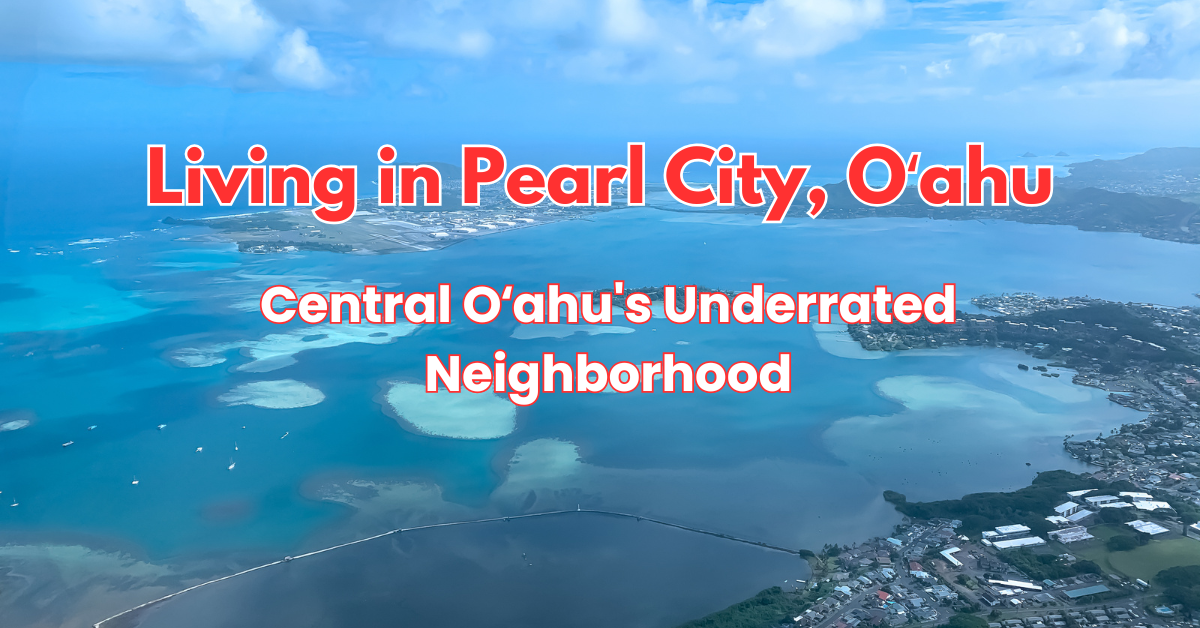
Living in Pearl City, Oʻahu: Central Oʻahu’s Underrated Neighborhood
When prospective buyers and relocating families begin researching where to [...]
Hawaii Crime Rates by Neighborhood: What the Data Says in 2026
When planning a relocation to the islands, safety is naturally [...]

Living in Poipu, Kauaʻi: South Shore Sunshine, Resorts, and Real Estate Realities
For many people, the idea of moving to Kauaʻi starts [...]

How to Finance Agricultural Land in Hawaiʻi (What Actually Works)
One of the first questions buyers ask me when they [...]

Eating Vegan on Hawaii Island: Top Plant-Based Dining and Local Markets
The Big Island of Hawaii is a plant-based paradise. Thanks [...]
Cost of Childcare in Hawaii: Island-by-Island 2026 Numbers
The Reality of Raising a Family in the Islands Moving [...]

Living in Kahului, Maui: Central Hub or Just a Stopover?
If you have ever flown into Maui, you have [...]

Should You Move to Hawaii With Kids in 2026? A Complete Family Guide
The Reality of Moving to Hawaii With Kids in 2026 [...]

Buying a Condo in Hawaii: 2026 Expert Guide
Buying a Condo in Hawaii: 2026 Expert Guide The [...]