
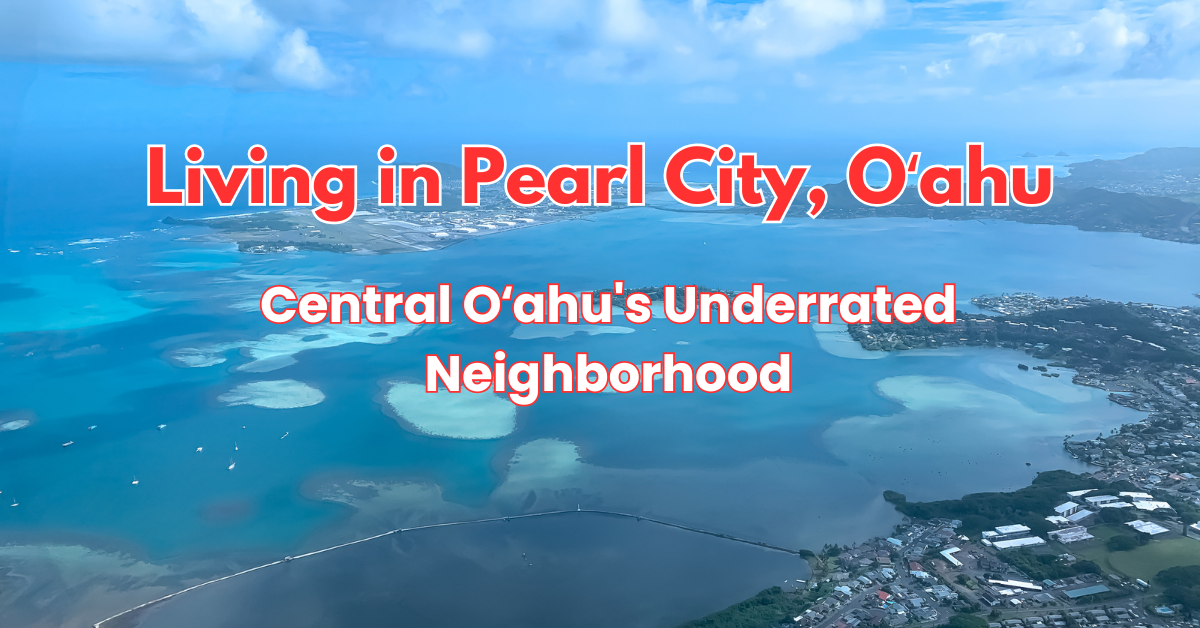
Living in Pearl City, Oʻahu: Central Oʻahu’s Underrated Neighborhood
When prospective buyers and relocating families begin researching where to settle on Oʻahu, their searches usually gravitate toward a predictable set of postcard neighborhoods. Glossy guides point them toward the breezy beaches of Kailua, the manicured master-planned developments of Kapolei, or the sleek high-rise towers of Kakaʻako. Yet tucked along the northern shore of Pearl Harbor sits Pearl City, an established, remarkably resilient Central Oʻahu community that long-time island residents have quietly relied upon for generations. Living in Pearl City Oʻahu delivers something increasingly rare on this island: genuine central convenience, mature residential properties, unmatched highway connectivity, and a grounded sense of everyday community life.
Take the Quiz: Is Hawaii Right For You? Meet with a Living in Hawaii Expert!
Pearl City rarely markets itself to mainland newcomers, and that quiet profile is precisely why it remains one of the most practical places to build a life. It is not a resort enclave, nor is it a sleepy rural outpost. Instead, it serves as one of Oʻahu’s primary residential backbones. Here, multi-generational families live side by side with young professionals, healthcare workers, and military service members. In this guide, we break down the geography, real estate market, commute dynamics, schools, and day-to-day realities of making Pearl City your home on Oʻahu.
Understanding Pearl City Geography: Lower Flats to Mountain Ridges
To truly understand Pearl City, you cannot view it as a single homogeneous suburb. The town stretches from the calm, mangrove-lined waters of Pearl Harbor’s Middle and East Lochs up into the dramatic Koʻolau mountain foothills. Because of this steep vertical elevation change, Pearl City divides into three distinct residential sub-areas, each offering a completely different living experience, climate, and streetscape.
1. Lower Pearl City
Lower Pearl City occupies the flat terrain running alongside Kamehameha Highway and the H-1 Freeway. This is the commercial and transit heart of the community. You will find higher-density living here, including established condominium towers, townhome complexes, and commercial plazas. Living down here means you can walk or take a two-minute drive to grocery stores, banks, pharmacies, and the Skyline rail stations. The climate is warm, sunny, and dry, with daily temperatures hovering consistently in the mid-80s. The tradeoff is street noise and traffic along the major arteries, but the sheer logistical convenience is hard to top.
2. Pearl City Highlands
As you cross north of the freeway and climb Waimano Home Road, you enter Pearl City Highlands. Developed primarily between the late 1950s and the 1970s, the Highlands is characterized by wide residential streets, single-family homes on generous terraced lots, and mature mango and plumeria trees. As you gain elevation, the ambient temperature drops slightly, and the prevailing trade winds become significantly more noticeable. Many homes along the western and southern ridges enjoy expansive, panoramic views looking out across Pearl Harbor toward the Waianae mountain range.
3. Pacific Palisades
At the very top of the ridgeline, accessed by driving up the winding, four-lane spine of Komo Mai Drive, sits Pacific Palisades. This enclave feels entirely detached from the bustling urban corridor below. Pacific Palisades is a peaceful, dead-end ridgetop neighborhood surrounded by lush preservation gulches on both sides. Because of its elevation, Palisades catches passing mountain showers, keeping lawns deep green and the air noticeably cooler than down on the highway. There is almost zero through-traffic here; the only vehicles on the streets belong to residents, delivery couriers, or hikers heading to the Manana Ridge Trail. The downside is the extra eight to ten minutes it takes just to drive down the hill to reach the freeway.
The Central Location Advantage: Commutes and Transit
Location is where Pearl City outshines almost every suburban competitor on Oʻahu. It sits at the critical nexus where the H-1, H-2, and Moanalua Freeways converge. Whether your daily routine takes you east into Downtown Honolulu, north toward Schofield Barracks, or west toward Kapolei, Pearl City puts you right in the center of the island’s primary transport grid.
For service members and civilian defense contractors, Pearl City provides one of the easiest logistical setups on Oʻahu. Joint Base Pearl Harbor-Hickam sits directly adjacent to the south, while Camp Smith, Fort Shafter, and Tripler Army Medical Center are all located within a five to fifteen-minute drive eastward. If you are comparing neighborhoods across the island, our detailed guide on living near military bases in Hawaii highlights why Central Oʻahu remains the gold standard for PCS moves and civilian commute preservation.
Commuting into Downtown Honolulu or the Kapiʻolani medical corridor covers roughly 11 to 13 miles. Without traffic, the drive takes 18 to 22 minutes. During the peak weekday morning rush between 6:15 AM and 8:30 AM, however, the H-1 crawl can stretch that trip to 45 to 60 minutes. Fortunately, Pearl City residents have multiple alternate routes that outer-suburb residents lack. You can choose between the H-1 viaduct, the Moanalua Freeway, or Kamehameha Highway depending on where traffic bottlenecks form on any given morning.
Public transit options are also advancing rapidly. Pearl City hosts critical infrastructure for Oʻahu’s Skyline elevated rail system, including the Waiawa station at Pearl Highlands and the Halaulani station near Leeward Community College. For residents working along the rail corridor toward West Oʻahu or taking connecting express buses eastward toward town, Pearl City provides transit connectivity that car-dependent neighborhoods on the Windward or North Shore simply cannot match.
Pearl City Real Estate: Housing Stock, Lot Sizes, and Pricing
Real estate in Pearl City reflects its history as one of Oʻahu’s original post-war suburban growth centers. You will not find the cookie-cutter, high-density tract homes that define newer developments out in Ewa Plain. Instead, the single-family inventory consists largely of single-story board-and-batten or hollow-tile homes built between 1955 and 1975, sitting on fee-simple lots ranging from 5,000 to 7,500 square feet.
Many of these properties have been held by the same families for thirty or forty years. As a result, when you tour homes for sale in Pearl City, you encounter two distinct property profiles: classic, vintage homes requiring comprehensive cosmetic modernization, and meticulously renovated properties that have been expanded to accommodate multi-generational living with separate entrances, wet bars, and extended lanais.
Here is an honest look at where property values typically settle across Pearl City:
-
Single-Family Homes: Median sale prices generally range between $950,000 and $1,250,000. Homes situated in Pacific Palisades or lower Pearl City Highlands on level lots command solid pricing, while properties perched along perimeter ridges with panoramic Pearl Harbor ocean views frequently exceed $1,300,000.
-
Condominiums and Townhomes: Starter units and smaller two-bedroom condos in towers like Pearl Regency or low-rise complexes like Waiau Garden Villa generally trade between $380,000 and $550,000. Larger three-bedroom split-level townhomes range between $575,000 and $725,000.
-
Rental Market: Two-bedroom condominiums typically rent for $2,200 to $2,800 per month, while detached three-to-four-bedroom single-family houses command between $3,500 and $4,500 monthly depending on square footage, air conditioning setups, and whether utilities or solar photovoltaic credits are included.
One major financial advantage of Pearl City single-family homes over newer suburban builds is the absence of steep Master Planned Community Association fees. Aside from standard municipal property taxes and specific condominium maintenance fees, most single-family streets in Pearl City carry no HOA dues and zero restrictive design committees. You own your land, you control your landscaping, and you enjoy freedom over how you use your space.
Everyday Living, Shopping, and Food Culture
Day-to-day life in Pearl City is exceptionally practical. You do not need to fight tourist crowds or drive twenty minutes across town just to pick up groceries, run hardware errands, or visit the doctor. The town functions as an self-contained economic engine packed with commercial infrastructure.
Along Kamehameha Highway, Pearl Highlands Center features Sam’s Club, 24 Hour Fitness, Home Depot, and diverse retail services. Down the street, the Pearl City Shopping Center has served as the neighborhood’s gathering hub for over half a century. It houses Don Quijote, an immense supermarket beloved for its extensive fresh poke counters, Asian specialty groceries, and everyday household goods. The adjacent medical clinics, veterinary offices, auto repair shops, and local banking branches mean your Saturday errands can all be completed within a two-mile radius.
The food scene in Pearl City is legendary among locals, anchored in authentic island comfort food rather than high-end tourist dining. Living here gives you immediate access to long-standing culinary landmarks:
-
Shiro’s Saimin Haven: An Oʻahu institution famous for serving dozens of variations of traditional saimin noodles, homemade broth, and classic wun tun in a welcoming diner setting.
-
Leeward Drive-Inn: Renowned for quick plate lunches, breakfast bentos, and its famous hot fried malasadas.
-
Maruki Tei: A quiet staple inside the shopping center turning out incredibly crisp chicken katsu, fresh sashimi, and hearty bento boxes.
-
House of Pure Aloha (HOPA): Serving ultra-fine shave ice topped with real fruit purees, providing the perfect neighborhood stop on warm Central Oʻahu afternoons.
Parks, Recreation, and Outdoor Access
While Pearl City does not have an oceanfront swimming beach in its backyard, it provides plenty of open green spaces and easy access to outdoor recreation. For families and fitness enthusiasts, the outdoor options are woven directly into the topography.
At the base of the town sits Neal S. Blaisdell Park, a sprawling shoreline park framing the waters of Pearl Harbor. It features broad grassy fields shaded by massive banyan trees, walking paths, and direct access to the Pearl Harbor Historic Bike Path. This paved multi-use trail runs along the shoreline, offering a scenic route for cycling, distance running, and taking in views across the lochs toward Ford Island and the historic naval shipyards.
Up at the summit of Pacific Palisades, outdoor recreation takes on a decidedly rugged, mountainous character. The Manana Ridge Trailhead begins right at the end of Komo Mai Drive. This premier ridge hike leads you through native forest, over undulating ridgelines, and deep into the Koʻolau mountains, rewarding dedicated hikers with dramatic valley drop-offs and sweeping views of the Windward coastline. For dog owners, trail runners, and nature lovers, having this trail system literally at your doorstep is a rare lifestyle perk that most Honolulu residents must drive forty minutes to enjoy.
Schools and Education in Pearl City
For families moving with school-aged children, the local educational landscape is a major decision factor. Pearl City falls under the Central District of the Hawaii public school system, and the schools here generally enjoy strong multi-generational family engagement and stable faculty retention.
The Pearl City Complex includes several notable neighborhood elementary schools, such as Momilani Elementary, Pearl City Elementary, and Palisades Elementary. Momilani Elementary in particular has earned repeated state and national recognition for high academic performance, consistent standardized testing outcomes, and deeply involved parent support groups.
Highlands Intermediate and Pearl City High School anchor the upper grades. Pearl City High School is widely respected across Oʻahu for its robust athletic programs, award-winning marching band, career pathway academies, and digital media tracks. The school fosters immense neighborhood pride; it is very common to meet local teachers, business owners, and coaches who are proud graduates of Pearl City High themselves.
Additionally, Pearl City hosts Leeward Community College, situated right on the ridge overlooking Middle Loch. As part of the University of Hawaiʻi system, Leeward CC offers accessible associate degrees, comprehensive workforce development certificates, vocational technical training, and an active culinary arts program with an on-campus public dining room.
Pros and Cons of Living in Pearl City Oʻahu
To help you decide if this Central Oʻahu hub matches your family’s needs and lifestyle expectations, we have compiled an honest, balanced breakdown of the advantages and drawbacks.
The Pros:
-
Unbeatable Central Accessibility: You are positioned at the confluence of three major freeways, cutting commute times to town, military bases, Windward Oʻahu, and the North Shore.
-
Established, Solid Neighborhoods: Generous lot sizes, mature fruit trees, wider streets, and stable communities where neighbors look out for one another.
-
Zero Master Association Dues: Unlike Kapolei or Ewa, most single-family properties in Pearl City do not carry monthly HOA assessments or restrictive covenant boards.
-
Outstanding Everyday Convenience: Sam’s Club, Don Quijote, Walmart, regional medical clinics, hardware stores, and local dining are all within minutes of home.
-
Diverse Microclimates: You can choose the sunny convenience of Lower Pearl City or the cooler, breeze-filled elevation of Pacific Palisades.
The Cons:
-
Aging Housing Inventory: Many homes were constructed in the 1960s and 1970s. Unless previously renovated, you will encounter original single-wall redwood framing, outdated wiring, older plumbing, and uninsulated roofs.
-
No Direct Swimming Beaches: While Pearl City touches Pearl Harbor, the harbor is an active naval, industrial, and estuarine waterway. You will need to drive 25 to 35 minutes to reach sandy ocean beaches in Ko Olina, Kailua, or Ala Moana.
-
Lower Town Traffic Congestion: The commercial corridors along Kamehameha Highway, Kaahumanu Street, and Moanalua Road experience heavy vehicle congestion during midday weekend shopping hours and afternoon commute peaks.
-
Palisades Commute Pinch Point: Pacific Palisades relies on a single arterial roadway, Komo Mai Drive. If roadwork, fallen trees, or utility repairs occur along that corridor, getting in and out of the neighborhood can experience delays.
How Pearl City Compares to Neighboring Communities
When buyers evaluate Central and West Oʻahu, they typically weigh Pearl City against neighboring Aiea, Waipahu, or the master-planned developments in Kapolei. Understanding these geographic differences will help you pinpoint your ideal fit. In our ongoing analysis of the best up-and-coming neighborhoods in Hawaii, we consistently look at how mature inner-ring suburbs retain value against newly constructed developments further out.
Compared to Aiea immediately to the east, Pearl City offers very similar vintage architecture and pricing, but with a slightly wider variety of elevated ridgeline housing. Aiea surrounds Pearlridge Center, making it feel somewhat more urbanized along its highway border, whereas Pearl City Highlands and Pacific Palisades stretch deeper into tranquil, elevated mountain terrain.
Compared to Kapolei and Ewa Beach to the west, Pearl City cuts 20 to 45 minutes off the grueling morning rush-hour drive into Honolulu. Kapolei offers newer, master-planned neighborhoods with modern finishes and community pools, but you trade that freshness for heavy freeway bottlenecks at the Kunia and Waipahu merges. Pearl City sits well east of those notorious highway choke points, preserving your personal time and reducing daily commute stress.
Is Pearl City Right for You?
Living in Pearl City Oʻahu is not about chasing an artificial vacation fantasy. It is about building an enjoyable, deeply grounded, and practical life on this island. If your priority is living in a high-rise steps from luxury boutique stores, or waking up directly on a white sandy surf beach, Pearl City will feel too suburban and utilitarian for your tastes.
However, if you want a spacious yard where you can plant avocado, mango, and citrus trees, a neighborhood where long-time residents wave from their driveways, and an unbeatable central position that lets you navigate all sides of Oʻahu with ease, Pearl City deserves a top spot on your relocation shortlist. It remains one of Central Oʻahu’s most practical, reliable, and fundamentally rewarding places to call home.
Leave A Comment