

Living Upcountry Maui: What to Know About Makawao, Pukalani, and Kula
If you’re considering a move to Maui and the thought of trading beach heat for mountain breezes sounds appealing, upcountry might just be your spot. The Makawao, Pukalani, and Kula area sits on the slopes of Haleakalā, and honestly, it feels like a completely different island up here compared to the beach towns below.
Let’s talk about what life actually looks like in this part of Maui, because it’s not for everyone—but for the right person, it’s pretty close to perfect.
The Climate Difference Is Real
First thing you’ll notice? You can actually breathe up here. While the beaches are pushing 85-90 degrees with humidity that makes you feel like you’re wearing the air, upcountry sits at elevations ranging from about 1,500 to 4,000 feet. That translates to temperatures in the 60s and 70s most days, dropping into the 50s at night.
You’ll want a light jacket for evenings, and yeah, you might even turn on a space heater during winter mornings. It’s wild to think you need a heater in Hawaii, but upcountry makes it happen. The trade-off? You wake up to crisp mornings, clear views, and none of that sticky feeling that has you running for the ocean.
Three Communities, Three Different Vibes
While people lump this whole area together as “upcountry,” Makawao, Pukalani, and Kula each have their own personality.
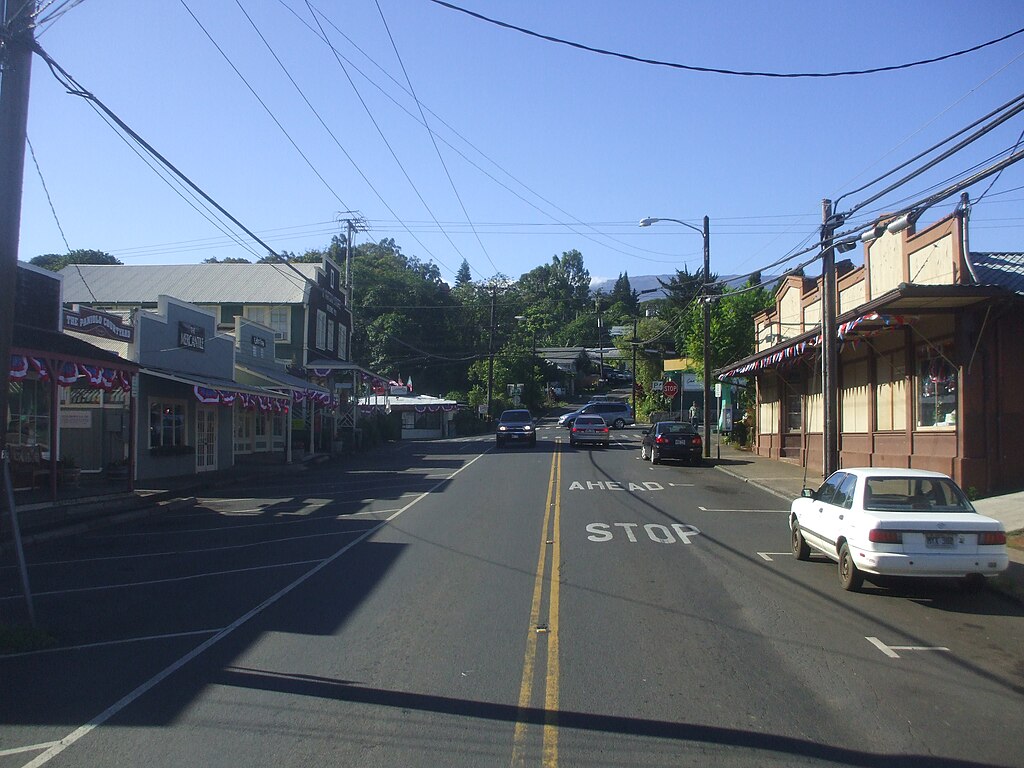
Looking up Baldwin Ave. towards the Baldwin Ave/Makawao Ave/Olinda Road intersection in Makawao. Komoda Store & Bakery is to the right (off white/brown building). Photo licensed under CC BY-SA 3.0.
Makawao is the artsy, paniolo (Hawaiian cowboy) town with a historic main street that actually feels like a town center. You’ve got galleries, boutiques, a handful of solid restaurants, and Komoda Store & Bakery where the cream puffs sell out before most people finish their coffee. The vibe here skews older hippie meets ranching culture—it’s eclectic in the best way.
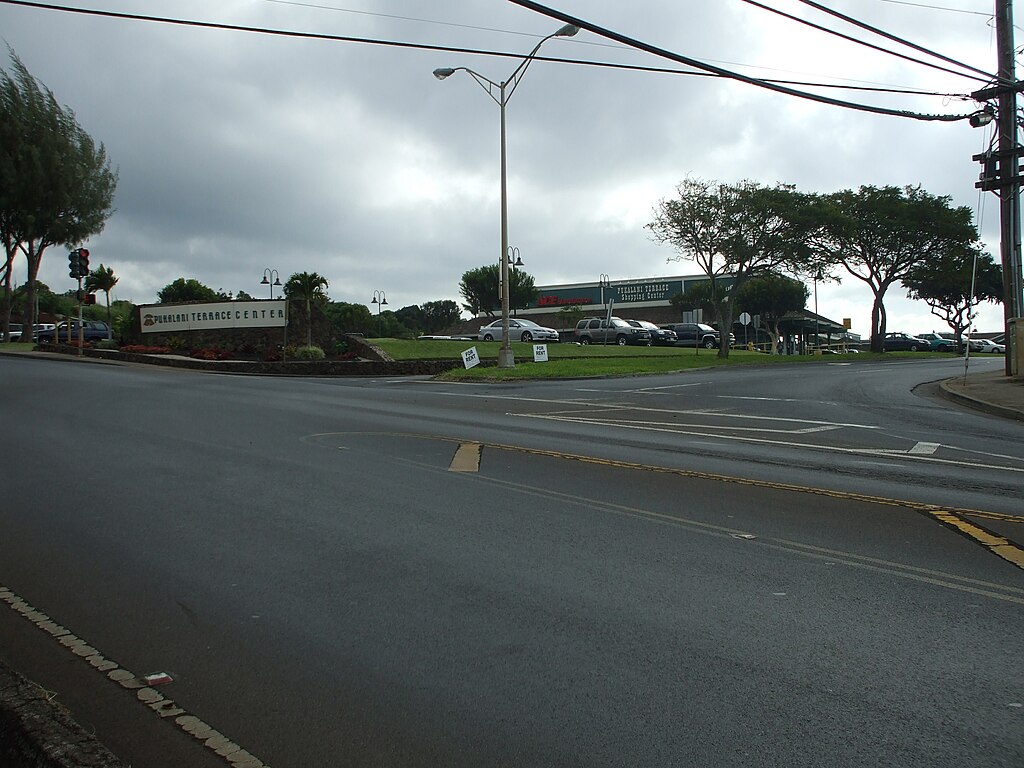
Intersection of Old Haleakala Highway and Pukalani Street in Pukalani. Photo by original author (2009), licensed under CC BY-SA 3.0.
Pukalani is more residential and practical. This is where you’ll find the bigger grocery store (Foodland), gas stations, and that suburban-but-not-really feel. Families tend to gravitate here because it’s a bit more affordable than Makawao proper, and you’re close enough to schools and services without sacrificing the upcountry lifestyle. Think of it as the “gateway” to upcountry living.
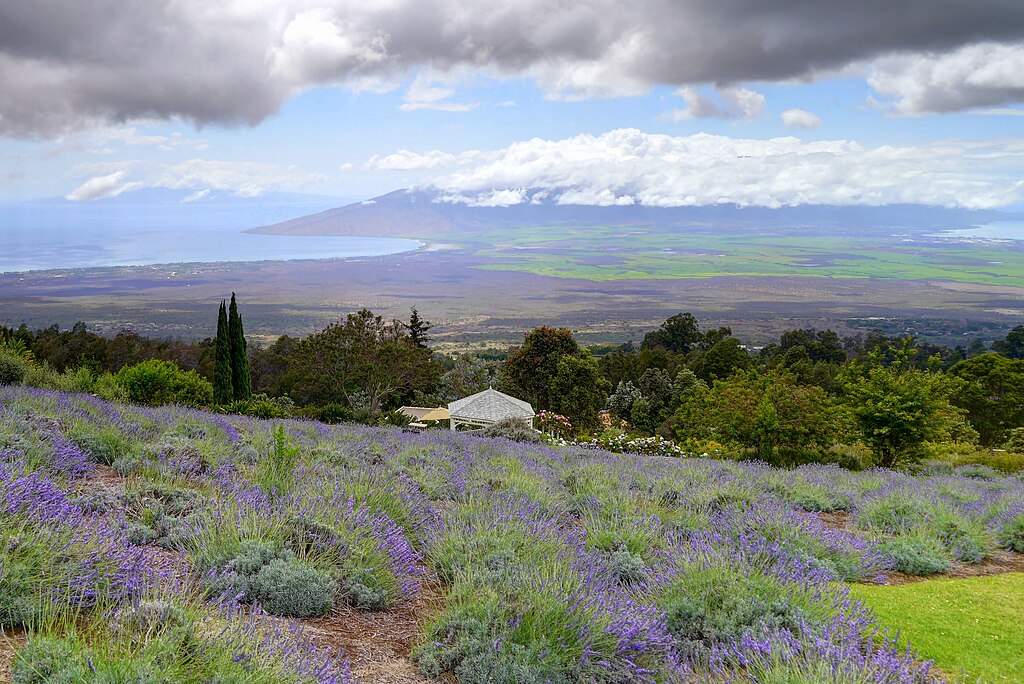
Field of lavender plants at Kula Lavender Farm in Kula, Maui. Photo by John Morgan (2012), licensed under CC BY 2.0.
Kula stretches higher up the mountain and gets more rural the farther you go. This is serious agriculture country—farms, flower operations, and properties with acreage. If you want space, privacy, and don’t mind being a bit more remote, Kula delivers. The downside? You’re adding extra drive time to pretty much everything.
The Agriculture Vibe Is Everywhere
Upcountry isn’t just near farms—it is farm country. You’re surrounded by protea flowers, lavender fields, vegetable operations, and cattle ranches. This means two things: the air smells incredible most of the time, and your neighbors might include horses, goats, and roosters who don’t understand the concept of sleeping in.
The farm-to-table thing isn’t a trendy concept here; it’s just how people eat. The farmers markets are legit, and you’ll find yourself buying produce directly from the person who grew it. There’s something grounding about living where food actually comes from, watching the seasons change through what’s growing in the fields around you.
Let’s Talk About the Commute
Here’s where upcountry living requires some real consideration. If you work in Kahului, Kihei, or Wailea, you’re looking at a commute. From Pukalani to Kahului is about 20-25 minutes on a good day. From Kula? Add another 10-15 minutes, sometimes more depending on how far up you are.
The drive itself is beautiful—winding roads, eucalyptus trees, incredible views—but it’s still a mountain road. That means slower speeds, the occasional tourist who’s terrified of the curves, and weather that can change quickly. Morning fog is common, and when it rains up here, it rains.
You’ll also burn through gas and brake pads faster than you would living in town. It’s just the reality of elevation changes. And if you work weird hours or want to hit happy hour after work, factor in that you’re driving home in the dark on those same winding roads.
Is it worth it? For a lot of people, absolutely. But be honest with yourself about what kind of commuter you are.

Upcountry Maui. Photo by James Brennan (2015).
What You’ll Pay and What You’ll Get
Real estate prices in upcountry Maui have climbed like everywhere else, but you generally get more space for your money compared to beachside properties. Homes here range from modest older cottages to sprawling ranch properties, and everything in between. To see properties currently available on Maui, head over to The Agency Team Hawaii’s Search Page.
Pukalani tends to be the most affordable of the three areas, with condos and townhomes that can work for people who don’t need a ton of land. Makawao properties come with premium pricing for that town access and vibe. Kula varies wildly—you can find deals on properties that need work, or you’ll pay top dollar for turn-key farm properties with jaw-dropping views.
One thing to know: many upcountry homes use catchment water systems instead of county water. If you’re not familiar with catchment, it’s a learning curve—you’re essentially collecting rainwater in a tank and managing your own water supply. It works great once you understand it, but it’s definitely different from turning on a tap connected to municipal water.
The Lifestyle Trade-Offs
Living upcountry means giving up some conveniences. You’re not walking to the beach. Quick errands take longer because everything requires a drive. Restaurant options are limited compared to tourist zones, though what’s here is generally excellent.
What you gain is space, quiet, community, and a pace of life that feels more sustainable. People know their neighbors up here. You’ll wave to folks on the road. There’s less hustle, less traffic, and more room to breathe—literally and figuratively.
Is Upcountry Right for You?
Upcountry Maui works best for people who value quality of life over convenience, who don’t mind (or actually prefer) a cooler climate, and who can handle a commute if necessary. It’s ideal for remote workers, retirees, families who want space for kids to roam, and anyone tired of the heat and crowds down below.
It’s not ideal if you need to be near the beach constantly, if you hate driving, or if you want walkable access to restaurants and shops. And if you’re someone who gets claustrophobic with small-town vibes, the limited dining and shopping options might wear thin.
But if you’re drawn to mountains over ocean, fresh air over salt air, and a community that skews more farmers market than nightlife, upcountry might just be exactly what you’re looking for. The sweater weather alone makes it worth considering.



Leave A Comment