
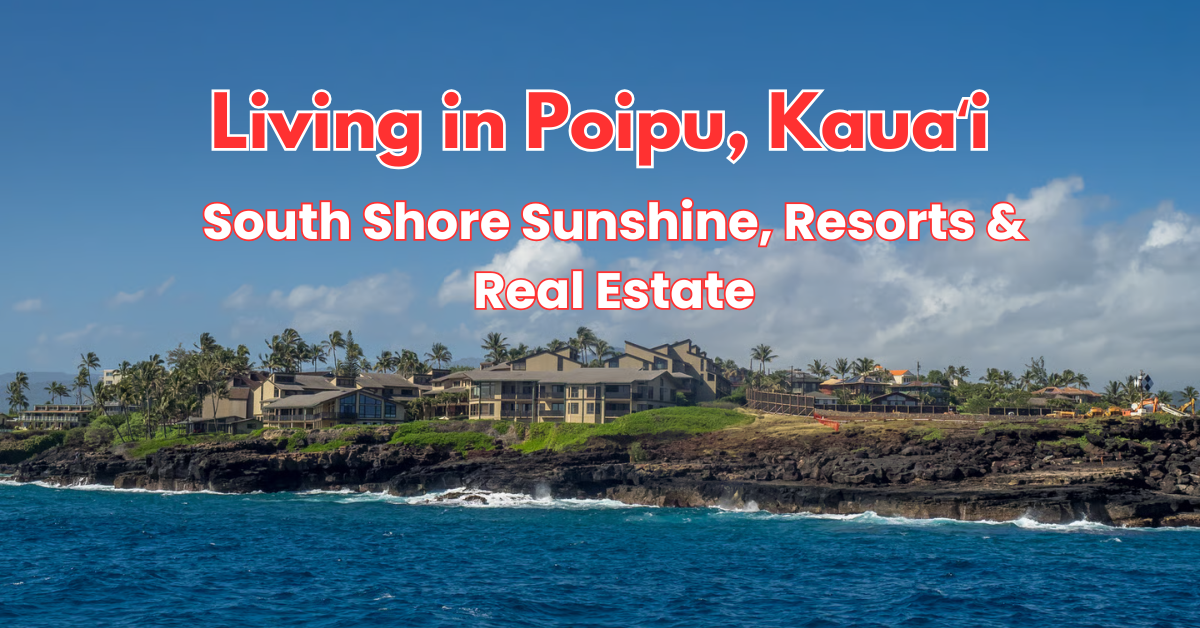
Living in Poipu, Kauaʻi: South Shore Sunshine, Resorts, and Real Estate Realities
For many people, the idea of moving to Kauaʻi starts on a sunny afternoon at Poipu Beach. You spend a week watching sea turtles rest on the sand, enjoying dinner at oceanfront restaurants, and feeling the steady South Shore trade winds. It is easy to see why so many visitors ask themselves whether they could turn that vacation feeling into everyday life. Making the shift from visitor to full-time resident, however, requires looking past the resort amenities and understanding the day-to-day realities of South Kauaʻi.
Take the Quiz: Is Hawaii Right For You? Meet with a Living in Hawaii Expert!
Living in Poipu offers incredible perks, including reliable sunshine, world-class ocean sports, and well-maintained master-planned neighborhoods. At the same time, it comes with the unique dynamics of living inside Kauaʻi’s primary southern tourism hub. From navigating Visitor Destination Area (VDA) zoning and high association fees to planning grocery runs into Līhuʻe, here is what you need to know about establishing roots in Poipu.
The Microclimate: Why South Kauaʻi Gets the Sun
Kauaʻi is famous for its dramatic green mountains, but that lush greenery comes from significant rainfall. Mount Waiʻaleʻale in the island interior is one of the wettest spots on earth. However, island topography creates vastly different microclimates just a few miles apart. While the East Side and North Shore receive substantial precipitation, Poipu sits in the rain shadow of the central mountains.
On average, Poipu receives between 35 and 45 inches of rain per year. Compare that to the 80 to 100 inches common in communities like Princeville on the North Shore. If your priority is dry, warm weather where outdoor plans rarely get rained out, South Kauaʻi delivers. When comparing lifestyle options across the island, looking at living in Princeville, Kauaʻi highlights how stark the difference in weather and daily atmosphere can be between the two resort centers.
Summer temperatures in Poipu consistently reach the mid-to-upper 80s, while winter highs hover comfortably around 80 degrees. The trade winds provide natural cooling, though inland pockets of Poipu and neighboring Kōloa can feel humid on calm summer days. Sun protection, good home ventilation, and functional air conditioning are essential aspects of daily comfort here.
Neighborhood Layout: Pōʻipu vs. Historic Kōloa Town
When people talk about living in Poipu, they are usually referring to the wider South Shore area that encompasses both coastal Poipu and historic Kōloa Town. While these two areas sit right next to each other, they offer distinctly different living environments.
The Coastal Resort Corridor (Poipu)
Coastal Poipu stretches along the oceanfront, anchored by Poipu Beach Park, Brennecke’s Beach, and Shipwreck Beach. This area is dominated by resorts, condominium complexes, and upscale residential subdivisions. The landscaping is immaculate, walking paths connect neighborhoods to the shoreline, and the ocean is never more than a short walk or drive away.
Communities within Poipu include established subdivisions like Poipu Kai, which offers a mix of condos and single-family homes linked by greenbelt walking trails, and newer master-planned developments like Kukuiʻula, an ultra-luxury private community featuring custom homes, a private golf course, and a club farm. Other pockets, such as Bayview and Sunset Kahili, provide varying price points and property styles, though inventory remains consistently limited.
Historic Kōloa Town
Just two miles inland from the coast lies Kōloa, the site of Hawaii’s first commercial sugarcane plantation founded in 1835. Kōloa maintains a historic small-town feel with plantation-style storefronts, wooden boardwalks, and shaded monkeypod trees. While Poipu caters heavily to visitors and luxury second-home owners, Kōloa is where you will find more traditional local residential neighborhoods, community parks, the neighborhood post office, and essential local services.
Living in Kōloa provides a quieter, more neighborhood-oriented environment while keeping you just five minutes from the beaches of Poipu. For residents who want a balance of island heritage and beach access, Kōloa offers an appealing alternative to the resort core.
The Poipu Real Estate Market: What Buyers Must Know
Real estate in Poipu is among the most sought-after on Kauaʻi, driven by both residential demand and strong investor interest. Understanding how the market works here requires familiarizing yourself with specific zoning rules and property types.
The Visitor Destination Area (VDA)
One of the most important factors in Kauaʻi real estate is the Visitor Destination Area (VDA) designation. The County of Kauaʻi strictly regulates short-term vacation rentals (properties rented for fewer than 30 consecutive days). Legal short-term renting is generally permitted only within designated VDAs. Most of coastal Poipu sits inside a VDA.
This designation has major implications for homeowners:
- Property Values and Competition: Because homes and condos in the VDA can generate vacation rental income, they trade at a significant premium. You will compete against mainland investors and second-home buyers looking for rental returns.
- Neighborhood Dynamics: In VDA neighborhoods, your neighbors may change every four to seven days. If you are looking for a quiet cul-de-sac where children play in the street and everyone knows one another, an active vacation rental neighborhood may feel transient.
- Property Tax Differences: Kauaʻi County taxes properties differently based on their use. Primary residences benefit from lower tax rates and homeowner exemptions, whereas properties classified under the vacation rental tax class pay significantly higher rates. You can read more about how county classifications impact your bottom line in our breakdown of how property taxes work in Hawaii.
Condos vs. Single-Family Homes
Condominiums represent a large portion of available housing in Poipu. They offer low-maintenance living, swimming pools, tennis courts, and on-site management, which appeals to buyers splitting time between the island and the Mainland. However, Homeowners Association (HOA) fees in Poipu can be substantial, often ranging from $800 to more than $2,000 per month. These fees cover exterior maintenance, common area landscaping, insurance, and amenities, but they significantly impact your monthly housing budget.
Single-family homes in Poipu provide privacy and yard space, but they require diligent maintenance. The South Shore’s salt spray, intense ultraviolet sun, and trade wind moisture cause rapid wear on exterior paint, roofing materials, and metal fixtures. Regular upkeep is a mandatory cost of homeownership here.
Daily Life and Logistics in South Kauaʻi
Vacationing in Poipu means leisurely days by the pool and dinners out. Living in Poipu means running errands, managing commutes, and finding your daily routine. Understanding the infrastructure helps set realistic expectations.
Grocery Shopping and Dining
For daily grocery needs, residents rely on the Big Save Market in Kōloa or the upscale gourmet market located at The Shops at Kukuiʻula. Kukuiʻula also hosts a popular weekly culinary market featuring local produce, fresh fruit, and prepared foods.
However, for major grocery hauls and bulk goods, you will make the 25 to 35-minute drive north into Līhuʻe. Līhuʻe is the commercial and government hub of Kauaʻi, home to Costco, Target, Safeway, Home Depot, and Walmart. Most South Shore residents plan a weekly or bi-weekly town run to stock up on essentials at Mainland-equivalent retail prices.
When it comes to dining, Poipu offers an impressive culinary scene. From upscale dining at Merriman’s, Red Salt, and The Beach House to casual tacos, food trucks, and poke counters in Kōloa, you will never run out of options. The trade-off is that resort-area dining carries resort-level pricing, so eating out regularly adds up quickly.
Traffic and Island Commuting
Access to the South Shore is primarily via Maluhia Road, famous for its historic Tree Tunnel of eucalyptus trees, or Kōloa Road coming from the west. While traffic on Kauaʻi is mild compared to Honolulu, the South Shore experiences noticeable bottlenecks during morning and evening rush hours, as well as mid-afternoon when rental cars return from daily island excursions.
If you work remotely from home, traffic will rarely affect your lifestyle. However, if you need to commute daily to Līhuʻe or the East Side, you should budget 35 to 50 minutes each way during peak traffic windows.
Healthcare and Essential Services
Kōloa has local family medical practices, dental offices, and urgent care clinics for routine healthcare needs. For emergency care, specialized treatments, or hospital services, Wilcox Medical Center in Līhuʻe is the primary healthcare facility on the island, located roughly 14 miles away. Kauaʻi Veterans Memorial Hospital (KVMH) on the West Side in Waimea provides another regional healthcare option about 20 miles to the west.
Education and Family Life
If you are relocating with school-age children, educational planning is a key consideration. The local public elementary school is Kōloa Elementary, which serves kindergarten through fifth grade. For middle and high school, public school students are generally districted to Chiefess Kamakahelei Middle School and Kauaʻi High School in Līhuʻe.
Many South Shore families also consider private school options. Island School, located adjacent to Kauaʻi Community College in Līhuʻe, is an independent pre-kindergarten through 12th-grade college preparatory school that serves students across the island. Daily school commutes into Līhuʻe are a standard part of life for South Shore families with children attending private institutions.
For outdoor recreation, the South Shore is an incredible natural playground. Youth surf programs, soccer leagues at the Kōloa park fields, skate parks, and community canoe clubs give kids and families ample opportunities to connect with the local community outside of the school day.
Pros and Cons of Living in Poipu, Kauaʻi
To help you decide if South Kauaʻi aligns with your relocation goals, here is a straightforward summary of the advantages and trade-offs of living in Poipu.
Pros of Poipu Living
- Reliable Sunshine: Consistent warm weather with significantly less rain than the North or East shores.
- World-Class Beaches: Quick access to premier snorkeling, bodyboarding, surfing, and sunset spots.
- Well-Maintained Infrastructure: Underground utilities, landscaped sidewalks, and clean parks in master-planned neighborhoods.
- Active Outdoor Lifestyle: Championship golf courses, ocean paddling, coastal hiking along the Mahaulepu Heritage Trail, and bike-friendly resort corridors.
- Strong Property Value Retention: High global demand and limited land supply keep South Kauaʻi real estate desirable.
Cons of Poipu Living
- High Cost of Real Estate: Steep entry prices for both single-family homes and condominiums, along with high HOA fees.
- Heavy Tourism Presence: Constant turnover of vacationers, busy beach parks, and crowded restaurant reservations during peak seasons.
- Distance from Major Retail: Routine trips to Līhuʻe are required for big-box shopping, specialized medical care, and airport access.
- Salt Air Maintenance: Accelerates wear and tear on vehicles, air conditioning units, appliances, and home exteriors.
- Transient Neighborhood Feel in VDA: Living among short-term vacation rentals can make it harder to build long-term neighborhood connections.
Is Poipu the Right Place to Build Your Life in Hawaii?
Living in Poipu is ideal for buyers who want an active, outdoor-focused lifestyle surrounded by ocean beauty and reliable sunshine. It is especially well suited for remote professionals, retirees, and families who appreciate manicured surroundings and do not mind sharing their community with travelers from around the world.
If you prefer a deeply quiet, non-resort atmosphere where every neighbor is a permanent resident, you might feel more at home in nearby Kōloa, the rolling hills of Kalāheo, or the cooler upcountry climate of ʻŌmaʻo. However, if your vision of island life includes walking to the beach at sunset, enjoying morning surf sessions, and spending weekends on the water, Poipu offers one of the most complete coastal lifestyle packages anywhere in the state.
Leave A Comment