

One of the first things people notice when they spend real time in Hawaii is how local the weather feels. You can wake up to sunshine, drive a few miles, and suddenly find yourself in steady rain. Ten minutes later, you’re back in blue skies.
For newcomers, this can feel confusing. For locals, it’s just part of daily life.
This is what people mean when they talk about Hawaii microclimates. They’re not an abstract weather concept. They’re something you experience every single day, and they play a huge role in comfort, lifestyle, and where people choose to live.
If you’re thinking about moving to Hawaii or even just trying to understand why two neighborhoods feel completely different, microclimates are one of the most important things to understand.
What Is a Microclimate in Hawaii?
A microclimate is a localized weather pattern that differs from the surrounding area. In Hawaii, these differences can show up within a few blocks.
The islands are small, but they’re extremely complex. Mountain ranges rise quickly from the ocean. Trade winds blow consistently from the northeast. Moist air hits land, rises, cools, and drops rain. Then it moves on, leaving dry zones behind it.
Because of this, Hawaii doesn’t have one climate per island. Each island has dozens, sometimes hundreds, of microclimates layered together.
That’s why general forecasts don’t always tell the full story. “Rainy” or “sunny” depends entirely on where you are standing.
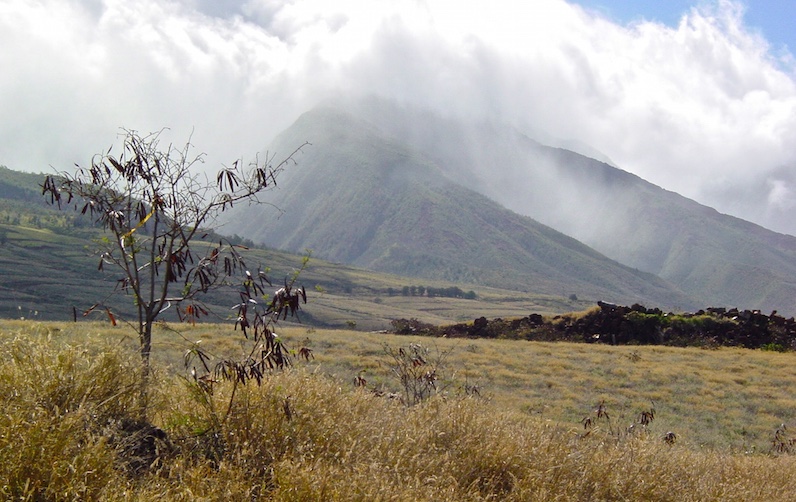
Typically there is a light rain over the West Maui Mountains in Lahaina. Copyright CyberCom, Inc.
The Role of Trade Winds and Mountains
Trade winds are one of the biggest drivers of Hawaii microclimates. They push moist ocean air toward the islands most days of the year.
When that air hits a mountain, it has nowhere to go but up. As it rises, it cools, and the moisture condenses into clouds and rain. This usually happens on the windward sides of the islands.
Once the air passes over the mountains and descends on the other side, it warms and dries out. This creates leeward areas that see far less rainfall.
This process happens constantly, shaping everything from vegetation to temperature to how often you reach for an umbrella.

Windward vs Leeward: Why It Matters
You’ll hear locals talk about windward and leeward sides almost immediately. It’s not just geography. It’s a lifestyle distinction.
Windward areas tend to be greener, cooler, and wetter. Rain often comes in passing showers rather than long storms, but it can be frequent. The upside is lush landscapes, cooler temperatures, and natural beauty everywhere you look.
Leeward areas are typically sunnier, warmer, and drier. You’ll see more consistent blue skies and fewer rainy days. Homes often rely more on airflow and shade, and landscaping looks very different.
Neither side is “better.” It depends on what you value day to day.

Why Rain Can Be So Hyper-Local
One of the most surprising things for people new to Hawaii is how localized rain can be.
A small increase in elevation can be enough to trigger cloud formation. A ridge can block wind. A valley can trap moisture. Afternoon clouds often build inland, while coastal areas stay clearer.
This is why two neighborhoods right next to each other can have completely different weather patterns. One might see daily afternoon showers, while the other stays mostly dry.
Over time, residents learn these patterns instinctively. You know which direction the clouds usually come from and when they’ll clear out.
Microclimates and Daily Comfort
Microclimates affect more than just whether it rains. They shape how comfortable a place feels to live in.
In wetter areas, temperatures are often cooler, especially in the mornings and evenings. Humidity can be higher, which means homes may need better ventilation or dehumidifiers. Mold prevention becomes part of regular maintenance.
In drier areas, heat is more noticeable, especially during the day. Shade, airflow, and building orientation matter more. Nights often cool down nicely, but daytime sun exposure is stronger.
Even a few hundred feet of elevation can make a difference. Homes higher up the slope tend to be cooler and breezier, while homes closer to sea level feel warmer and more humid.

How Microclimates Influence Home Choice
This is where microclimates really start to matter.
Two homes with similar prices, layouts, and views can feel completely different depending on their microclimate. One might feel cool and breezy year-round. Another might feel warm and still. One might require constant moisture management. Another might rarely need it.
Roof material, window placement, ceiling height, and lanai orientation all interact with local weather patterns. These details matter far more in Hawaii than many people expect.
That’s why spending time in a neighborhood before committing is so important. Visiting at different times of day gives a much clearer picture than a single showing.

Road from S.R. 19 to Laupahoehoe Point, Hawaii by Ken Lundis licensed under CC BY NC 2.0 / Image may have been resized or cropped from original
Big Island: The Ultimate Microclimate Example
If you want to truly understand Hawaii microclimates, the Big Island is the clearest example.
It has more climate zones than anywhere else on Earth packed into one island. You can drive from lush rainforest to dry lava fields in less than an hour. Elevation plays a massive role, especially around areas like Waimea, Volcano, and the slopes of Mauna Kea and Mauna Loa.
Some areas see frequent rain, while others remain dry for weeks at a time. Temperatures can change dramatically with elevation, even within the same town.
People sometimes assume the Big Island has “bad weather,” but that’s usually based on limited experience in one area. In reality, it simply has very distinct microclimates. Once you understand them, it becomes easier to choose a location that fits your lifestyle.
Microclimates and Lifestyle Choices
Where you live affects how you live.
Gardeners often love wetter areas where plants thrive naturally. Hikers may prefer cooler, greener regions where trails stay shaded and comfortable. People who spend a lot of time outdoors during the day often lean toward sunnier, drier areas.
Surf conditions, hiking schedules, and even grocery runs get planned around local weather patterns. Over time, this becomes second nature.
You don’t fight the weather. You work with it.
Common Mistakes Newcomers Make
One of the biggest mistakes people make when moving to Hawaii is assuming island weather is uniform.
They imagine constant sunshine everywhere and are surprised when daily rain becomes part of life. Without understanding microclimates, people can end up frustrated in areas that don’t match their expectations.
The better approach is asking more specific questions. Instead of “Is this island rainy?” it helps to ask, “Which parts are rainy, when does it usually rain, and how does that affect daily life?”
That shift leads to much better decisions.
Learning to Live With Microclimates
Long-term residents don’t obsess over forecasts. They watch the mountains. They notice wind direction. They know when clouds will build and when they’ll clear.
Living in Hawaii means accepting that weather is dynamic and local. Once you understand that, microclimates stop feeling unpredictable and start feeling familiar.
They’re one of the things that make life here so unique.
Understanding Hawaii microclimates isn’t about avoiding rain or chasing sunshine. It’s about choosing a place that fits how you want to live, day after day.
Hawaii Microclimates FAQ
What causes microclimates in Hawaii?
Hawaii microclimates are caused by a mix of trade winds, mountains, elevation, and ocean exposure. Moist air hits the islands, rises over mountain ranges, and drops rain in certain areas while leaving others dry. Small changes in elevation or geography can create noticeable differences in weather.
Why does it rain more on the windward side of Hawaii?
Windward areas face the prevailing trade winds, which carry moist air from the ocean. When that air rises over the mountains, it cools and produces rain. This makes windward neighborhoods greener, cooler, and wetter than leeward areas.
Are leeward areas always sunny in Hawaii?
Leeward areas are generally sunnier and drier, but they are not rain-free. They can still experience passing showers, seasonal weather changes, and occasional storms. Compared to windward areas, rain is simply less frequent and usually more predictable.
Which Hawaiian island has the most microclimates?
The Big Island has the most diverse microclimates in Hawaii. It contains more climate zones than anywhere else in the world, with environments ranging from rainforest to desert to alpine conditions, often within short driving distances.
How do microclimates affect daily life in Hawaii?
Microclimates influence temperature, humidity, rain frequency, and wind, all of which affect comfort, home maintenance, energy use, and outdoor activities. Where you live can determine how often you use air conditioning, deal with humidity, or plan around afternoon rain.
Should I worry about microclimates when choosing a place to live in Hawaii?
Yes. Microclimates play a major role in how a home feels day to day. Two homes close to each other can have very different weather patterns. Spending time in a neighborhood at different times of day helps you understand what living there will actually be like.
Do Hawaii microclimates change throughout the year?
Yes, but patterns remain fairly consistent. Winter months tend to bring more rain overall, while summer is usually drier. Even so, the same areas generally stay wetter or drier year-round based on their location and elevation.
Why don’t weather apps accurately reflect Hawaii’s microclimates?
Most weather apps report conditions for broad areas or airports, not individual neighborhoods. Because Hawaii’s weather changes so quickly over short distances, forecasts often don’t capture the block-by-block differences people experience in real life.



What do you think?