
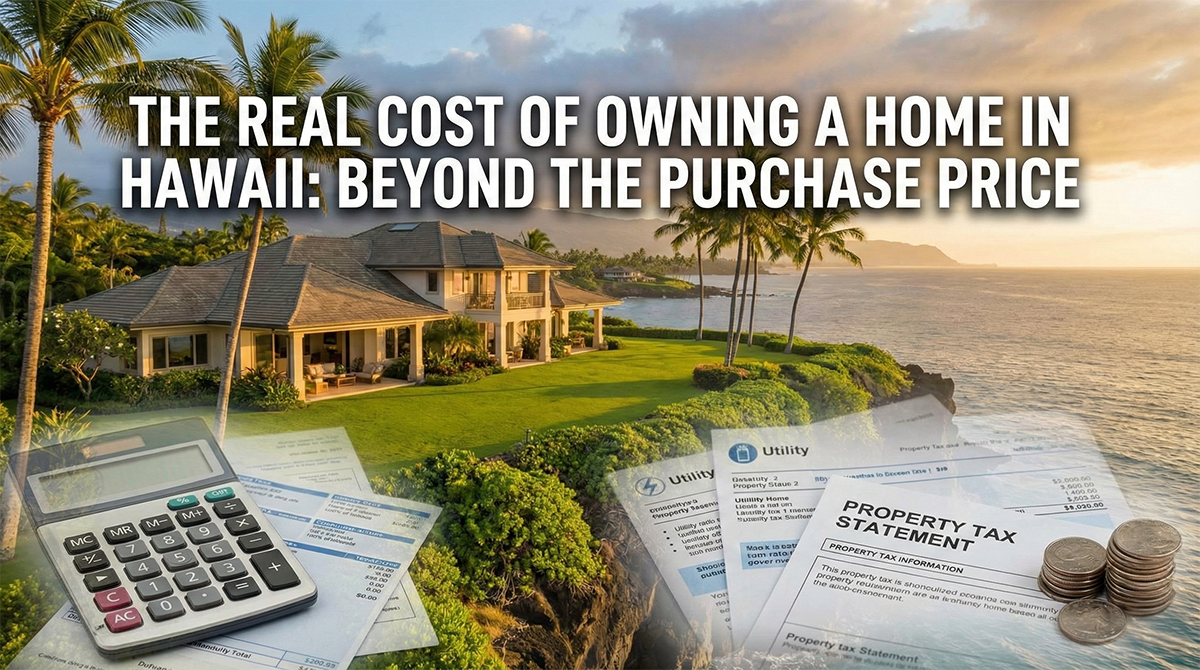
If you are considering buying a home in Hawaii, the most important thing to understand is this. The purchase price is only the beginning. Daily living and long term ownership costs in Hawaii are higher, more layered, and more location dependent than many buyers expect, especially those relocating from the mainland.
This does not mean owning a home here is a bad decision. It means successful homeowners go in with clear expectations. When buyers understand the full picture upfront, they make better choices and feel far more comfortable after closing.
Here is what owning a home in Hawaii really costs beyond the price on the listing.
Electricity Is a Major Monthly Expense
Electricity in Hawaii is consistently among the most expensive in the country. This affects everyday life more than most buyers anticipate. Air conditioning, ceiling fans, water heaters, pool pumps, and dehumidifiers all add up quickly.
Many homes rely entirely on electricity because natural gas is not widely available. Even homes that feel modest in size can produce surprisingly high electric bills due to local rates alone.
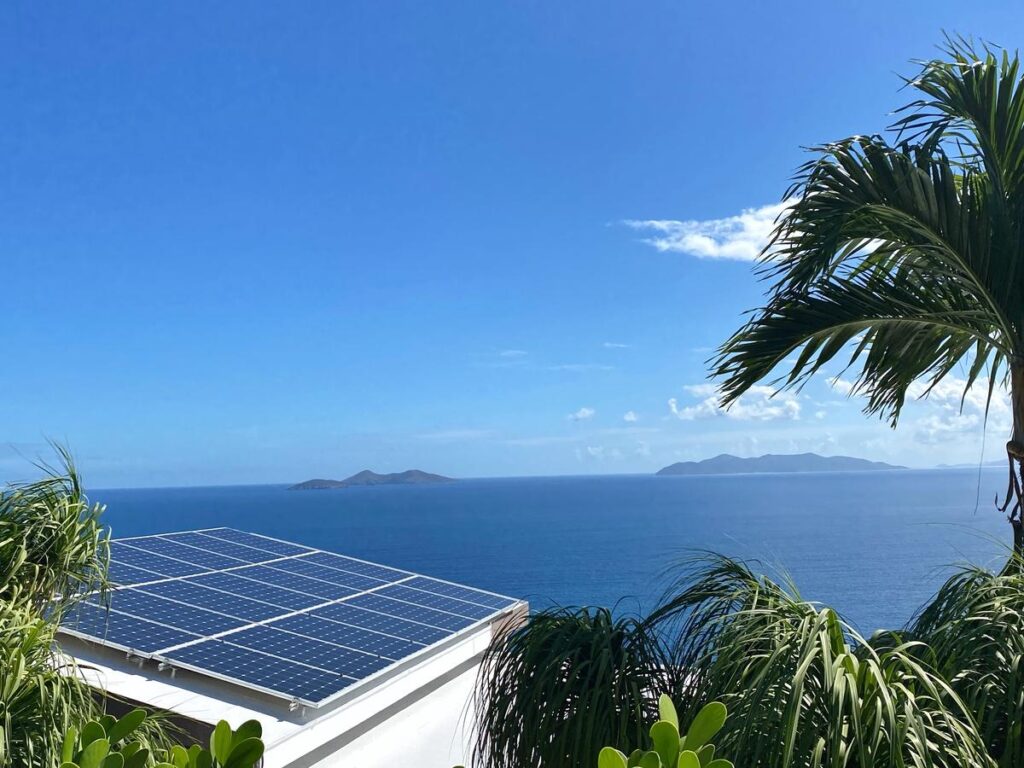
Solar can help reduce costs, but buyers need to confirm whether panels are owned outright or tied to a lease or power purchase agreement. Those contracts directly affect monthly expenses and resale flexibility.
Water Is Not Cheap and Varies by Location
Water is another cost that often catches new homeowners off guard. In many parts of Hawaii, water and sewer rates are significantly higher than mainland averages.
On the Big Island especially, water access and pricing vary by district. Some homes rely on municipal water, while others use catchment systems that require pumps, filtration, maintenance, and power. Homes with irrigation, landscaping, or pools often see higher usage and higher bills.
Water should be treated as a primary utility expense, not a minor one.
Insurance Is Layered and Can Change Over Time
Home insurance in Hawaii is rarely a single policy. Most homeowners carry multiple forms of coverage depending on location and risk factors.
Standard homeowners insurance covers the structure and contents. Flood insurance may be required based on FEMA flood zones. Hurricane insurance is often separate and can significantly increase annual premiums.
Insurance costs are influenced by proximity to the ocean, the age of the home, roof type, and regional risk factors. Rates can change over time, so buyers should budget conservatively rather than assuming today’s premium will remain stable.
Lava Zones Matter More Than Many Buyers Realize
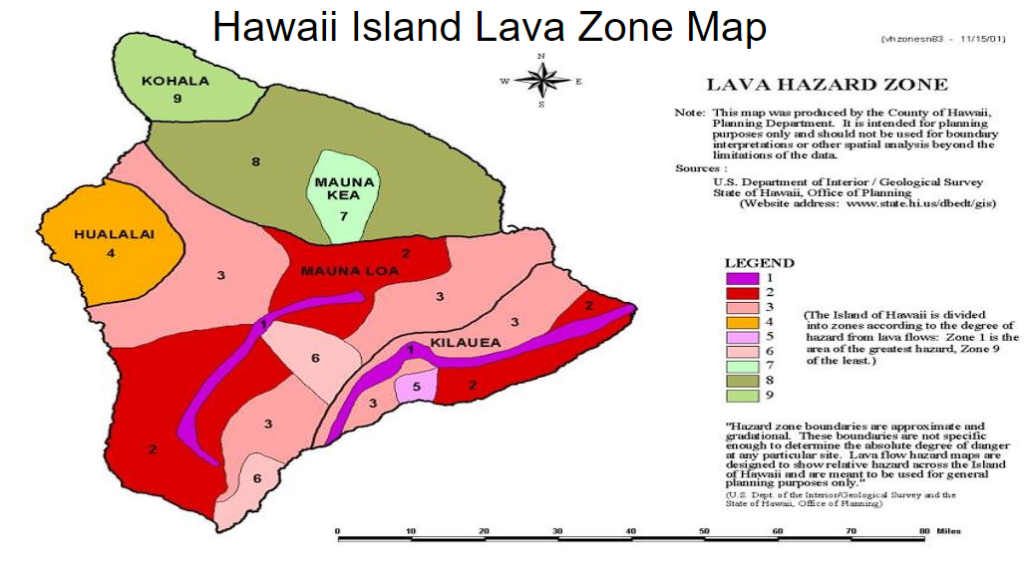
Lava zones are a uniquely Hawaii consideration, particularly on the Big Island. Properties are classified into lava hazard zones based on historical volcanic activity.
Homes in higher lava zones often have lower purchase prices, but those savings come with tradeoffs. Insurance options may be limited or more expensive. Some lenders impose stricter requirements. Long term risk tolerance becomes an important part of the decision.
Lava zones do not mean danger is imminent, but they absolutely affect financing, insurance availability, and resale considerations. Buyers should understand a property’s lava zone classification before making decisions based solely on price.
Termites Are a Normal Part of Homeownership
Termites are not an exception in Hawaii. They are expected.
The warm, humid climate creates ideal conditions for both subterranean and drywood termites. Nearly every home in Hawaii will deal with termites at some point, regardless of age, price, or location.
Most homeowners plan for regular termite inspections, typically on an annual basis. Preventative treatments, spot treatments, or full tenting may be required over time. Tenting a home is not unusual and can be a significant expense.
Buyers should review termite inspection reports and treatment history carefully. A clean inspection does not mean termites will never appear. Ongoing monitoring and prevention are normal maintenance costs in Hawaii.
Maintenance Costs Are Higher in a Tropical Climate
Hawaii’s environment is beautiful, but it is demanding on homes. Salt air accelerates corrosion. Humidity encourages mold and mildew. Strong sun breaks down paint, roofing materials, and exterior finishes faster than in many mainland climates.
Routine maintenance often includes termite inspections, pest control, repainting, roof checks, appliance replacement, and moisture management. Homes near the ocean or in high humidity areas typically require more frequent upkeep.
Skipping preventative maintenance in Hawaii almost always leads to higher repair costs later.
HOA and Association Fees Add Another Layer
Condos and planned communities are common throughout Hawaii. Many offer amenities like elevators, pools, security, and shared landscaping. These features come with monthly association fees that can range from a few hundred dollars to well over a thousand.
HOA dues often cover exterior maintenance, shared utilities, insurance on common structures, and reserve funding. Buyers should review association budgets, reserve studies, and recent fee increases carefully, especially in older buildings.
The True Cost of Owning a Home in Hawaii
Owning a home in Hawaii can be incredibly rewarding, but it requires realistic planning. Electricity, water, insurance, lava zones, termites, maintenance, and association fees all contribute to the true cost of ownership.
Buyers who understand these factors upfront are more likely to choose the right home, set the right budget, and enjoy island life without unnecessary financial stress.
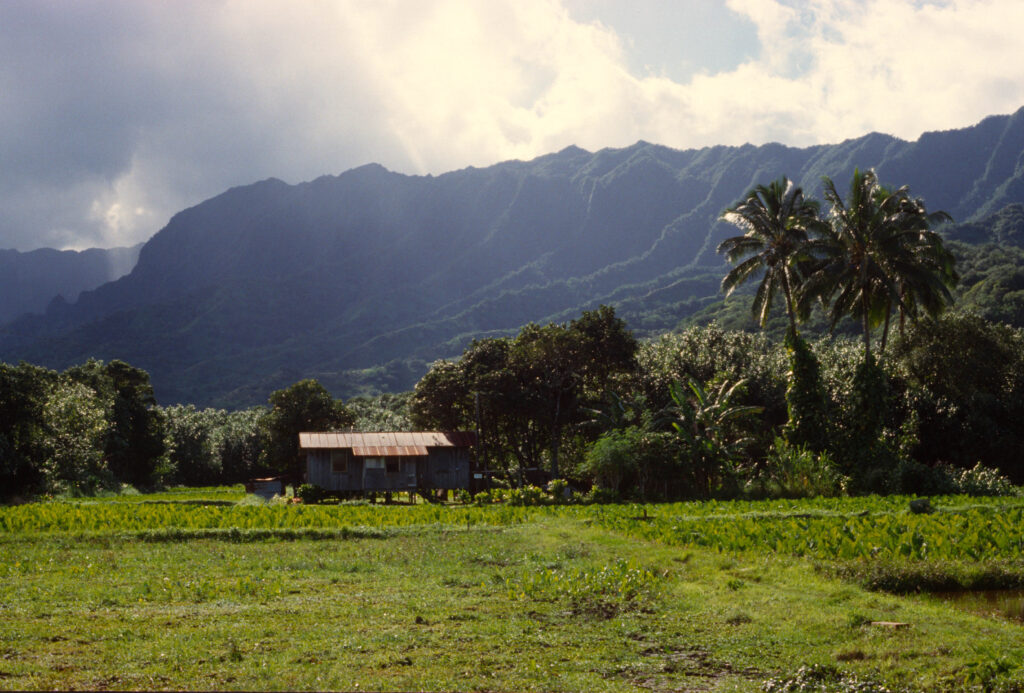
Hawaii by David Wipf is licensed under CC BY 2.0. Image may have been resized or cropped from original and has been 64268289@N03.
Frequently Asked Questions About the Cost of Owning a Home in Hawaii
Is it more expensive to own a home in Hawaii than the mainland?
In most cases, yes. Utilities, insurance, and maintenance costs are generally higher, even if mortgage payments are comparable.
Why is electricity so expensive in Hawaii?
Hawaii relies heavily on imported fuel and has limited infrastructure, which drives up electricity rates statewide.
Is water really that expensive?
Yes. Water and sewer rates are higher than many mainland areas and vary significantly by island and neighborhood.
What are lava zones and why do they matter?
Lava zones indicate volcanic risk, primarily on the Big Island. They affect insurance availability, financing options, and long term planning.
Are termites common in Hawaii homes?
Yes. Termites are extremely common and should be expected as part of normal homeownership.
Does homeowners insurance cover termite damage?
Typically no. Termite damage is considered preventable maintenance and is usually excluded from coverage.
How much should I budget for maintenance each year?
Many homeowners plan for one to three percent of the home’s value annually, with higher budgets for older, coastal, or high exposure properties.


What do you think?