
Hawaii Natural Disasters – What Newcomers Should Know in 2025
Hawaii has a way of spoiling you. Mornings start with that orange/purple glow as the sun rises, trade winds keep the air cool, and if you’re lucky, you can smell plumeria on your walk to get coffee. But the islands aren’t just pretty postcards. They’re living, breathing landscapes — and sometimes, they’re alive and they remind you of that.
Natural disasters here don’t happen every day, but when they do, they shape the community. Some you can see coming for days; others arrive with no warning at all. They’re part of life in Hawaii, and knowing what to expect makes it easier to settle in and enjoy your time here. We have a recent, at the time of this article refresh, video that you can view below:
Hurricanes: Slow-Building but Powerful
If you’ve only seen hurricanes on the news, Hawaii’s might surprise you. They’re not a yearly guaranteed event, but when they show up, they can leave a mark for decades. Hurricane Iwa in 1982 tore across Oahu, Kauai, and Ni‘ihau, and ten years later, Iniki struck Kauai head-on as a Category 4 monster, flattening neighborhoods and leaving thousands without power for weeks.
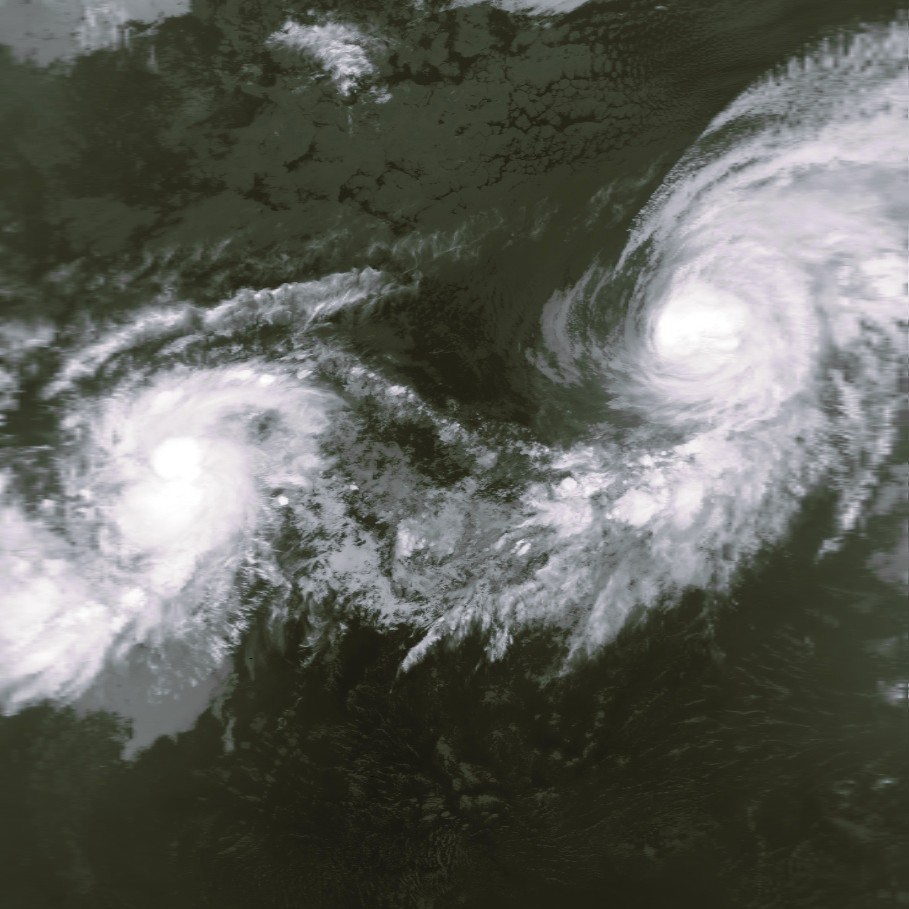
Satellite view of Hurricane Iniki approaching Hawaii in September 1992. Iniki remains the most powerful hurricane to strike the state in recorded history. Photo credit: NOAA via Wikimedia Commons.
More recently, hurricanes like Lane (2018) and Darby (2022) stayed offshore but still dumped enough rain to flood streets, close schools, and trigger landslides. Even distant storms can whip up dangerous surf and cut off interisland ferries and flights.
Hurricane prep here is almost a ritual. You top off the gas tank, fill the water jugs, and make a Costco run for the essentials — rice, Spam, canned tuna, toilet paper. Make sure your propane is full on the BBQ, maybe have an extra tank. I have one of those single burner butane stoves that come in handy even with power outages. Candles, backup battery, all you’ll need to be comfortable. Don’t forget to check in on neighbors, especially kūpuna (elders), and make sure everyone knows where the nearest shelter is.
Hurricane season runs from June through November, but supplies don’t go bad overnight — so locals keep them year-round.
Tsunamis: The Fast-Moving Threat
If hurricanes are slow to make an entrance, tsunamis are the opposite. They can start with an earthquake thousands of miles away, and just hours later, Hawaii’s coastline is on alert.
The sound of a tsunami siren is one you don’t forget — long, loud, and impossible to ignore. In Hawaii, people don’t wait to see if it’s “real.” They grab their go-bag and head uphill or inland. The state’s early warning system is taken seriously here. Sirens are tested at 11:45 a.m. on the first business day of every month, a reminder that nature doesn’t always send invitations before it arrives. You can find evacuation maps, preparedness tips, and updates on the Hawaii Emergency Management Agency’s website.
History explains why the system is so respected. In 1946, waves from an earthquake in the Aleutian Islands reached Hilo at 55 feet high, killing nearly 160 people. There was no warning system then, and many victims were caught exploring the suddenly exposed seafloor just before the waves came in.
By 1960, Hawaii did have an early warning network. That May, after the massive 9.5 earthquake off the coast of Chile, the Pacific Tsunami Warning Center sounded the alarms. The waves still caused devastation in Hilo’s Waiākea area — bending parking meters, gutting buildings, and sweeping away homes. Sixty-one lives were lost, and damages topped $24 million. The tragedy proved that even with hours of warning, tsunamis demand absolute respect — and that going back too soon between surges can be deadly.
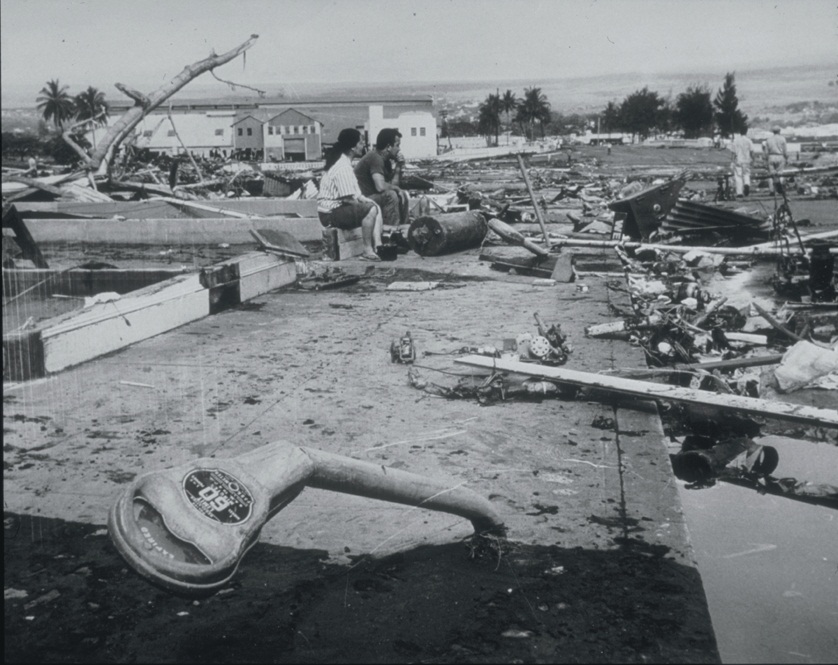
Waiākea area of Hilo after the 1960 Chile earthquake tsunami. Waves bent parking meters, gutted buildings, and swept away homes, leaving 61 dead and $24 million in damages. Photo credit: U.S. Navy via Wikimedia Commons.
Today, Hawaii’s warning system is one of the best in the world, but the rules haven’t changed: if you feel a strong earthquake or see the ocean suddenly recede, move to higher ground immediately — and stay there until you get the official all-clear. The first wave is rarely the biggest.
Earthquakes: Hawaii’s Quiet Rumbles
Earthquakes here are usually small — little shivers under your feet that are over in seconds. But every now and then, the islands shake hard enough to rattle cabinets and knock out power.
The 2006 Kīholo Bay earthquake (magnitude 6.7) damaged buildings across the Big Island and Oahu. In 2018, as Kīlauea erupted, hundreds of smaller quakes hit, collapsing roads and shifting the ground enough to change property lines.
Living here, you get used to the idea that the land itself is alive. If you feel shaking, remember: drop to your hands and knees, cover your head and neck, and hold on until it’s over. Although, most of the time, it’s just a regular thing that you just keep on doing what you’re doing. Living on The Big Island, we felt quakes all the time. Interested to know about the latest quakes, here’s where I’d check –> The USGHS Webiste
Landslides and Rockfalls: When the Mountains Move
Hawaii’s mountains are part of the magic — steep, green, and impossibly dramatic. But after days of heavy rain, gravity sometimes wins.
I’ve seen highways closed for days while crews cleared boulders the size of SUVs. In certain valleys, people talk about “that one storm” when a rock came straight through someone’s living room. It doesn’t happen every week, but it’s a good reminder that those cliffs and ridges aren’t just scenery. They’re steep and nothing is there to stop a rock if it takes off down the hill.
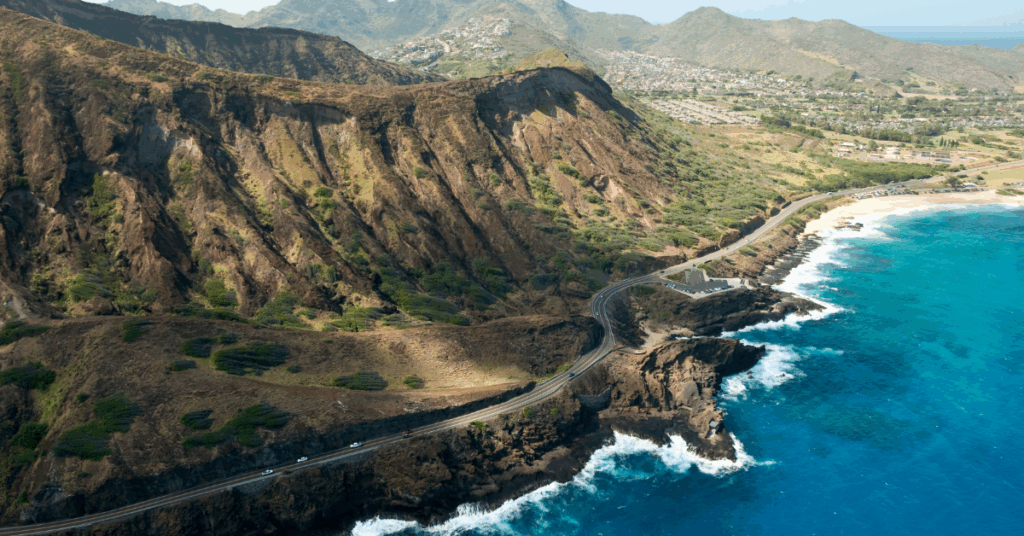
When rain is steady for days, think twice before hiking narrow ridges or driving along cliffside roads.
Volcanoes and Vog: The Islands’ Fiery Heart
Not every island has an active volcano, but on the Big Island, Pele — the Hawaiian goddess of volcanoes — is still very much present.
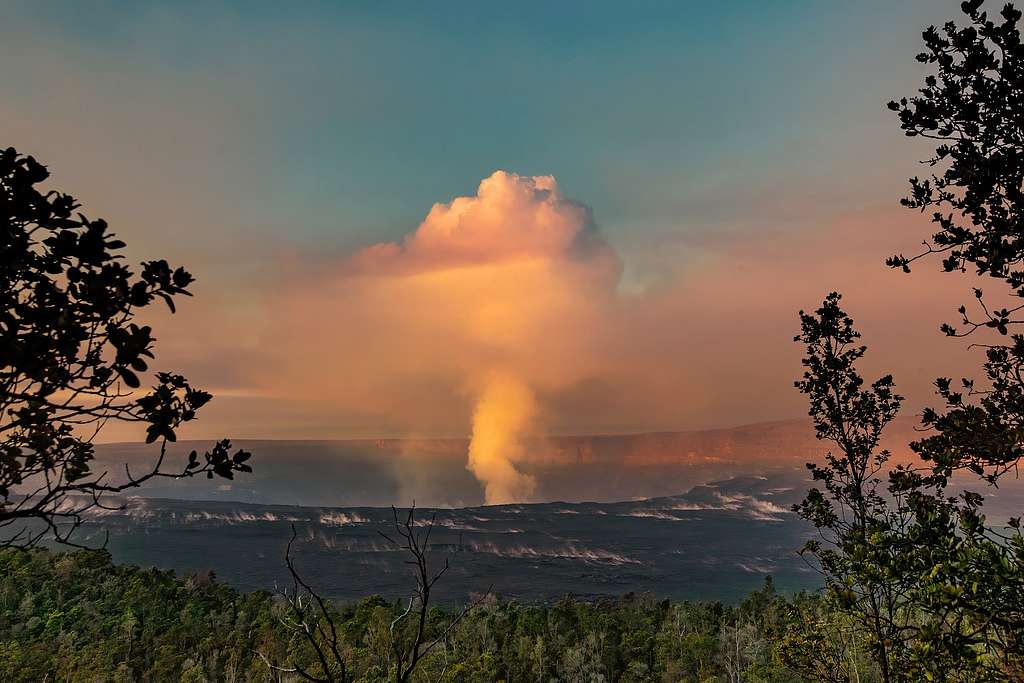
Vog, or volcanic smog, from Kīlauea’s summit eruption spreading from the crater at sunrise, viewed from Byron Ledge on December 23, 2020. Photo credit: NPS/Janice Wei via Wikimedia Commons.
Most lava flows move slowly enough that you can watch from a safe distance, but in 2018, Kīlauea’s eruption destroyed over 700 homes and reshaped entire neighborhoods. Even if you never see lava, you might encounter vog — volcanic smog that can drift for miles, making the air hazy and irritating your lungs. Sometimes for weeks.
Locals check vog forecasts during active periods, just like surfers check the waves.
Living Prepared: The Island Way
In Hawaii, disaster prep isn’t about paranoia — it’s about community. Neighbors check in on each other, share generators, and swap supplies.
If you’re new here, make yourself a go-bag with at least two weeks of non perishable food and water, first-aid supplies, flashlights, batteries, important documents, and cash. Learn your evacuation routes, and download local alert apps like HNL.info and the Pacific Tsunami Warning Center. Make sure you’re setup to receive
The goal is simple: be ready so you can keep living on island time, even when nature stirs. Check out the comprehensive info from the Hawaii Emergency Management Agency that outlines all things to be aware of to be ready.
FAQs
What natural disasters happen most often in Hawaii?
Flooding from heavy rain and small earthquakes are the most common, with occasional hurricanes, tsunamis, and volcanic activity.
When is hurricane season in Hawaii?
From June through November, though storms can occur outside that window.
How do you know if a tsunami is coming?
Sirens, phone alerts, and sometimes natural signs like the ocean receding dramatically.
What is vog?
Vog is volcanic smog from active volcanoes, made of sulfur dioxide and fine particles.
Has a hurricane ever hit Maui directly?
Direct hits are extremely rare, but storms have passed close enough to cause flooding and wind damage.
Aloha and Mahalo! I just moved here and want to be in tune with the nature. I was warned about the centipede, but feel terrible I may have flushed a much smaller innocent creature. A gecko showed up two nights in a row and I think it’s a great sign. I may have ruined his dinner and my conscience. I’m learning as I go after one week.
I think it’s going to be OK. Go get involved with a local nonprofit group and help with a beach cleanup or something like that. You’ll find it very rewarding.