

Kīhei is a six-mile stretch of South Maui coastline known for 276 days of annual sunshine, accessible beaches including Kamaʻole Beach Parks I-III and Keawakapu, and predominantly condo-style housing ranging from $400,000 to over $2 million. Located in Haleakalā’s rain shadow, Kīhei stays consistently dry and warm year-round but experiences afternoon trade winds that can kick up red volcanic dust. The community offers a casual, family-friendly lifestyle with essential shopping and dining along South Kīhei Road and Piʻilani Highway. Residents trade some wind and dust for reliable sunshine, walkable beach access, and a genuine local community feel distinct from nearby resort areas like Wailea.
If you’re thinking about making the move to Maui, Kīhei deserves a serious look. This South Maui town has quietly become one of the island’s most popular residential areas, and once you spend a little time here, you’ll understand why.
Why Kīhei Has the Best Weather on Maui
Kīhei stretches along six miles of South Maui coastline, and it’s basically the island’s answer to “what if we had sunshine every single day?” While the rest of Maui might get rain, Kīhei stays dry and sunny. We’re talking 276 days of sunshine a year. South Maui sits in the rain shadow of Haleakalā, which means the mountain blocks most of the clouds before they reach this side of the island.
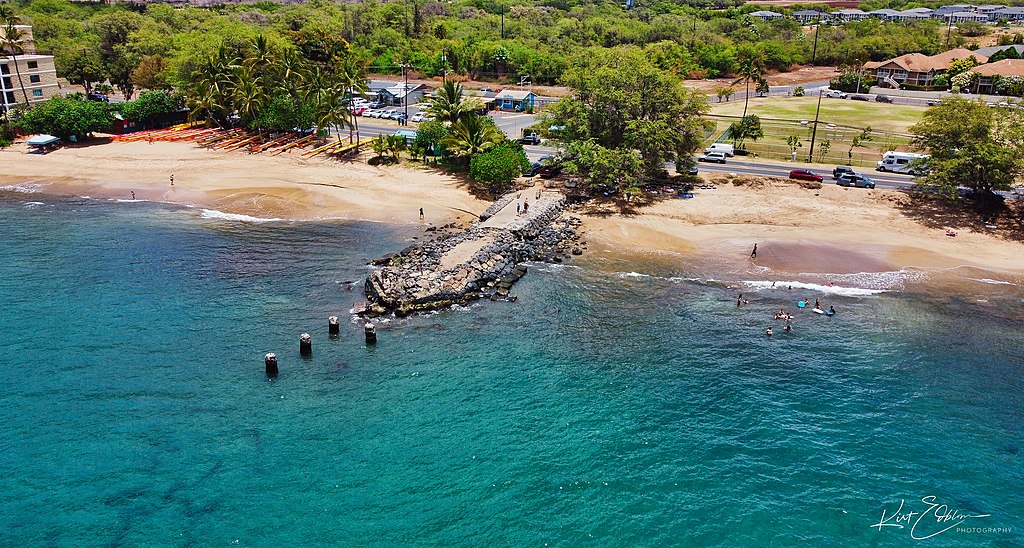
“Kihei Pier” by Kirt Edblom (CC BY-SA 2.0)
The weather here is remarkably consistent. Average temperatures hover between 75-85°F year-round, with minimal seasonal variation. While Upcountry Maui and the Windward side get regular rainfall, Kīhei typically receives less than 10 inches of rain annually. That predictability makes planning your life easier.
The trade winds are constant, keeping things from feeling oppressively hot even on the warmest days. They pick up in the afternoon, usually between 1-5 PM, bringing that breeze that makes lanai time so pleasant.
Kīhei’s Beach Life: Accessible and Beautiful
The beaches here are the real deal. From Kamaʻole Beach Parks (locals just call them Kam I, II, and III) to Keawakapu, you’ve got accessible, beautiful stretches of sand where you can actually spend your afternoons. Not just tourist spots you drive past on your way to somewhere else. Morning swims, sunset walks, weekend beach days with the family. It becomes part of your routine.
Kamaʻole Beach Park I is the most popular, with good facilities, lifeguards, and great swimming conditions for families. All three Kam parks have restrooms, showers, picnic areas, and parking. Keawakapu Beach, on the south end near Wailea, offers about half a mile of beautiful golden sand and is less crowded than the Kamaʻole parks.
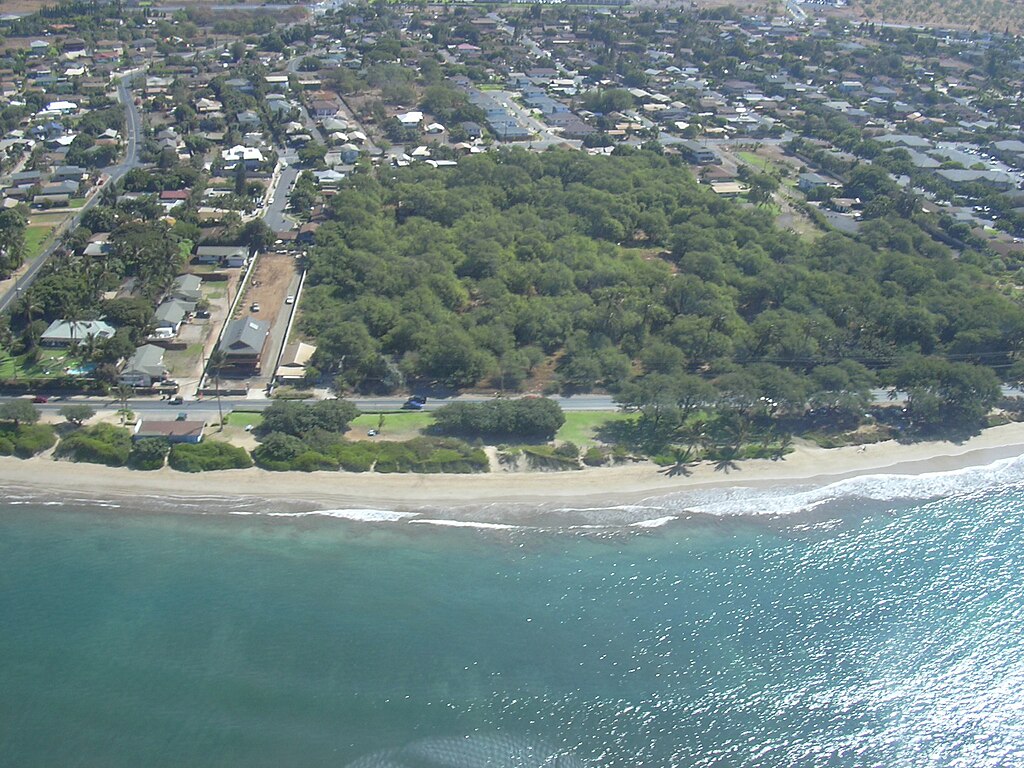
“Mai poina oeiau Kihei, Maui” by Forest & Kim Starr (CC BY 3.0)
Early mornings here are spectacular. You’ll often see sea turtles, and the water tends to be calmer before the afternoon winds kick in. Beyond these main beaches, you’ve got excellent snorkeling opportunities at multiple spots along the coast.
Understanding Kīhei’s Condo-Focused Housing Market
Kīhei is primarily a condo town. You’ll find everything from affordable older complexes to newer luxury developments, but single-family homes are less common and typically come with higher price tags. For a lot of people, this works perfectly. Condo living in Kīhei often means you’re within walking distance of beaches, restaurants, and shopping. Many complexes have pools, and the maintenance is handled for you.
The condo market here is diverse. Older complexes built in the 1970s and 1980s offer more affordable entry points, typically ranging from $400,000-$700,000 depending on size, location, and updates. Mid-range complexes built in the 1990s and 2000s offer better amenities and more contemporary layouts, usually running $700,000-$1.2 million. Luxury oceanfront properties can exceed $2 million, especially for larger units with direct ocean views.
Single-family homes exist but represent maybe 20% of the housing stock. When they come on the market, they typically start around $1.2 million and go up quickly from there.
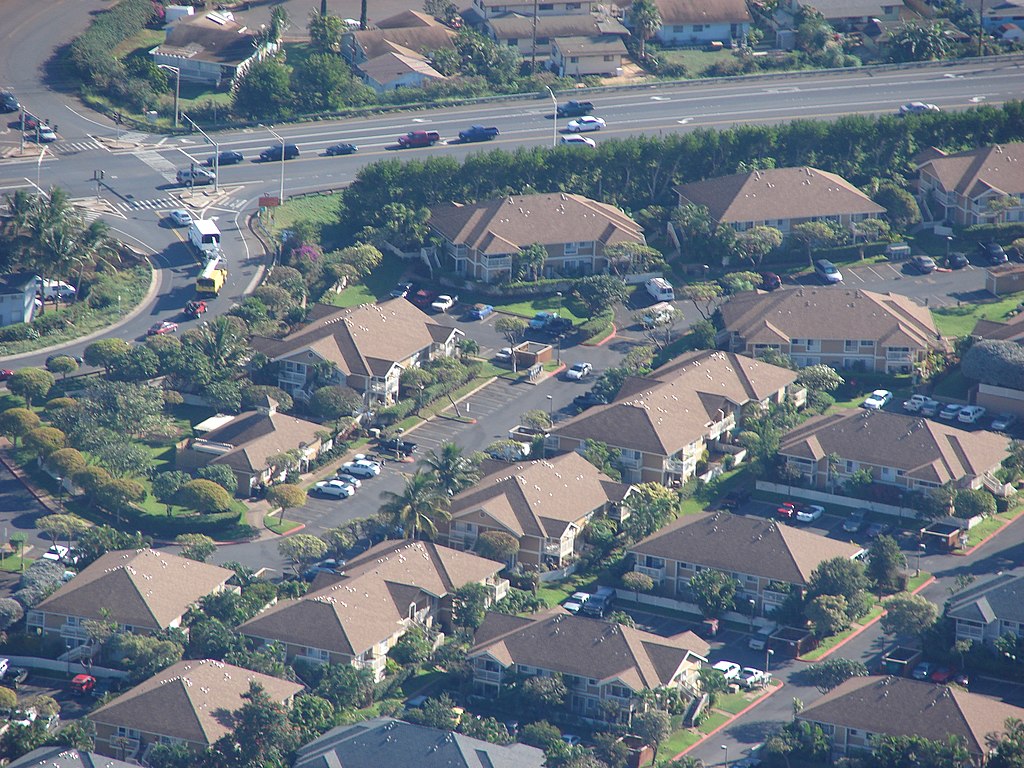
“Kihei Villages, Maui” by Forest & Kim Starr (CC BY 3.0)
If you’re exploring Kīhei real estate options, you’ll notice the variety ranges from oceanfront luxury to more budget-friendly options further from the water. Working with local experts who understand South Maui’s specific market helps you navigate what can be a competitive landscape. Inventory tends to move quickly here because the combination of weather, beaches, and relative affordability compared to Wailea makes Kīhei attractive to a wide range of buyers.
Shopping, Dining & Daily Conveniences
The town runs along South Kīhei Road and Piʻilani Highway, and you’ll find most of what you need: grocery stores (Safeway and Foodland), restaurants ranging from local plate lunch spots to nicer dining, shops, and services. It’s not Kahului with big-box stores, but you’re not driving an hour for essentials either.
The dining scene is surprisingly solid. You’ve got everything from food trucks to upscale spots like Nalu’s South Shore Grill. Local favorites include Kihei Caffe for breakfast, Coconut’s Fish Cafe, and plenty of poke spots and plate lunch places that become part of your regular rotation.
Shopping includes Target in the Piʻilani Village Shopping Center, various surf shops, and enough boutiques to keep things interesting. For more extensive shopping, Kahului is about 25-30 minutes away with Costco, Home Depot, and the bigger mall. You’ll also find gyms, yoga studios, medical facilities, banks, and pretty much everything you need for daily life.
The Wind and Dust: What You Need to Know
Here’s what people don’t always mention: Kīhei can be windy and dusty. Those same trade winds that keep things cool and dry also kick up red dirt, especially in the afternoon. If you’re particular about keeping your car clean or your lanai spotless, this might drive you a little crazy. Some days it’s fine, other days you’ll come home to a fine layer of dust on everything. It’s just part of the deal.

“Peacock blocking morning traffic in Kihei, Maui, Hawaii” by Viriditas (CC BY-SA 3.0)
The red dust comes from the volcanic soil in the area. Your car will show it most obviously with that reddish-brown film that appears within days of washing. Outdoor furniture, lanais, and anything left outside will collect it too.
Most residents develop strategies. Some keep their cars covered when possible. Others just accept that their car is going to look dusty. Indoor spaces stay cleaner if you keep windows and doors closed during the windiest parts of the day, though many people love the cross-breeze.
The wind itself is actually one of Kīhei’s best features for many residents. It keeps mosquitoes at bay, prevents the air from feeling stagnant, and makes outdoor activities comfortable even when temperatures climb.
Kīhei’s Lifestyle and Community Vibe
The vibe here is casual and relaxed, even by Hawaii standards. Kīhei doesn’t have the resort polish of Wailea to the south. It’s more of a “throw on your slippers and grab shave ice” kind of place. Families love it here because it feels safe, accessible, and genuinely livable. Retirees appreciate the sunshine and the slower pace. Remote workers are increasingly discovering it as a place where you can actually afford to live while working from paradise.
The community has a real local feel despite the tourist presence. You’ll see the same faces at your regular coffee shop, recognize people at the beach, and develop relationships with neighbors. There’s a weekly farmers market, community events, and local organizations that make it feel like an actual town rather than just a tourist destination.
Getting Around Kīhei: Traffic Considerations
Traffic along South Kīhei Road can get thick during peak tourist season, but it’s nothing compared to what you’d deal with in any mainland city. You learn the rhythms. Avoid driving through town at certain times, take Piʻilani when you need to get somewhere quickly.
South Kīhei Road runs through the heart of town. During high season (roughly December through April, and again during summer), it can slow to a crawl during mid-morning and late afternoon. Piʻilani Highway runs parallel but further inland. It’s faster and bypasses most of the beach traffic. Most residents use Piʻilani for getting in and out of Kīhei and only jump on South Kīhei Road when accessing something specific in town.
Getting to other parts of Maui is straightforward. Kahului is 25-30 minutes, the airport is about 25 minutes, and you can reach Wailea in 10-15 minutes heading south.
Activities and Cost Considerations
Beyond the beaches, water activities dominate. Stand-up paddleboarding, kayaking, snorkeling, and scuba diving are all accessible. The Hawaiian Islands Humpback Whale National Marine Sanctuary headquarters is in Kīhei, and whale watching from shore during winter months (December-April) is phenomenal. The Kīhei Coastal Trail is a paved path perfect for walking, running, or biking.
Living in Kīhei is less expensive than Wailea but still pricey by mainland standards. Groceries run 30-50% higher than mainland prices, and utilities can be surprisingly high, especially if you run air conditioning frequently. Many residents find their overall cost of living is 50-80% higher than comparable mainland cities.
Is Living in Kīhei Right for You?
Living in Kīhei means you’re never far from the water, you’ve got reliable sunshine, and you’re part of a real community that exists beyond the tourist economy. The wind and dust? You get used to it. The condo lifestyle? For most people, it’s a fair trade for living in one of the sunniest, most accessible parts of Maui.
The people who thrive here value outdoor lifestyle over nightlife, don’t mind occasional tourist crowds, can handle the wind and dust, and appreciate the casual, unpretentious vibe.
Ready to explore living in South Maui? The Agency Team Hawaii specializes in helping people find their perfect Hawaii home, whether you’re looking at Kīhei condos or exploring other areas across the islands. Hawaii’s top real estate team knows the nuances of each community and can guide you through everything from oceanfront properties to more affordable inland options.
Frequently Asked Questions About Living in Kīhei
How much does it cost to buy a condo in Kīhei?
Condo prices in Kīhei typically range from $400,000 for older, smaller units to over $2 million for luxury oceanfront properties. The sweet spot for most buyers is $600,000-$900,000, which gets you a well-maintained 2-bedroom unit in a decent complex with amenities.
Is Kīhei good for families?
Yes, Kīhei is very popular with families. The beaches are accessible and safe for kids, the community feels secure, there are good schools in the area, and the overall vibe is family-friendly. The consistent sunshine means kids can be outdoors year-round.
How bad is the wind and dust really?
It depends on your tolerance level. The afternoon trade winds are consistent but not overwhelming. Most people find them pleasant and cooling. The dust is noticeable, especially on cars and outdoor surfaces, but most residents consider it a minor inconvenience compared to the benefits of living in Kīhei.
Can you swim at Kīhei beaches year-round?
Absolutely. The water temperature stays comfortable year-round (74-80°F), and most of Kīhei’s beaches offer good swimming conditions. The Kamaʻole Beach Parks are generally the most protected and family-friendly for swimming.
Is Kīhei walkable?
Partially. If you live in a condo complex within walking distance of beaches, restaurants, and shops, you can handle a lot of daily activities on foot or bike. However, the town is spread out over six miles, and you’ll still need a car for grocery shopping and traveling to other areas of Maui.
What’s the difference between Kīhei and Wailea?
Wailea is the upscale resort area just south of Kīhei, with luxury hotels, high-end shopping, championship golf courses, and pristine manicured beaches. Kīhei is more residential, casual, and affordable with a genuine community feel. Think of Wailea as where you vacation, Kīhei as where you live.
Do I need air conditioning in Kīhei?
Many condos have air conditioning, but it’s not always essential. The trade winds provide natural cooling, especially if you have good cross-ventilation. That said, during the hottest summer months (August-September), AC is nice to have, particularly for sleeping.
What are HOA fees like in Kīhei condos?
HOA fees vary widely depending on the complex and what’s included. Expect anywhere from $400-$800 per month for most condos, with luxury properties or those with extensive amenities running higher. Always factor HOA fees into your budget when considering condo purchases.
Is Kīhei safe?
Kīhei is generally considered safe by Hawaii standards. Like anywhere, property crime (car break-ins, occasional thefts) happens, especially in areas with lots of tourists. Violent crime is rare. Most residents feel comfortable walking around town and going about daily activities without safety concerns.
For more detailed information about specific properties and neighborhoods in Kīhei, The Agency Team Hawaii can provide insights based on current market conditions and help you find the right fit for your lifestyle and budget.




What do you think?