
Water Catchment & Off-Grid Water on Big Island
If you’re looking at properties on the Big Island, there’s a good chance you’ll come across listings that mention “catchment water” or “off-grid water system.” For many people moving from the mainland, this can feel like a curveball. Wait, no county water? Just… rain?
Yep. And honestly, once you understand how it works, it’s not nearly as intimidating as it sounds.
Where Catchment is Common:
A District-by-District Look
Water catchment is pretty standard in certain parts of the Big Island, particularly in areas where county water lines just don’t reach. Let me break down where you’ll typically find these systems:
Puna District is probably the most catchment-heavy area on the island. Subdivisions like Hawaiian Paradise Park, Orchidland Estates, Hawaiian Acres, Leilani Estates, and pretty much everything in lower Puna runs on catchment. We’re talking thousands of homes here. The Puna area gets substantial rainfall—some parts receive over 150 inches annually—so water availability isn’t usually an issue if your system is properly sized.
Ka’u has plenty of catchment properties, especially in the more rural subdivisions like Ocean View, Hawaiian Ocean View Estates, and areas around Pahala. Ocean View is interesting because it’s one of the drier catchment areas, which means you really need to pay attention to your usage and storage capacity.
North Kohala has catchment throughout the area, from Hawi down through the rural homesteads. The northeast side gets decent rain, but as you move toward the coast, it gets drier and catchment management becomes more critical.
Slopes of Mauna Loa and Hualalai in the Kona area have scattered catchment properties, particularly in agricultural subdivisions and areas above the county water lines. Places like Kalaoa, parts of Honaunau, and higher elevation properties often rely on catchment.
South Kona has a mix, with many coffee farms and rural residential properties using catchment systems, especially above the 1,000-foot elevation where county water doesn’t reach.
The County of Hawaii Department of Water Supply has maps showing their service areas, which can help you identify where catchment is common versus where county water is available.
How It Actually Works
The concept is simple: rain falls on your roof, runs through gutters, gets filtered, and flows into large storage tanks. Most homes have anywhere from 10,000 to 30,000 gallons of storage, sometimes more. That might sound like a lot, but it’s basically your entire water supply for drinking, cooking, showering, laundry, and everything else.
The typical household uses about 50-100 gallons per person per day, so a family of four might go through 200-400 gallons daily. A 20,000-gallon tank gives you a buffer of 50-100 days if no rain falls, though you’d want to start conserving well before running dry.
The key is keeping your catchment system clean and functional. Your roof becomes your watershed, so what’s on your roof ends up in your water. That means regular gutter cleaning is non-negotiable. Leaves, debris, bird droppings—all of that needs to be cleared out consistently or it’ll end up contaminating your supply.
Maintenance Requirements
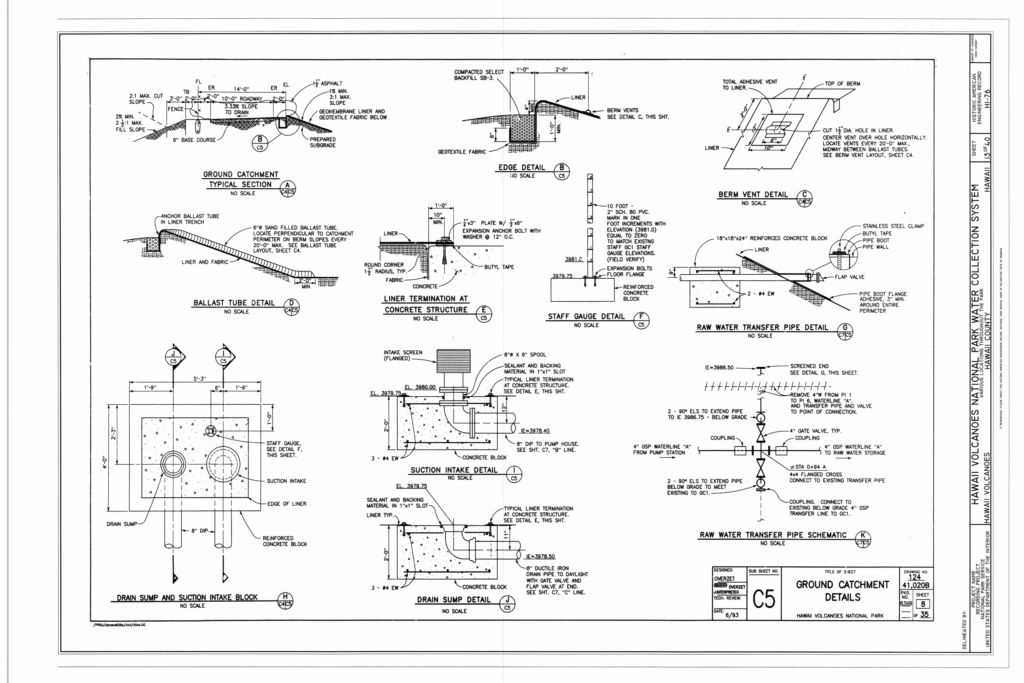
Ground Catchment Details – Hawaii Volcanoes National Park Water Collection System. Library of Congress, HAER HI-76 (sheet 13 of 40). Public domain.
Let’s be real: catchment water requires more attention than turning on a tap connected to county water. You’ll need to inspect and clean your gutters regularly, check your tanks for algae or sediment buildup, and keep an eye on your water levels, especially during dry spells.
Most people install a first-flush diverter, which automatically discards the initial runoff from each rain event. This catches the worst of the roof debris before it enters your tank. You’ll also want screens on your gutters and tank inlets to keep out mosquitoes and larger debris.
Tank maintenance involves periodic cleaning—usually every few years—where you’ll drain and scrub the interior. Some people hire professionals for this, others do it themselves. Either way, it’s part of the deal. Local companies like Island Catchment and other contractors specialize in tank cleaning and system maintenance if you’d rather go the professional route.
Keep your tanks covered and opaque to prevent algae growth from sunlight. Black polyethylene tanks are popular because they block light completely. If you’ve got older galvanized metal tanks, monitor them for rust and deterioration.
Roof Material Matters
Here’s something people don’t always consider: your roof material affects your water quality. Metal roofing is ideal for catchment—it’s smooth, doesn’t degrade, and doesn’t leach chemicals into your water. Most catchment homes on the Big Island have metal roofs for this exact reason.
Asphalt shingles are not recommended for catchment. They can leach petroleum-based compounds and deteriorate over time, contaminating your water supply. If you’re buying a catchment property with an asphalt roof, that’s a red flag worth investigating.
Painted metal roofs need to be painted with food-grade or water-safe paint. The University of Hawaii Cooperative Extension Service has published guidelines on rainwater catchment systems that cover roof materials in detail.
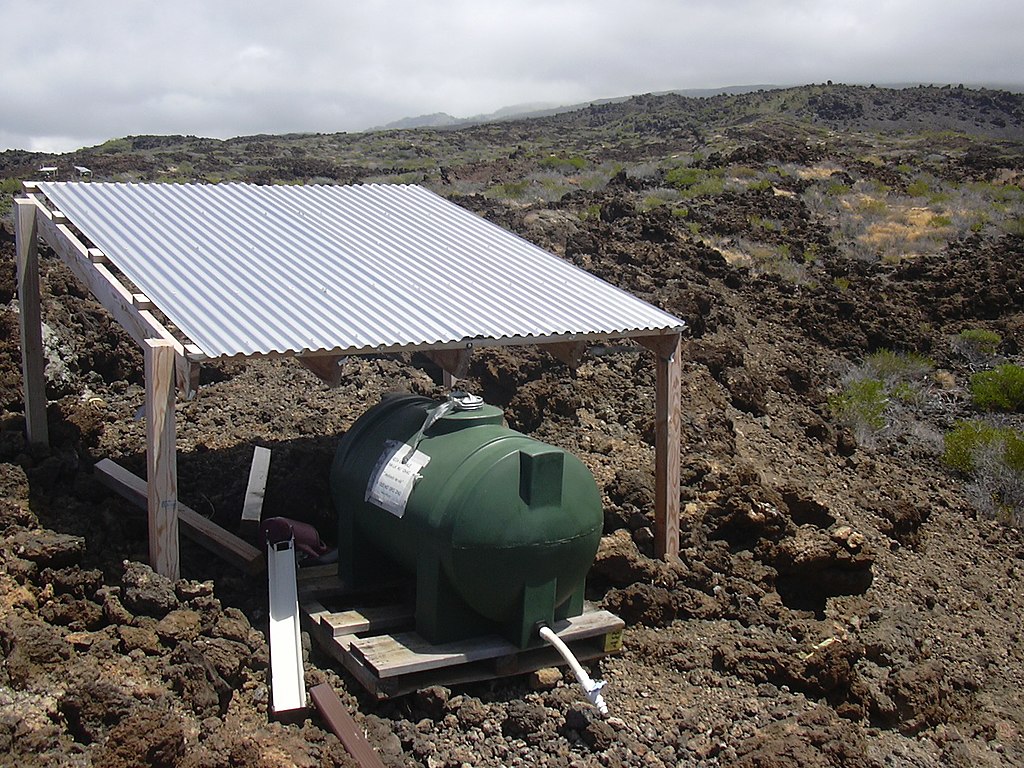
Photo by Forest & Kim Starr, CC BY 3.0
Filtration is Everything
Here’s where you don’t want to cut corners. Even with good maintenance, you need proper filtration before that water is safe to drink. Most catchment households use a multi-stage filtration system that includes sediment filters, carbon filters, and UV sterilization.
A basic setup might run you a few hundred dollars, while more sophisticated systems can cost several thousand. The filters need regular replacement—sediment and carbon filters typically every few months, UV bulbs annually. It’s an ongoing expense, but it’s essential for keeping your water safe.
Some folks go the extra mile with reverse osmosis systems for their drinking water. It’s not strictly necessary if you’ve got good filtration and UV, but it gives people peace of mind.
You should also get your water tested periodically. The Hawaii Department of Health can provide guidance on water testing, or you can use private labs like Aqua Engineers or send samples to certified mainland labs. Test for bacteria, heavy metals, and chemical contaminants at least annually, and more frequently if you notice any changes in taste, smell, or appearance.
Storage Capacity and Rainfall Patterns
Understanding your area’s rainfall patterns is crucial. Puna might get rain almost daily, while Ocean View in Ka’u can go weeks without significant precipitation. The National Weather Service Honolulu provides rainfall data and forecasts that can help you understand what to expect.
In drier areas, you need more storage capacity relative to your usage. Some Ocean View residents have 40,000-50,000 gallons of storage because dry spells can last months. In wet Puna, you might get away with less, though bigger is always better for peace of mind.
During extended dry periods, some people have water delivered by truck to fill their tanks. This runs about $100-300 depending on volume and distance, so it’s not cheap. Proper conservation and adequate storage help you avoid this expense.
Insurance Considerations
Here’s something that catches people off guard: insurance can be trickier with catchment water. Some insurance companies are hesitant about properties without county water, or they’ll charge higher premiums. The concern is fire protection—without hydrants, firefighting capability is limited.
Before you fall in love with a catchment property, talk to insurance agents who work with Big Island properties. Not all companies will cover catchment homes, and those that do may have specific requirements. Some require a minimum tank capacity or a certain volume dedicated to fire suppression.
Companies like Island Insurance, DTRIC, and First Insurance Company of Hawaii are familiar with catchment properties and may have better options than mainland insurers who don’t understand the local reality.
You might also need to demonstrate you have adequate filtration and that your system is properly maintained. Documentation helps here. Keep receipts for filter replacements, tank cleanings, and water testing.
Legal and Permitting Issues
The County of Hawaii has specific requirements for catchment systems, especially for new construction. You’ll need to meet minimum storage capacity requirements based on your home’s size and intended use. The County of Hawaii Building Division handles permitting for catchment systems.
If you’re buying an existing property, make sure the catchment system was properly permitted. Some older systems were built before current regulations existed, which can sometimes complicate insurance or future modifications.
The Cost Reality
Let’s talk numbers. Installing a new catchment system for a home typically costs:
- Tanks (20,000 gallons): $3,000-8,000
- Gutters and downspouts: $1,500-3,000
- First-flush diverters and screens: $200-500
- Filtration system: $500-3,000+
- Installation labor: $2,000-5,000
So you’re looking at roughly $7,000-20,000 for a complete system, depending on capacity and quality. Ongoing costs include filter replacements ($200-500/year), occasional tank cleaning ($300-800), and water testing ($100-300/year).
Compare that to county water bills that might run $50-100/month, and over time, catchment can be cost-competitive, especially when you factor in connection fees for hooking up to county water where available.
The Bottom Line
Living with catchment water isn’t for everyone, and that’s okay. It requires more involvement in your water supply than most people are used to. But for those who want the space, privacy, and lifestyle that comes with Big Island’s off-grid areas, it’s absolutely manageable.
The key is going in with realistic expectations. Budget for maintenance and filtration. Stay on top of cleaning. Monitor your usage during dry periods. And make damn sure you understand what you’re getting into before you buy.
Once you’ve got the routine down, catchment becomes just another part of island living. And there’s something pretty satisfying about being this connected to your resources.
Summary: Quick Takeaways
Where: Catchment is common in Puna, Ka’u (especially Ocean View), North Kohala, and rural Kona areas—basically anywhere county water lines don’t reach.
System Basics: Rain collected from roof → gutters → first-flush diverter → storage tanks (typically 10,000-30,000+ gallons).
Maintenance: Regular gutter cleaning, periodic tank cleaning (every 2-3 years), filter replacements (monthly to annually depending on type), and annual water testing.
Filtration: Multi-stage filtration with sediment filters, carbon filters, and UV sterilization is essential. Budget $500-3,000 for a quality system.
Costs: Initial installation runs $7,000-20,000; ongoing maintenance costs $400-1,000+ annually.
Insurance: Not all carriers cover catchment properties. Work with local agents familiar with Big Island’s off-grid homes and expect to document your system’s maintenance.
Roof Material: Metal roofing is ideal; avoid asphalt shingles for catchment systems.
Storage Needs: Vary by location—drier areas like Ocean View need more capacity (40,000+ gallons), while wet Puna can manage with less.
Resources: Contact the County of Hawaii Department of Water Supply, UH Cooperative Extension Service, and local catchment specialists for technical guidance and support.
Living with catchment water means taking responsibility for your own supply, but thousands of Big Island residents do it successfully every day. With proper setup and maintenance, it’s a viable long-term solution that opens up access to some of the island’s most beautiful and affordable properties.



Leave A Comment