
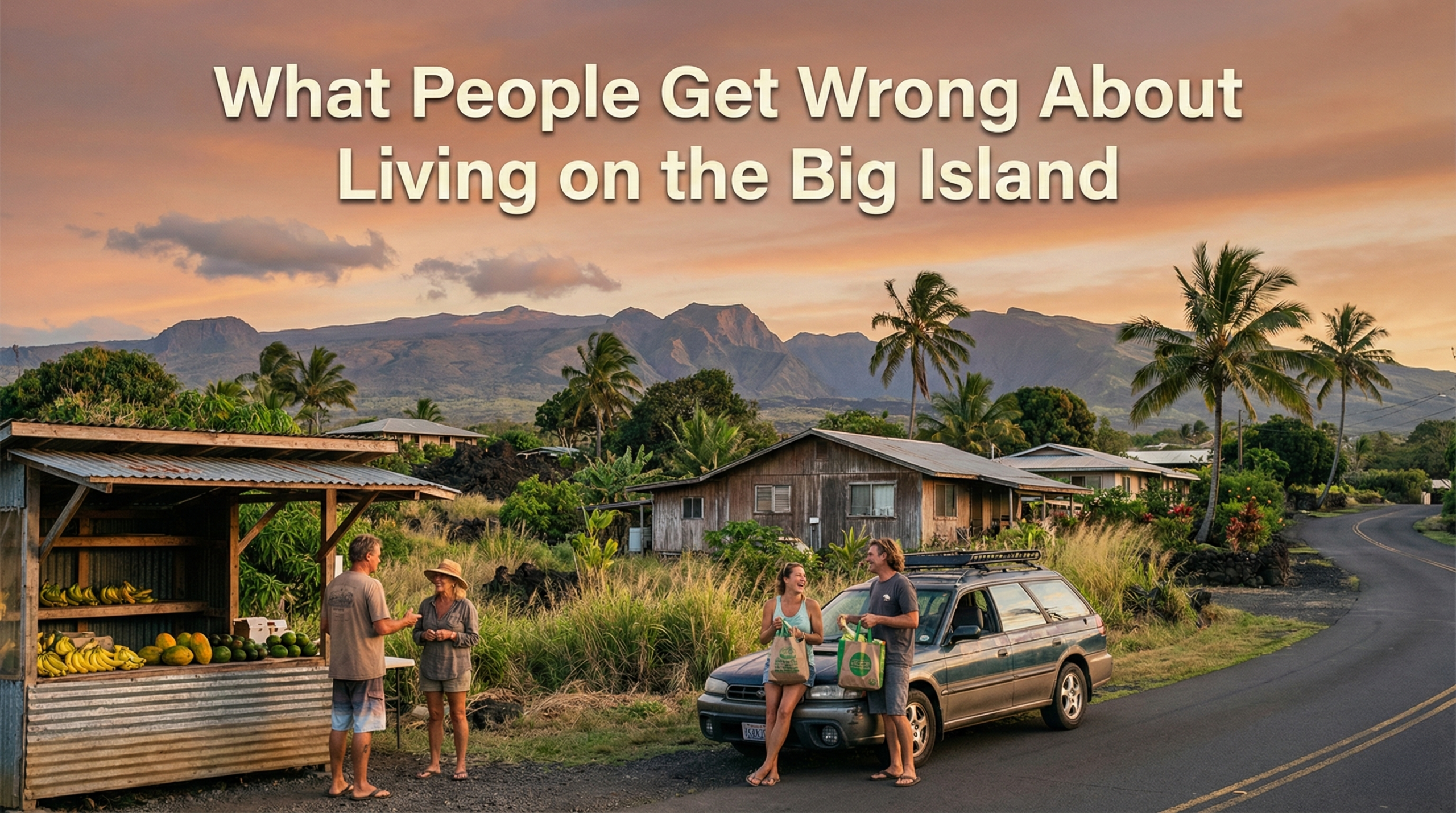
What People Get Wrong About Living on the Big Island
I’ve owned a home and lived on the Big Island of Hawaii, including time in Kealakekua, and I’ve spent time traveling all over the island. I do not currently live there, but once you’ve experienced everyday life on the Big Island, not just short visits, your understanding of the island changes permanently.
Many people fall in love with the idea of the Big Island almost immediately. From the moment you step off the plane in Hilo or Kona, the pace feels different. The air is warmer. The scenery feels expansive. There’s a sense that life slows down the moment you arrive.
That feeling is real. What people often get wrong is assuming that feeling carries over unchanged into daily life.
Vacation Hawaii and living in Hawaii are two very different experiences. Once routines take over, work schedules settle in, errands need to be run, and weather patterns become familiar, the island begins to show its true personality. For most people, that is when expectations either adjust or clash.
“It’s an island, so everything must be close”
This is one of the most common assumptions, and it usually comes from people who have not spent much time here.
Yes, it’s an island. It’s also the largest island in the Hawaiian chain, bigger than all the others combined. When I lived in Kealakekua, nothing felt close unless it truly was. A grocery run could mean a drive. A doctor appointment might take most of the morning. Meeting friends often required planning around distance and time.
Living well on the Big Island usually means choosing an area and building your life around it. People who expect to casually move across the island throughout the day often end up frustrated. People who embrace a more localized lifestyle tend to settle in more comfortably.

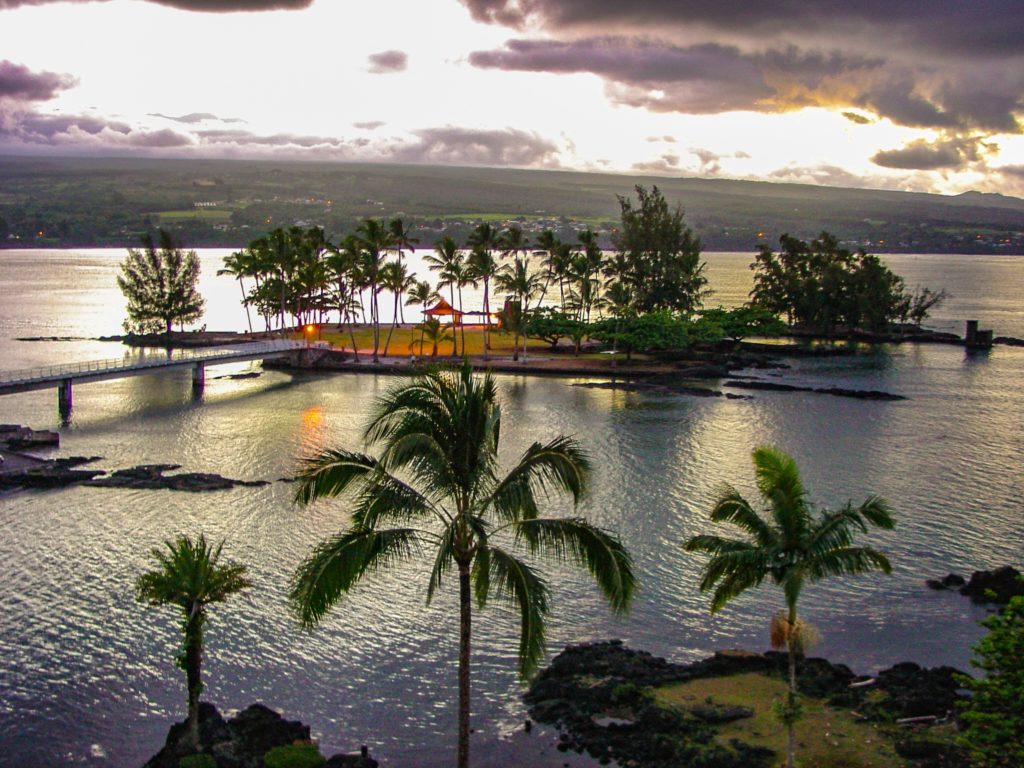
Landscape view of the Big Island of Hawaii. Photo by Robert Linsdell, licensed under CC BY.
“There’s no traffic on the Big Island”
Traffic exists here. It just looks different than what most people expect.
There are fewer major roads and very few alternate routes. One accident, construction project, or downed utility pole can slow an entire region. School mornings and work commutes can create backups even in smaller towns.
Over time, you learn to plan ahead, leave earlier (or later), and build extra time into your day. The island sets the pace more often than you do.
“The weather is basically the same everywhere”

This might be the biggest surprise for newcomers.
The Big Island has more climate variety than anywhere else in Hawaii. You can experience sunshine, rain, fog, wind, and cool mountain air in a single day without leaving the island. Elevation matters. Trade winds matter. Rain patterns matter. Even which side of a hill your home faces can change how it feels to live there.
On the west side, areas around Kailua-Kona are generally drier and sunnier. On the east side, Hilo is greener, wetter, and cooler. Neither is better. They simply support different lifestyles.
This contrast comes up often in local conversations, including this Living in Hawaii discussion that compares Hilo and Kona from people who know both sides well:
https://www.youtube.com/watch?v=132XtnouRpA&t=8s
Understanding these differences matters, especially when choosing where to live.
“Wind is not a big factor”
Wind is something many people underestimate until they live here.
Some areas experience steady trade winds that keep homes cool and comfortable. Other areas can feel calm most of the year. In certain regions, wind can affect how often you use outdoor spaces, how you ventilate your home, and even how noisy your surroundings feel.
This is one of those details that does not show up on listing photos but plays a big role in daily comfort. It’s also why neighborhood-level insight matters more than broad island descriptions.
“Island culture feels the same everywhere”
Each island has its own rhythm, and the Big Island moves at a different pace than many newcomers expect.
This is not resort Hawaii. It’s local Hawaii. Community matters. Respect matters. Patience matters. Things do not always move quickly, and that is part of the culture rather than a problem to solve.
People who arrive expecting mainland efficiency or entertainment often struggle. People who slow down and adapt usually find deeper connections and a stronger sense of belonging.
“There’s always something to do”
If you are used to constant nightlife, entertainment, and events, the Big Island can feel quiet.
Life here is more self-directed. Entertainment often looks like hiking, ocean time, farmers markets, scenic drives, and community gatherings. Evenings tend to be calmer, especially outside of town centers. I got used to planning my days differently. Early morning runs, paddles. Evening hikes and wind things down after that. Nightlife isn’t a thing and that’s ok.
Some people find this incredibly grounding. Others find it isolating. Knowing which one you are is important before making a move.

Kailua-Kona Ironman start and finish area on Aliʻi Drive, Big Island of Hawaii. Photo by dronepicr, licensed under CC BY 2.0.
“Cost of living balances out easily”
Housing can be more affordable than on some other islands, but daily expenses still add up.
Groceries, utilities, gas, and shipping costs are higher than many people expect. Certain items take longer to arrive or are harder to find. Planning ahead becomes a habit, not an inconvenience.
People who thrive here usually adjust their lifestyle instead of trying to recreate mainland convenience.
Choosing the Right Area Changes Everything
Because the Big Island is so diverse, where you live shapes your experience more than almost anything else. Kona, Hilo, South Kona, Waimea, and smaller communities all support very different ways of life.
This is where having grounded, local information becomes valuable. Community guides and neighborhood breakdowns, like the ones shared by The Agency Team Hawaii, tend to focus less on hype and more on how people actually live. Looking at areas like Kailua-Kona or Hilo through that lens helps set expectations early.
Final Thoughts
The Big Island is not for everyone, and that is perfectly okay. But for the right person, it offers something rare. Space, perspective, and a lifestyle shaped more by intention than urgency.
If you are considering a move, spend time here beyond a vacation. Drive the island. Visit different communities. Pay attention to how it feels on an ordinary weekday.
That is when the Big Island starts to make sense.
Leave A Comment