
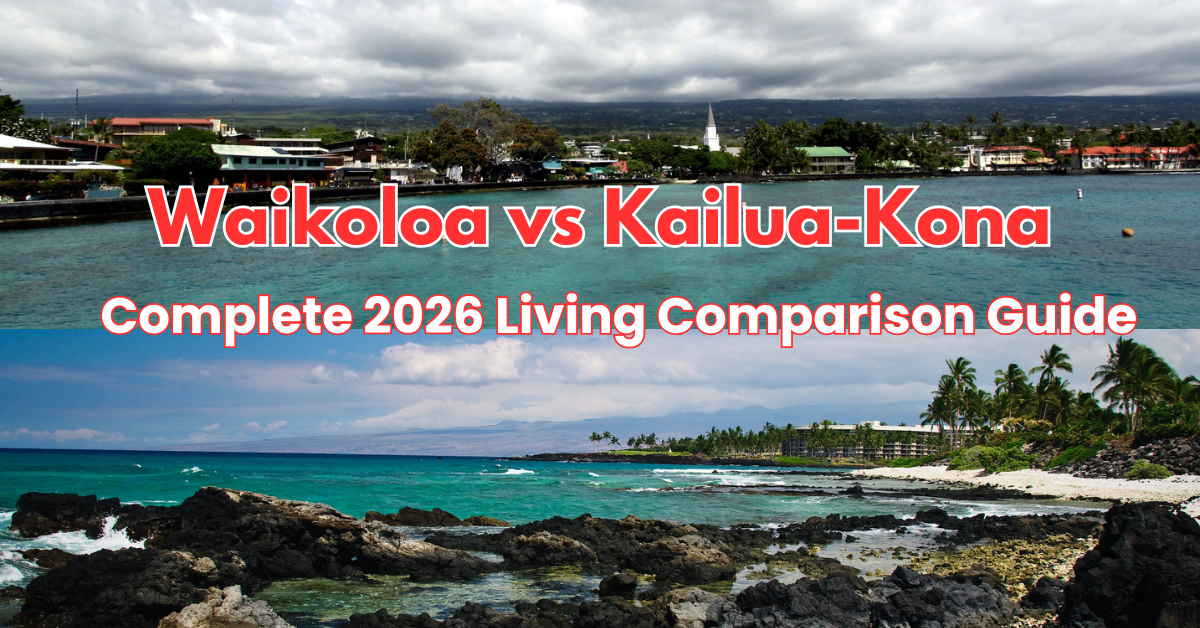
Waikoloa vs Kailua-Kona: Complete 2026 Living Comparison Guide
Choosing between Waikoloa and Kailua-Kona represents one of the most important decisions you’ll make when relocating to the Big Island. Both communities offer distinct advantages, but they cater to very different lifestyles and budgets. As someone who has extensively explored both areas and guided countless families through this exact decision, I can tell you that the “right” choice depends entirely on your priorities, work situation, and long-term goals for island life.
Take the Quiz: Is Hawaii Right For You?Meet with a Living in Hawaii Expert!
The fundamental difference comes down to this: Waikoloa offers resort-style living with newer infrastructure and higher costs, while Kailua-Kona provides a more authentic Hawaiian town experience with better job opportunities and more diverse housing options. Both areas have transformed significantly in recent years, making 2026 an interesting time to compare these two West Hawaii communities.
Geographic Overview: Understanding the Layout
Waikoloa and Kailua-Kona sit approximately 25 miles apart along the Big Island’s western coast, but they might as well be different worlds. Waikoloa encompasses two main areas: Waikoloa Village (the residential community inland) and Waikoloa Beach Resort (the coastal resort area). When people say “Waikoloa,” they usually mean the village, which sits at about 1,000 feet elevation and offers cooler temperatures than the coast.
Kailua-Kona, often simply called “Kona,” stretches along the coastline and extends inland through various neighborhoods and subdivisions. The town center hugs the ocean, with residential areas climbing up the slopes of Hualalai volcano. This creates distinct microclimates and price zones within the greater Kona area.
The drive between the two takes 20-30 minutes via Queen Kaahumanu Highway, but this commute can become a significant factor in your daily life depending on where you work and shop. Understanding this geography is crucial because it affects everything from your grocery runs to your social life.
Housing Market Reality Check: 2026 Pricing and Availability
Waikoloa Housing Market
Waikoloa Village presents a unique housing situation on the Big Island. As a planned community developed in the 1970s and 1980s, most homes here were built during a specific era, creating a relatively uniform housing stock. The median home price in Waikoloa Village in 2026 sits around $750,000 to $850,000, with most properties being single-family homes on quarter-acre to half-acre lots.
The housing here consists primarily of three-bedroom, two-bathroom homes built between 1975 and 1990. While this means you’re getting established neighborhoods with mature landscaping, it also means you’re likely looking at homes that need updating. Many properties require roof replacements, updated electrical systems, and modern plumbing. Factor in an additional $50,000 to $100,000 for major updates if you’re buying an original condition home.
Rental options in Waikoloa Village are extremely limited. When properties do become available, expect to pay $2,800 to $3,500 for a three-bedroom home. The rental market here moves fast because of the limited inventory, often requiring immediate decisions and strong rental applications.
Kailua-Kona Housing Diversity
Kona’s housing market offers much more variety, which is both an advantage and a challenge. You’ll find everything from $400,000 condos in older complexes to $2 million oceanfront estates. The sweet spot for many relocating families falls in the $600,000 to $900,000 range for single-family homes in established neighborhoods like Kealakehe, Holualoa, or the various subdivisions off Palani Road.
Unlike Waikoloa’s uniform development, Kona’s housing spans multiple decades and architectural styles. You can find 1960s plantation-style homes, 1980s tract housing, and brand-new custom builds all within the same general area. This diversity means more options but also requires more careful inspection and research.
Rental availability in Kona significantly exceeds Waikoloa, with approximately 200-300 long-term rentals available at any given time compared to Waikoloa’s 10-20. Rental prices range from $2,200 for a two-bedroom condo to $4,000+ for a luxury home with ocean views. The larger rental pool means more negotiating power and options for different budgets.
Housing Pros and Cons:
Waikoloa Pros: Planned community feel, consistent property values, golf course living, cooler temperatures
Waikoloa Cons: Limited inventory, aging housing stock, higher prices for what you get, minimal rental options
Kona Pros: Housing diversity, better rental market, more price points, newer construction options
Kona Cons: Inconsistent neighborhood quality, higher traffic, more vacation rentals affecting long-term housing
Employment and Economic Opportunities
The job market represents one of the starkest differences between these two communities. Kailua-Kona functions as the economic hub of West Hawaii, offering significantly more employment opportunities across various sectors. The town supports everything from healthcare and education to retail and professional services. Major employers include Kona Community Hospital, various medical practices, schools, retail chains, and a growing number of remote-work-friendly businesses.
Tourism-related jobs abound in Kona, from hotel management to tour operations, but the economy has diversified beyond tourism. You’ll find accounting firms, legal practices, construction companies, and various service businesses that support the broader West Hawaii community. The median household income in the greater Kona area sits around $65,000, which reflects this economic diversity.
Waikoloa’s employment picture is much more limited. Most jobs center around the resort properties (Hilton Waikoloa Village, Marriott properties), the golf courses, or the small commercial center in the village. While these can be good jobs, particularly in hospitality management, the options are narrow. Many Waikoloa residents commute to Kona for work, which adds 45-60 minutes of daily driving to their routine.
For remote workers, both communities offer adequate internet infrastructure, though Kona has more redundancy and options. Waikoloa Village recently upgraded its fiber network, but you’re still dependent on a single provider in most areas.
Daily Life and Practical Considerations
Shopping and Services
Your grocery shopping experience will differ dramatically between these two locations. Kona offers multiple full-service grocery stores including Safeway, KTA Super Stores, Target, and Costco. You can comparison shop, find specialty items, and generally live without feeling like you’re in a remote location. The variety means better prices and more options for dietary restrictions or preferences.
Waikoloa Village has one small grocery store, Waikoloa Village Market, which serves basic needs but at significantly higher prices. Most residents drive to Kona for major grocery runs, adding time and gas costs to their weekly routine. For perspective, a gallon of milk might cost $6 in Waikoloa Village versus $5 at Kona’s Safeway.
Healthcare access strongly favors Kona. Like other Big Island communities, access to medical care requires planning, but Kona offers multiple medical practices, specialists, and Kona Community Hospital. Waikoloa residents typically drive to Kona for anything beyond basic medical needs.
Recreation and Community
Both communities excel in outdoor recreation but offer different experiences. Waikoloa Village centers around two championship golf courses, making it ideal for serious golfers. The community also features tennis courts, swimming pools, and direct access to hiking trails on Mauna Kea’s lower slopes. The elevation provides cooler temperatures and less humidity, making outdoor activities more comfortable during summer months.
Kona’s recreation revolves around ocean activities and the famous Ironman culture. You’ll find world-class snorkeling, diving, fishing, and surfing within minutes of town. The community strongly supports endurance sports, with numerous running and cycling groups, swim clubs, and triathlon training opportunities. The town also offers more cultural activities, including art galleries, live music venues, and community events.
Social dynamics differ significantly between the two areas. Waikoloa Village feels more like a mainland planned community transplanted to Hawaii, with homeowners associations, community pools, and organized social activities. It attracts many retirees and second-home owners, creating a quieter, more controlled environment.
Kona maintains more of a “real Hawaii” feel, with a mix of long-time residents, newcomers, and visitors creating a more diverse and dynamic community. You’ll encounter more local culture, hear more Hawaiian language, and experience a broader range of economic backgrounds in your daily interactions.
Climate and Environmental Factors
The 1,000-foot elevation difference between Waikoloa Village and coastal Kona creates noticeably different microclimates. Waikoloa Village typically runs 5-8 degrees cooler than Kona town, which can mean the difference between needing air conditioning and comfortable natural ventilation. Summer afternoons in Kona regularly reach 85-90 degrees with high humidity, while Waikoloa Village might stay in the low 80s with lower humidity.
Both areas sit in the rain shadow of Mauna Kea and Mauna Loa, receiving minimal rainfall compared to the island’s eastern side. However, Waikoloa Village occasionally catches more afternoon showers due to its elevation, while coastal Kona can go months without meaningful rain. This affects everything from your landscaping costs to your water usage.
Trade wind patterns also differ between the locations. Kona town can experience “Kona weather” (calm, humid conditions) more frequently, while Waikoloa Village generally maintains better air circulation. If you’re sensitive to humidity or prefer consistent breezes, this becomes a significant quality of life factor.
Volcanic considerations apply to both areas, as they sit in Lava Flow Hazard Zone 4, indicating relatively low risk. However, understanding volcano zone implications remains important for insurance and long-term planning in either location.
Transportation and Commute Realities
Your transportation needs will vary significantly depending on which community you choose and where you work. Waikoloa Village residents face limited options: you drive everywhere, and you drive to Kona frequently. There’s no public transportation, no walkable commercial areas beyond the small village center, and no alternatives to car ownership.
The commute from Waikoloa Village to Kona takes 20-30 minutes under normal conditions, but this can extend to 45 minutes during peak traffic or when accidents occur on the two-lane Queen Kaahumanu Highway. Factor in gas costs, vehicle wear, and time when calculating the true cost of living in Waikoloa while working in Kona.
Kona offers slightly more transportation flexibility, though you’ll still need a car for most activities. The town has some walkable areas, particularly around the historic center and waterfront. Public transportation options remain limited but do exist, with the Hele-On bus providing basic service to other parts of the island.
Parking in Kona can be challenging, especially during busy tourist seasons or special events like the Ironman competition. Many businesses offer limited parking, and street parking fills up quickly in popular areas. Waikoloa Village eliminates these concerns with ample parking everywhere.
Cost of Living Breakdown
The overall cost of living differs between these communities in ways that aren’t immediately obvious. While housing costs might seem similar on the surface, the total cost picture varies significantly.
Waikoloa Village Additional Costs:
- Higher grocery costs due to limited options
- Increased transportation costs for commuting and shopping
- Potential HOA fees ($200-400 monthly in some areas)
- Higher utility costs due to elevation and older homes
- Limited service provider options (internet, cable, etc.)
Kona Additional Costs:
- Higher property taxes in some areas
- Potential parking fees for work or activities
- More dining and entertainment options (can increase spending)
- Higher crime-related costs (security systems, insurance)
Electricity costs favor Waikoloa Village due to cooler temperatures reducing air conditioning needs. A typical three-bedroom home in Waikoloa might average $180-220 monthly for electricity, while the same home in Kona could cost $250-300 during summer months.
Schools and Family Considerations
Families with children face different scenarios in each location. Waikoloa Village falls within the Waikoloa Elementary and Middle School district, which serves a smaller, more affluent student population. Class sizes tend to be smaller, and parent involvement is typically high. However, high school students must commute to Kona for school, adding transportation complexity to family life.
Kona offers more school options, including Kealakehe Elementary, Kealakehe Intermediate, and Kealakehe High School, plus various charter and private school alternatives. The larger population provides more extracurricular activities, sports teams, and academic programs. However, school quality can vary more significantly between different Kona-area schools.
Both communities provide access to youth sports leagues, though Kona offers more variety and competition levels. Swimming, soccer, and baseball programs exist in both areas, but Kona adds options like outrigger canoe paddling, surfing instruction, and more diverse martial arts programs.
Making the Decision: Which Fits Your Lifestyle?
Choose Waikoloa Village if you:
- Prioritize a quiet, planned community environment
- Are retired or work remotely
- Love golf and don’t mind limited dining/entertainment options
- Prefer cooler temperatures and lower humidity
- Want a more “mainland-like” community feel
- Don’t mind driving to Kona for shopping and services
Choose Kailua-Kona if you:
- Need local employment opportunities
- Want walkable areas and more dining/entertainment options
- Prefer ocean access and water sports
- Enjoy a more diverse, culturally rich community
- Want better shopping and healthcare access
- Like the energy of a “real” Hawaiian town
2026 Market Trends and Future Outlook
Both communities are experiencing growth pressures, but in different ways. Waikoloa Village faces limited expansion possibilities due to geographic constraints and water availability issues. This scarcity supports property values but also means fewer housing options for newcomers.
Kona continues expanding inland and up the slopes, with new subdivisions and developments regularly coming online. This growth provides more housing options but also increases traffic and strains infrastructure. The town is working on traffic improvements and utility upgrades, but growth often outpaces infrastructure development.
Climate change considerations favor both locations due to their elevation above sea level rise concerns, though increasing temperatures may make Waikoloa Village’s cooler climate more valuable over time. Water availability remains a long-term concern for both communities, with conservation measures likely to increase in coming years.
Investment potential differs between the locations. Waikoloa Village properties tend to hold value well due to scarcity and the golf course lifestyle appeal, but appreciation may be steadier rather than dramatic. Kona properties offer more variation in investment potential, with some areas showing strong growth while others remain flat.
Final Recommendations
The choice between Waikoloa and Kailua-Kona ultimately comes down to lifestyle priorities and practical needs. Waikoloa Village works best for those seeking a quiet, resort-like community who don’t mind driving for most services and employment. It’s particularly appealing to retirees, remote workers, and those who prioritize golf and cooler temperatures.
Kailua-Kona serves those who want to be part of a real Hawaiian community with job opportunities, cultural diversity, and easy access to ocean activities. It’s better suited for families with children, people seeking local employment, and those who enjoy the energy of a working town.
Both communities offer pathways to successful Big Island living, but understanding these differences before you move will help ensure you choose the location that truly fits your vision of island life. Take time to visit both areas during different seasons and times of day to get a real feel for daily life in each community.
Leave A Comment