
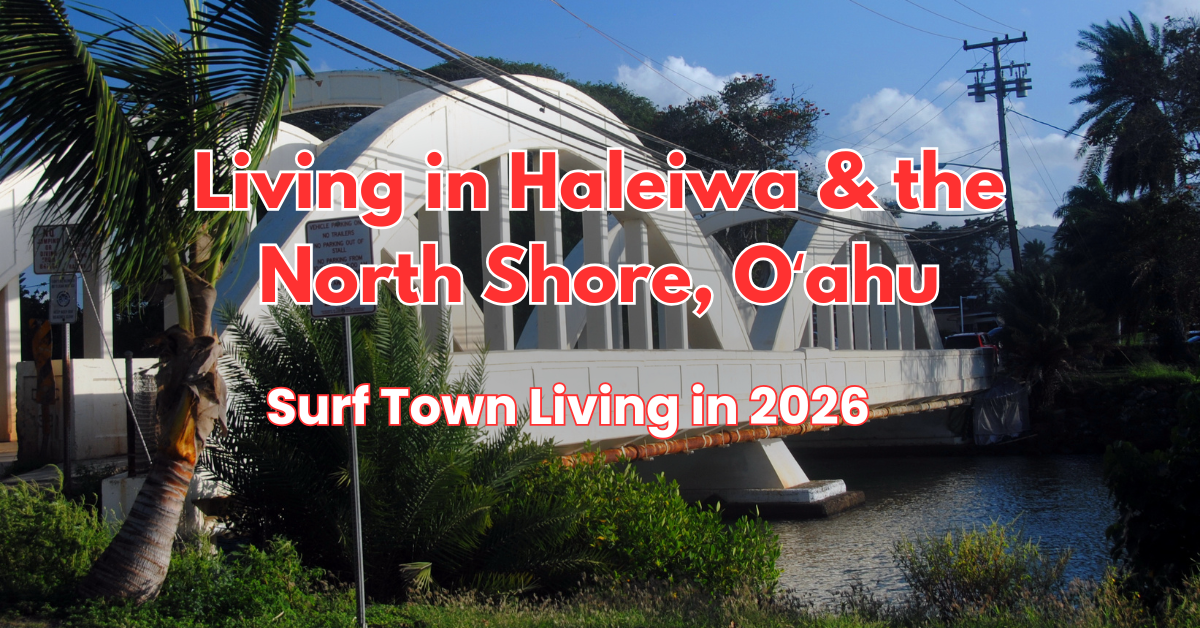
Living in Haleiwa & the North Shore, Oʻahu: Surf Town Living in 2026
Introduction to North Shore Living
For many, the phrase “living in Hawaii” conjures up a very specific mental image: a rustic wooden beach bungalow, a cruiser bicycle parked by the gate, surfboard racks on the side of a weathered truck, and a slow-paced lifestyle dictated by the rise and fall of the ocean tides. This dream is not just a fantasy: it is the daily reality for the residents of Haleiwa and the surrounding North Shore of Oʻahu. Known globally as the historic capital of professional surfing, this coastline stretches from Mokulēʻia in the west to Kahuku in the east, with the charming town of Haleiwa serving as its commercial and cultural anchor.
Take the Quiz: Is Hawaii Right For You? Meet with a Living in Hawaii Expert!
However, relocating to this iconic region in 2026 requires looking past the postcard-perfect imagery. Living on the North Shore is vastly different from spending a week-long vacation here. The region presents a unique set of logistical, financial, and environmental challenges that can catch unprepared newcomers off guard. From severe traffic bottlenecks to an aging housing stock and a highly competitive local economy, making the North Shore your permanent home demands flexibility, patience, and a deep respect for the local community. This guide offers an honest, detailed look at what it truly means to live in Haleiwa and the North Shore today.
The Geography and Neighborhoods of the North Shore
To understand the North Shore, you must understand its geography. The region is not a single contiguous town, but rather a collection of distinct micro-neighborhoods scattered along Kamehameha Highway, each with its own unique personality, microclimate, and housing style. Understanding these differences is crucial when deciding where to plant your roots.
Haleiwa Town is the historic heart of the region. Characterized by its plantation-era architecture, local boutiques, surf shops, and popular eateries, Haleiwa is the most commercialized and walkable area on the North Shore. It serves as the gateway to the rest of the coast. Living in Haleiwa offers the convenience of being close to grocery stores, restaurants, and community parks, though it also means dealing with the highest concentration of day-tripping tourists.
Just west of Haleiwa lies Waialua, a quiet residential community built around a former sugar mill. Waialua is highly favored by long-term residents and families because it is more affordable and insulated from the heavy tourist traffic of the main highway. The homes here are typically older plantation-style houses with larger yards, offering a peaceful, suburban country vibe. If you are looking for a more suburban feel, you might also consider comparing this area to other coastal communities by reading our guide on living in Kailua, Oʻahu, which offers a different take on coastal town life.
Heading east from Haleiwa, you enter the Seven Mile Miracle, the legendary stretch of coastline home to the world’s most famous surf breaks. Neighborhoods like Pupukea, Sunset Beach, and Kawela Bay line this corridor. Pupukea is unique because it extends up the mountainside, offering cooler temperatures, larger acreage lots, and stunning panoramic ocean views. Sunset Beach features oceanfront and near-ocean bungalows where the sand is literally your backyard, though these properties come with a premium price tag and exposure to the harsh coastal elements.
The Housing Market and Real Estate Realities
The real estate market on the North Shore of Oʻahu is highly competitive and carries a significant premium. Because the community is deeply committed to the “Keep the Country Country” movement, zoning laws are exceptionally strict, and large-scale residential developments are virtually non-existent. This lack of new inventory, combined with high global demand, keeps housing prices elevated.
In 2026, the median sales price for a single-family home in the Haleiwa and North Shore area ranges from $1.4 million to $1.8 million. For properties located on the ocean side of Kamehameha Highway or directly on the beach, prices easily start at $3 million and can quickly climb to over $10 million. The rental market is similarly tight, with modest two-bedroom homes or cottage units renting for $3,500 to $5,000 per month, often excluding utilities.
Beyond the purchase price, buyers must be prepared for the realities of older island infrastructure. Many homes on the North Shore were built between the 1950s and 1980s. These properties often feature post-and-pier construction, which allows for excellent airflow but requires diligent maintenance to protect against termites, rot, and moisture. Additionally, a significant portion of North Shore properties rely on individual wastewater systems, such as cesspools or septic tanks, rather than municipal sewer lines. With state-mandated deadlines to convert all cesspools to septic or aerobic treatment units by 2050, buyers must factor these conversion costs, which can range from $20,000 to over $50,000, into their long-term financial planning.
Infrastructure, Commuting, and the Turtle Traffic
One of the most significant adjustments for new residents moving to the North Shore is the infrastructure, or lack thereof. Kamehameha Highway is a two-lane road that serves as the single artery connecting the entire coastline. When this road experiences an issue, whether it is a traffic accident, a fallen tree, high surf washing over the asphalt, or simple congestion, the entire North Shore can come to a standstill.
A primary driver of daily traffic is the phenomenon known locally as “turtle traffic” near Laniakea Beach. This beautiful stretch of sand is a favorite resting spot for Hawaiian green sea turtles (honu). Because thousands of visitors stop daily to view these protected creatures, pedestrians constantly cross the two-lane highway, creating a bottleneck that can back up traffic for miles in both directions. A drive that should take five minutes can easily take forty-five minutes during peak tourist hours, which generally run from 10:00 AM to 4:00 PM daily.
For those who need to commute to Honolulu, Kapolei, or the military bases in Central Oʻahu for work, the commute can be grueling. The distance from Haleiwa to downtown Honolulu is approximately thirty miles. During the morning rush hour, which begins as early as 5:30 AM, this drive can take anywhere from seventy-five to ninety minutes each way. Because public transportation options are limited and a personal vehicle is practically mandatory for daily life here, budgeting for transportation is essential. We highly recommend reviewing our detailed analysis of the cost of car ownership in Hawaii in 2026 to understand the fuel, insurance, and maintenance costs associated with long island commutes.
Daily Living, Amenities, and the Cost of Country Life
Living on the North Shore means embracing a more rural lifestyle. You will not find major big-box retailers, massive shopping malls, or multi-screen movie theaters here. The nearest major commercial hubs, featuring stores like Costco, Target, and major medical centers, are located in Wahiawa, Mililani, or Kaneohe, each requiring a twenty to forty-minute drive depending on traffic.
For daily necessities, residents rely on local establishments. Haleiwa is home to Malama Market, a full-service grocery store, while those living further up the coast shop at the Foodland in Pupukea. While these stores are well-stocked, prices are noticeably higher than on the Mainland and even slightly higher than in Honolulu due to the logistics of transporting goods to the country. A typical grocery bill for a family of four on the North Shore can easily run $300 to $400 per week, with standard items like a gallon of milk costing around $8 to $9.
Utility costs are another major factor to consider. Hawaii has the highest electricity rates in the nation. While many homes on the North Shore do not have central air conditioning, relying instead on trade winds and ceiling fans, those who run window AC units can expect monthly electricity bills to exceed $400. Many residents invest in rooftop solar panels to offset these costs, which is highly recommended if you plan to purchase a home in the area.
Pros and Cons of Living on the North Shore
To help determine if the North Shore lifestyle matches your day-to-day expectations, it is helpful to look at the clear advantages and disadvantages of making this beautiful region your home.
The Pros of North Shore Living
- Unmatched Natural Beauty: You are surrounded by some of the most beautiful beaches, dramatic mountain ridges, and stunning sunsets in the world.
- Active Outdoor Lifestyle: World-class surfing, snorkeling, hiking, and diving are right at your doorstep, encouraging a healthy, active daily routine.
- Strong Community Identity: The North Shore has a tight-knit, small-town feel where neighbors look out for one another and local business is fiercely supported.
- Slower Pace of Life: Living here forces you to slow down, disconnect from the frantic rush of modern city life, and appreciate a simpler way of living.
The Cons of North Shore Living
- Extreme Traffic Congestion: The single-lane highway makes travel unpredictable and frustrating, especially during peak tourist hours and winter surf events.
- High Cost of Living: From real estate and rent to groceries and utilities, living in this desirable area requires a substantial financial commitment.
- Geographic Isolation: Accessing specialized medical care, major shopping centers, and airport services requires a significant drive.
- Seasonal Crowds: During the winter months, the population swells dramatically with surf tourists, media crews, and spectators, making local beaches and restaurants highly crowded.
Walkability and Getting Around Haleiwa
When considering the layout of the area, many prospective residents wonder how easy it is to get around without a vehicle. Haleiwa Town itself is highly walkable, featuring a continuous stretch of sidewalks, crosswalks, and bike lanes that connect the historic shops, restaurants, and beach parks. Because of this, Haleiwa is often highlighted among the best walkable towns in Hawaii for 2026.
However, this walkability is highly localized. Once you leave the immediate commercial core of Haleiwa Town, the infrastructure changes. The residential neighborhoods stretching along the coast toward Pupukea and Sunset Beach do not have continuous sidewalks or street lighting. While many residents use cruiser bikes to travel along the multi-use path that runs from Waimea Bay to Velvet Sides, a car remains a necessity for grocery shopping, commuting to work, and traveling outside the region.
Community, Culture, and Local Etiquette
Perhaps the most important aspect of successfully transitioning to life on the North Shore is understanding and respecting the local culture. The North Shore is a place of deep cultural heritage, and the community is highly protective of its environment and lifestyle. As a new resident, taking a humble, respectful approach to your new home is key to being welcomed into the community.
This begins with environmental stewardship. Practicing malama ka aina (caring for the land) is a core value here. This means participating in beach cleanups, reducing plastic waste, respecting wildlife by keeping a safe distance from sea turtles and monk seals, and being mindful of water usage. Ocean safety is another critical component of local culture. The winter waves on the North Shore are incredibly powerful and can be deadly. Always consult with lifeguards, pay attention to warning signs, and follow the golden rule of the ocean: “When in doubt, don’t go out.” Respecting the local surf hierarchy and giving established surfers their space in the water is also essential for maintaining harmony.
Finally, support the local economy. Instead of wishing for mainland chain stores, embrace the local boutiques, roadside fruit stands, and family-owned restaurants that give Haleiwa its unique character. By showing respect for the land, the ocean, and the people who have lived here for generations, you will find that the North Shore is not just a place to live, but a community to truly belong to.
Leave A Comment