
Building Community Fast After Moving to Hawaii in 2026: A Newcomer’s Complete Guide
Moving to Hawaii is exciting, but let’s be honest: building a genuine community from scratch can feel overwhelming. You’re thousands of miles from your mainland support network, surrounded by stunning beauty but potentially feeling isolated. The good news? Hawaii’s unique culture actually makes it easier to build meaningful connections than many mainland cities, if you know the right approach.
After helping hundreds of newcomers navigate their first year in the islands, I’ve identified the strategies that work fastest for building authentic community connections. This isn’t about surface-level networking. It’s about creating the kind of relationships that make Hawaii feel like home, not just a beautiful place you happen to live.
Understanding Hawaii’s Community Culture
Hawaii operates on different social principles than most mainland communities. The concept of ohana (family) extends far beyond blood relations, and aloha is more than a greeting. It’s a way of approaching relationships with genuine care and respect.
The Island Reality Check: Hawaii’s isolation creates tighter-knit communities by necessity. People rely on each other more than they might in a sprawling mainland city. This means relationships often develop faster and run deeper, but there’s also an unspoken expectation of reciprocity and commitment.
What This Means for You: Don’t approach community building like you’re networking at a mainland conference. Hawaiians (both native and long-term residents) can spot inauthentic relationship-building from miles away. The key is genuine interest in contributing to the community, not just extracting value from it.
The Newcomer Advantage: Contrary to what you might fear, being new can actually work in your favor. Most island residents remember their own arrival story and are often eager to help newcomers who show genuine respect and interest in island life.

The Foundation: Workplace and Neighborhood Connections
Your Workplace as Community Hub
Your job isn’t just a paycheck in Hawaii. It’s often your first and most reliable community entry point. Hawaiian workplace culture tends to be more personal than many mainland environments.
Immediate Actions:
– Accept every lunch invitation for your first month
– Volunteer for office parties or community service projects
– Ask colleagues about their weekend plans (and actually listen)
– Offer to help with work events, even if it’s outside your job description
The Reality: Hawaiian workplaces often extend into social circles. That coworker who seems friendly? They might become your hiking buddy, introduce you to their friend group, or invite you to family barbecues. These relationships often develop within 2-3 months if you’re genuinely engaged.
Industry-Specific Opportunities:
– Healthcare: Join the Hawaii Medical Association or nursing groups
– Education: Participate in teacher unions and educational conferences
– Tourism: Connect through hospitality industry meetups
– Military: Utilize base community centers and spouse groups
– Remote Workers: Join coworking spaces like BoxJelly or The Collective
Neighborhood Integration Strategies
Hawaiian neighborhoods often function like small towns, regardless of whether you’re in urban Honolulu or rural Hilo. The key is becoming a familiar, helpful presence.
Immediate Neighborhood Actions:
– Introduce yourself to immediate neighbors within your first week
– Attend homeowners association meetings (even if they seem boring)
– Participate in neighborhood cleanups or beautification projects
– Shop at local businesses and become a regular customer
– Walk your dog or exercise in neighborhood areas consistently
Timeline Expectations: Neighborhood acceptance typically takes 3-6 months of consistent, respectful presence. Don’t expect instant inclusion, but don’t give up after a few weeks either.
Everyone’s friends here in the islands. Image Copyright CyberCom, Inc.
Activity-Based Community Building
Outdoor and Fitness Communities
Hawaii’s outdoor culture creates natural community-building opportunities. These groups tend to be welcoming because they’re focused on shared activities rather than social hierarchies.
Hiking Groups:
– Hawaiian Trail and Mountain Club: Organized hikes every weekend, all skill levels
– Meetup hiking groups: Search for island-specific groups (Oahu has 15+ active groups)
– Trail maintenance volunteers: Groups like Na Ala Hele always need help
– Expected timeline: Regular participation leads to friendships within 6-8 weeks
Beach and Water Activities:
– Outrigger canoe clubs: Incredibly welcoming, meet 2-3 times per week
– Surf schools and groups: Even beginners find community quickly
– Beach volleyball leagues: Most beaches have informal regular games
– Snorkeling and diving clubs: Equipment sharing creates natural bonding
Fitness Communities:
– CrossFit boxes: Hawaiian CrossFit culture is particularly social
– Running clubs: Early morning groups are common and consistent
– Yoga studios: Many offer community events beyond regular classes
– Martial arts dojos: Traditional respect culture aligns with Hawaiian values
Pros of Outdoor Communities:
– Activities provide natural conversation starters
– Regular schedule creates consistent contact
– Shared challenges build bonds quickly
– Less pressure than purely social meetups
Cons to Consider:
– Weather dependency can disrupt consistency
– Some groups have established cliques
– Equipment costs can be significant
– Physical limitations might exclude some activities
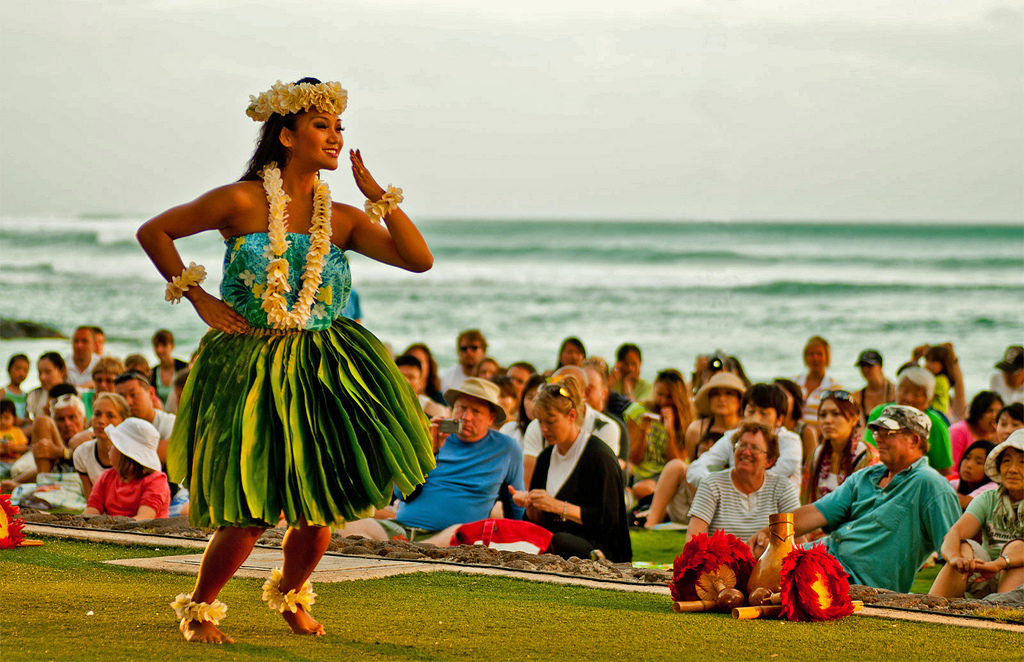
Hula is an important part of Hawaiian culture.
Kuhio Park hula dancer by Ray_LAC is licensed under CC BY 2.0. Image may have been resized or cropped from original
Cultural and Educational Groups
Engaging with Hawaiian culture respectfully while pursuing learning opportunities creates meaningful connections with both newcomers and long-term residents.
Hawaiian Cultural Learning:
– Hawaiian language classes: Community colleges offer beginner courses
– Hula halau (schools): Many welcome respectful newcomers
– Cultural centers: Bishop Museum, Polynesian Cultural Center offer volunteer opportunities
– Traditional crafts: Lauhala weaving, lei making workshops
General Learning Communities:
– Community college continuing education: Photography, cooking, art classes
– Book clubs: Libraries and bookstores host regular groups
– Lecture series: Universities and museums offer public programs
– Skill-sharing groups: Maker spaces, gardening clubs, cooking groups
Timeline Reality: Cultural groups often take longer to fully accept newcomers (6-12 months), but the relationships formed are typically deeper and more meaningful.
Professional and Service Communities
Volunteer Organizations
Volunteering is perhaps the fastest way to build authentic community connections in Hawaii. The islands have a strong tradition of community service, and volunteers are always needed.
High-Impact Volunteer Opportunities:
– Food banks and pantries: Immediate need, regular schedule, diverse volunteers
– Beach and park cleanups: Environmental groups like Surfrider Foundation
– Animal shelters: Hawaiian Humane Society and local rescue groups
– Youth programs: Mentoring, tutoring, sports coaching
– Senior services: Meals on Wheels, companion programs
Strategic Volunteering Approach:
– Commit to one organization consistently rather than scattered efforts
– Choose causes that align with your skills and interests
– Attend volunteer appreciation events and social gatherings
– Take on small leadership roles when offered
Expected Timeline: Volunteer communities typically welcome newcomers immediately, with deeper friendships forming after 2-3 months of consistent participation.

Professional Associations
Hawaii’s professional community is smaller and more interconnected than mainland equivalents, making professional associations valuable for both career and social connections.
Major Professional Groups:
– Chamber of Commerce: Each island has active chapters
– Rotary, Lions, Kiwanis: Service clubs with strong social components
– Industry-specific associations: Real estate, legal, medical, engineering groups
– Women’s professional groups: Soroptimist, Business and Professional Women
– Young professional organizations: Most islands have 20s-40s focused groups
Networking Strategy:
– Attend monthly meetings consistently for at least six months
– Volunteer for committees or event planning
– Offer your mainland expertise for presentations or workshops
– Follow up with personal coffee meetings
Faith-Based and Spiritual Communities
Religious Organizations
Hawaii’s religious communities are often central to social life, regardless of your level of faith. Many churches, temples, and spiritual centers function as community hubs.
Diverse Religious Landscape:
– Christian churches: Every denomination represented, often with strong community programs
– Buddhist temples: Particularly active in community service
– Jewish congregations: Small but tight-knit communities
– Islamic centers: Growing communities with welcoming programs
– Interfaith organizations: Focus on community service and dialogue
Engagement Strategy:
– Attend services regularly, not just occasionally
– Participate in community service projects
– Join small groups, classes, or study sessions
– Volunteer for events and fundraisers
Timeline Expectations: Faith communities often embrace newcomers quickly (2-4 weeks), but deeper integration takes 3-6 months of consistent participation.
Alternative Spiritual Communities
Hawaii’s spiritual diversity extends beyond traditional religions, offering unique community-building opportunities.
Options Include:
– Meditation groups: Buddhist, secular, and guided meditation circles
– Yoga communities: Studios often host social events and retreats
– New Age spiritual groups: Crystals, energy healing, alternative practices
– Indigenous spirituality: Respectful participation in appropriate cultural practices
Family-Focused Community Building
Parents and Families
If you have children, family-focused activities provide natural community entry points with other parents facing similar challenges.
School-Based Communities:
– Parent-Teacher Organizations: Immediate involvement opportunity
– School sports and activities: Coaching, volunteering, supporting
– Fundraising committees: Planning events and activities
– After-school program support: Tutoring, mentoring, organizing
Family Activity Groups:
– Keiki (children’s) programs: Libraries, community centers, museums
– Family hiking groups: Kid-friendly trails and beach activities
– Sports leagues: Soccer, baseball, swimming for various age groups
– Scouting organizations: Boy Scouts, Girl Scouts, adventure programs
Parenting Support Networks:
– New parent groups: Hospitals and community centers host these
– Homeschool cooperatives: Strong communities with shared resources
– Special needs support: Groups for parents of children with disabilities
– Military family support: If applicable, base family readiness groups
Timeline Reality: Parent communities often form quickly around immediate needs (school events, playdates) but deeper friendships require 4-6 months of consistent interaction.
Digital and Modern Community Building
Online to Offline Strategies
While digital connections shouldn’t replace face-to-face community building, they can accelerate the process when used strategically.
Effective Online Platforms:
– Facebook Groups: Island-specific community groups, hobby groups, newcomer groups
– Meetup.com: Activity-based groups with regular in-person meetings
– Nextdoor: Neighborhood-specific networking and information sharing
– Discord servers: Gaming, hobby, and interest-based communities
– Reddit communities: r/Hawaii, island-specific subreddits for advice and meetups
Online-to-Offline Strategy:
– Participate actively in online discussions before attending events
– Offer help or resources to establish yourself as a contributor
– Attend virtual events before in-person gatherings
– Use online connections to learn about offline opportunities
Timeline Expectations: Online connections can accelerate in-person community building by 2-4 weeks, but shouldn’t be relied upon exclusively.
Co-working and Remote Worker Communities
With remote work becoming more common, Hawaii has developed strong communities for location-independent professionals.
Co-working Spaces and Communities:
– BoxJelly (Honolulu): Established co-working with strong community events
– The Collective (Kailua): Beach-adjacent co-working with networking events
– Impact Hub Honolulu: Social enterprise focused co-working
– Island-specific spaces: Maui, Big Island, and Kauai have growing options
Remote Worker Meetups:
– Digital nomad groups: Regular meetups and co-working sessions
– Industry-specific remote groups: Tech, marketing, consulting professionals
– Entrepreneur meetups: Small business and startup communities
– Freelancer support groups: Shared resources and networking
Overcoming Common Community Building Challenges
The “Locals vs. Newcomers” Dynamic
The Reality: Some long-term residents may initially view newcomers with skepticism, especially if they perceive you as contributing to housing costs or cultural changes.
Strategies for Respectful Integration:
– Learn basic Hawaiian words and their proper pronunciation
– Understand local customs (removing shoes, bringing food to gatherings)
– Avoid comparing Hawaii negatively to the mainland
– Show genuine interest in local history and culture
– Support local businesses over chain stores when possible
– Be patient with the “Hawaii time” concept
Timeline: Earning respect as a newcomer typically takes 6-12 months of consistent, respectful behavior.
Dealing with Isolation and Homesickness
Expected Challenges:
– Missing mainland family and friends
– Feeling overwhelmed by cultural differences
– Struggling with the high cost of social activities
– Experiencing seasonal depression despite the beautiful weather
Coping Strategies:
– Schedule regular video calls with mainland connections
– Create familiar routines in your new environment
– Budget for social activities as an essential expense
– Seek counseling if isolation becomes overwhelming
– Remember that adjustment typically takes 6-18 months
Budget-Conscious Community Building
The Financial Reality: Hawaii’s high cost of living can make social activities expensive, but community building doesn’t have to break the budget.
Free and Low-Cost Options:
– Beach activities and hiking (free)
– Library programs and events (free)
– Community college classes ($50-200 per semester)
– Volunteer activities (free, often includes meals)
– Religious services and events (free)
– Neighborhood cleanups and community service (free)
Budget-Friendly Social Strategies:
– Host potluck gatherings at your home
– Organize group activities to split costs (boat rentals, equipment)
– Take advantage of resident discounts (kamaaina rates)
– Participate in free community festivals and events
– Join groups that meet in public spaces rather than paid venues
DSC_5469 by Eric Chan is licensed under CC BY 2.0. Image may have been resized or cropped from original.
Creating Your Community Building Action Plan
Month 1: Foundation Setting
Week 1-2: Immediate Neighborhood Integration
– Introduce yourself to immediate neighbors
– Find and visit local coffee shop, grocery store, restaurant regularly
– Join one online community group for your area
– Sign up for library card and explore programs
Week 3-4: Workplace and Activity Exploration
– Accept all social invitations from coworkers
– Research and visit 3-4 potential activity groups (hiking, fitness, hobby)
– Attend one volunteer orientation
– Visit one religious or spiritual community if applicable
Month 2-3: Consistent Participation
Commitment Strategy:
– Choose 2-3 activities and attend consistently
– Volunteer for one organization regularly (weekly or bi-weekly)
– Attend one professional or networking event monthly
– Host or organize one social gathering (even if small)
Relationship Building:
– Exchange contact information with potential friends
– Follow up with coffee dates or casual meetups
– Offer help or assistance to new connections
– Invite people to activities you enjoy
Month 4-6: Deepening Connections
Leadership and Investment:
– Take on small volunteer leadership roles
– Organize group activities or outings
– Join committees or planning groups
– Mentor other newcomers when possible
Community Investment:
– Support local businesses regularly
– Participate in community events and festivals
– Advocate for causes important to your new community
– Share your mainland skills and expertise
Measuring Your Community Building Success
Healthy Community Integration Indicators
After 3 Months, You Should Have:
– 3-5 regular activity partners or acquaintances
– 1-2 people you could call for help in an emergency
– Knowledge of local customs and basic Hawaiian phrases
– Participation in at least one regular community activity
After 6 Months, You Should Have:
– 2-3 genuine friendships beyond activity partners
– Invitations to social gatherings and celebrations
– A sense of belonging in your neighborhood
– Understanding of local politics and community issues
After 12 Months, You Should Have:
– A support network comparable to what you left on the mainland
– Leadership roles or significant contributions in chosen communities
– Deep knowledge of your island’s culture and history
– The ability to help other newcomers integrate
Red Flags: When to Adjust Your Strategy
Warning Signs:
– Still feeling completely isolated after 6 months
– Only socializing with other recent mainland transplants
– Avoiding community events due to feeling unwelcome
– Comparing everything negatively to your previous home
– Spending all free time alone or only with family
Course Corrections:
– Seek counseling or support groups
– Try completely different types of activities
– Consider moving to a different neighborhood
– Examine your own attitudes and behaviors honestly
– Connect with other successful newcomers for advice
The Long-Term Community Vision
Building authentic community in Hawaii isn’t just about making friends. It’s about becoming a contributing member of a unique island society that values relationships, respect, and reciprocity. The connections you build in your first year will likely become the foundation of your Hawaiian life for decades to come.
Your Community Building Legacy:
As you become established, you’ll have the opportunity to help other newcomers navigate the same challenges you faced. This cycle of support and mentorship is fundamental to Hawaiian community culture and will deepen your own sense of belonging.
The Investment Payoff:
The time and energy you invest in community building during your first year will pay dividends for as long as you live in Hawaii. Strong community connections provide emotional support, professional opportunities, emergency assistance, and the deep sense of belonging that transforms Hawaii from a beautiful place you live into your true home.
Remember, building genuine community takes time, patience, and authentic investment in others. But for those who approach it with the right mindset and strategies, Hawaii offers the opportunity to build some of the most meaningful and lasting relationships of your life. The key is starting immediately, staying consistent, and always approaching others with genuine aloha.
Leave A Comment