
Hawaii Grocery Strategy 2026: Where to Shop for Best Prices & Save Money
Living in Hawaii means dealing with some of the highest grocery prices in the nation, but it doesn’t mean you have to break the bank every time you need food. After years of navigating the islands’ grocery landscape, I’ve developed a comprehensive strategy that can cut your monthly food bill by 30-40% without sacrificing quality or variety.
The key isn’t just finding the cheapest store. It’s understanding the complex ecosystem of Hawaii’s grocery market and knowing exactly when, where, and how to shop for maximum savings. From understanding shipping schedules to leveraging local produce seasons, this guide will transform how you approach grocery shopping in paradise, no matter which island you call home.
Understanding Hawaii’s Grocery Price Reality
Hawaii’s grocery prices are approximately 60-70% higher than the mainland average, with some items reaching shocking premiums. A gallon of milk that costs $3.50 in California will run you $6-8 in Hawaii. Ground beef averages $8-12 per pound compared to $4-6 on the mainland. These aren’t just tourist trap prices. This is the reality of island living driven by shipping costs, limited competition, and geographic isolation.
The Jones Act, which requires goods shipped between U.S. ports to use American-flagged vessels, adds significant cost to everything imported. Since Hawaii imports roughly 90% of its food, this federal regulation directly impacts your grocery bill. Understanding this helps explain why a box of cereal can cost $7-9 when it’s $3-4 on the mainland.
But here’s what most newcomers don’t realize: prices vary dramatically between stores, islands, neighborhoods, and even days of the week. The same loaf of bread might cost $4.99 at one store and $2.99 at another just five miles away. And residents on neighbor islands often face even higher prices than Oahu shoppers, since goods are sometimes shipped to Honolulu first and then redistributed. Learning these patterns is crucial to your grocery budget survival.
The Big Players: Statewide Chain Store Strategies

Foodland: The Local Favorite with Premium Pricing
Foodland is Hawaii’s largest locally owned grocery chain with over 30 locations across the state, including stores on Oahu, Maui, the Big Island, and Kauai. Their convenience comes at a premium, with average prices running 15-25% higher than competitors. That said, their Maikai rewards program can offset some costs, and their fresh poke counters are consistently excellent.
Foodland Strategy: Shop their weekly specials (Wednesday-Tuesday cycles) and focus on local items where they have direct supplier relationships. Their poke is competitively priced at $12-15 per pound compared to $18-22 at specialty shops. Avoid packaged goods and household items here unless they’re on deep discount.
Foodland Farms vs. Regular Foodland: Foodland Farms locations (Ala Moana and Kahala on Oahu, Mauna Lani on the Big Island) offer better produce quality but higher prices. Regular Foodland stores in residential areas tend to have more competitive pricing on staples.
Safeway: Mainland Pricing Power
Safeway leverages its mainland buying power to offer some of the most competitive prices on packaged goods and national brands. You’ll find Safeway stores on Oahu, Maui (four locations including Kihei, Lahaina, and two in Kahului), and Kauai. Their Just for U digital coupons program is essential, often providing 20-50% discounts on regular purchases.
Safeway Strengths: Packaged goods, frozen foods, dairy, and household items. Their store brands (Safeway Select, O Organics) offer 30-40% savings over name brands with comparable quality. The pharmacy rewards program adds extra savings on groceries.
Safeway Weaknesses: Limited local produce selection and higher prices on fresh fish and local specialties. Their meat department is adequate but not exceptional compared to local competitors.
Times Supermarket: The Value Champion
Times consistently offers the lowest prices on staples. Family-owned since 1949, they focus on value over ambiance. Expect savings of 20-30% on basic groceries compared to Foodland or Whole Foods. Times has 24 locations on Oahu, two stores on Maui (Kihei and Honokowai), and operates the Big Save Markets chain on Kauai.
Times Strategy: This should be your primary store for rice, canned goods, pasta, and household essentials. Their produce section varies by location, with newer stores offering better selection.
Times Insider Tip: Shop early morning (7-9 AM) for best produce selection and freshest items. Their turnover is high, so afternoon shopping often means picked-over selections.
Target and Walmart: The Mainland Price Anchors
Don’t overlook Target and Walmart for grocery shopping. Both carry groceries and offer pricing that’s significantly lower than traditional Hawaii grocery stores on packaged goods, snacks, beverages, and household staples.
Target has five locations across the state: three on Oahu, one in Kahului on Maui, one in Kailua-Kona on the Big Island, and one in Lihue on Kauai. Target’s private-label Good & Gather brand is a standout, offering quality comparable to name brands at a fraction of the price. Their grocery sections vary by location, but even the smaller ones carry a solid selection of packaged goods, frozen foods, dairy, snacks, and some fresh produce. Download the Target Circle app for regular discounts that stack.
Walmart has locations on Oahu, Maui (Kahului), the Big Island (Hilo and Kailua-Kona), and Kauai (Lihue). Walmart’s prices tend to be the lowest of any non-warehouse option on packaged goods and household items. The grocery selections are full-sized, and Walmart’s Great Value brand is hard to beat on price. The trade-off is a less pleasant shopping experience and limited local product selection.
Target/Walmart Strategy: Use these stores for packaged goods, household items, personal care products, baby supplies, snacks, and beverages. Their mainland-anchored pricing on these categories consistently undercuts local chains. Don’t rely on them for fresh fish, poke, or local produce, as that’s where the local chains and farmers markets will always win.
Island-Specific Stores and Hidden Gems
Oahu: Don Quijote and Ethnic Markets
Don Quijote: The 24-Hour Game Changer
Don Quijote revolutionized Hawaii grocery shopping when they arrived from Japan. Open 24/7 with incredibly competitive prices on both local and Asian products, they’ve become essential for budget-conscious Oahu shoppers.
Don Quijote Advantages: Lowest prices on rice (50-lb bags for $35-45), Asian vegetables and fruits, fresh fish, and prepared foods. Their bento boxes ($4-6) compete directly with local plate lunch spots. The variety of Japanese products is unmatched outside of specialty import stores.
Don Quijote Strategy: Shop late evening or early morning to avoid crowds. Their produce moves fast, so popular items sell out by midday. Stock up on rice, noodles, and pantry staples here. Their fresh fish counter offers sashimi-grade fish at wholesale prices.
Ethnic Markets: Oahu’s diverse population supports numerous ethnic markets offering specialized products at competitive prices. Filipino markets excel at rice, canned goods, and tropical vegetables. Korean markets are great for produce, seafood, and prepared foods. Japanese markets offer the best fresh fish, noodles, and specialty items. Vietnamese markets are your go-to for herbs, vegetables, and bulk spices.
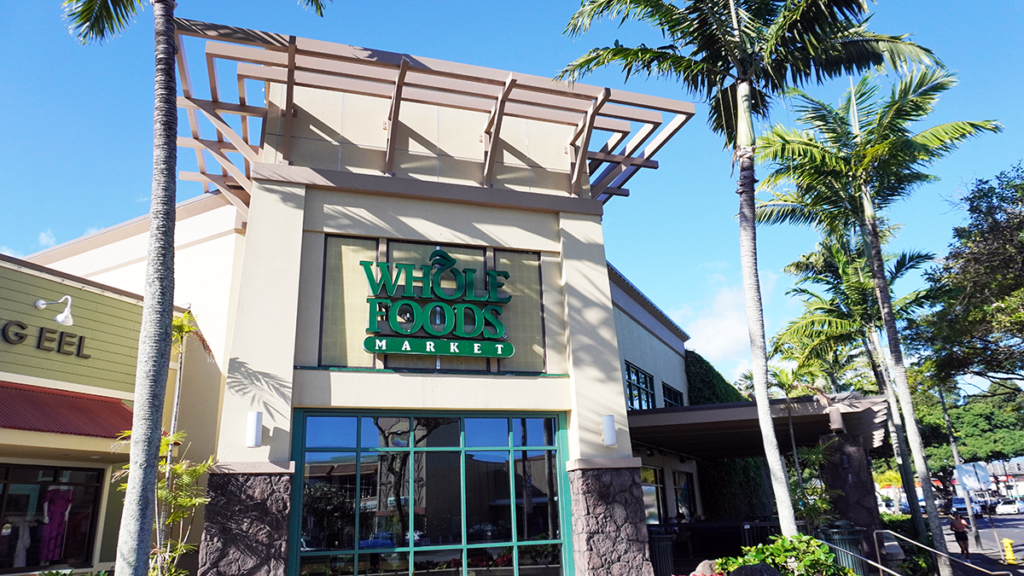
Whole Foods Kailua Town
Oahu: Whole Foods and Costco
Whole Foods: Strategic Splurging
While Whole Foods commands premium prices, strategic shopping here can provide value on specific categories. Their bulk bins, 365 store brand, and rotating sales make certain items competitive.
Whole Foods Value Plays: Bulk nuts, grains, and spices offer 40-60% savings over packaged equivalents. Their 365 brand competes with Times on organic staples. The prepared food bar charges by weight, making it reasonable for single portions.
When to Avoid Whole Foods: Regular produce, meat, and dairy are consistently 50-100% higher than competitors. Save this for specialty items and bulk purchases only.
Costco: The Bulk Buying Essential
Costco is hands down the cheapest option for bulk groceries across all islands. Locations include Oahu (multiple stores), Maui (Kahului), Big Island (Kona), and Kauai (Lihue). A membership pays for itself quickly in Hawaii given the price gaps on staples. Ideal for rice, cooking oil, proteins, dairy, and household items.
Maui: Island Grocery Depot, Mana Foods, and More
Maui residents and visitors have a different grocery landscape than Oahu. There’s no Don Quijote on Maui, and most of the major stores are concentrated in Kahului, the island’s commercial hub.
Island Grocery Depot: This is one of Maui’s best-kept secrets for budget grocery shopping. Island Grocery Depot focuses on value pricing and has earned a reputation among locals as the go-to for everyday staples at lower prices than Foodland or Times.
Mana Foods (Paia): Located in the heart of Paia town, Mana Foods has been a Maui institution for over 30 years. It’s a natural and organic grocery with a strong local following, excellent prepared foods, a solid bulk section, and fresh baked goods. It’s not the cheapest option, but for quality natural products and specialty items, it’s hard to beat on Maui.
Maui Shopping Route: Most budget-conscious Maui residents build their routine around a trip to Costco, Target, or Walmart in Kahului for bulk and packaged goods, supplemented by Safeway or Times in Kihei or West Maui for weekly fresh items. Foodland fills in the gaps with its convenient locations across the island and reliable poke counters.
Maui Farmers Markets: The Upcountry Farmers Market and various community markets offer excellent local produce at fair prices. Maui-grown items like Kula strawberries, onions, and lavender products are seasonal highlights.
Big Island: KTA Super Stores and ChoiceMart
The Big Island has the most diverse grocery landscape of the neighbor islands, partly because of its size and partly because of its strong local agriculture scene.
KTA Super Stores: The Big Island’s Own
KTA is to the Big Island what Times is to Oahu: a family-owned, community-focused chain that prioritizes value and local products. Founded in 1916 in Hilo, KTA has grown to eight locations across the island, including stores in Hilo, Kailua-Kona, Keauhou, Waimea, Waikoloa Village, and Kealakekua.
KTA’s Mountain Apple Brand program is a standout feature, spotlighting locally produced and manufactured goods. You’ll find fresh Big Island produce, local meats, and prepared foods that reflect the island’s diverse food culture. Their poke and prepared food counters rival Foodland’s quality, and their pricing is generally more reasonable.
KTA Strategy: Use KTA as your primary grocery store on the Big Island. Their produce sections feature a strong lineup of locally grown fruits and vegetables, and their seafood counters carry fresh catches. The Puainako (Hilo) and Kailua-Kona locations are the largest and best-stocked.
ChoiceMart (Captain Cook)
Located in the Kealakekua Ranch Center in Captain Cook, ChoiceMart is an independent supermarket that’s become a beloved stop for South Kona residents. Owned by the historic Kealakekua Ranch, the store traces its roots back to the 1800s and the original Greenwell Store.
ChoiceMart carries over 35,000 products and emphasizes local sourcing, stocking Big Island grass-fed beef, fresh fish from local fishermen, locally grown produce, Kona coffee, and honey. Their poke and seafood counter is excellent, and they carry a strong selection of natural and organic products. For anyone living in or passing through South Kona, ChoiceMart saves you the long drive to Kailua-Kona for a full grocery run.
Big Island Shopping Route: Combine a Costco or Target/Walmart run in Kona for bulk and packaged goods with regular trips to KTA for fresh items and local products. If you’re in South Kona, ChoiceMart covers most daily needs. Safeway in Hilo and Kona fills gaps on mainland brands. The Hilo Farmers Market (Wednesday and Saturday) and Kona farmers markets offer outstanding local produce at fair prices.
Kauai: Big Save Markets
Kauai has the most limited grocery options of the major islands, which makes strategic shopping even more important.
Big Save Markets: Kauai’s Neighborhood Chain
Big Save is owned by Times Supermarkets and operates five stores across Kauai in Hanalei, Kapaa, Koloa, Eleele, and Waimea, plus a Times location in Lihue. Big Save focuses on value pricing and local products, stocking Kauai-grown items like Kauai Shrimp, Hanalei Poi, Kapaa Bananas, and fresh pork from Kaneshiro Farms.
Big Save’s “Taste of Times” deli counters serve plate lunches, poke, and sushi that make for quick, affordable meals. The stores also carry a solid selection of Asian and Polynesian dry goods, including hard-to-find Filipino staples.
Kauai Shopping Route: Target (Lihue) and Costco (Lihue) are your anchors for packaged goods and bulk items. Supplement with Big Save or Safeway for fresh items and local products. Kauai’s Sunshine Markets, held at various locations throughout the week, are excellent for local produce at the best prices on the island. Foodland locations provide convenient backup options.
Local Farmers Markets Across the Islands
Hawaii’s farmers markets offer the best prices on local produce when you know how to shop them. The Saturday KCC Farmers Market on Oahu is tourist-focused with premium pricing, but weekday markets in residential areas across all the islands offer real value.
Best Value Markets:
– Oahu – Honolulu Farmers Market (Wednesday, Blaisdell): Local vendors, competitive prices
– Oahu – Kailua Thursday Market: Smaller but focused on local farms
– Maui – Upcountry Farmers Market: Great local produce at fair prices
– Big Island – Hilo Farmers Market (Wednesday and Saturday): One of the best in the state
– Kauai – Sunshine Markets: Rotating locations throughout the week
Farmers Market Strategy: Arrive in the last hour for best deals as vendors prefer to sell rather than pack up. Bring cash for additional discounts. Focus on seasonal items where local production is high.
The Weekly Shopping Strategy That Works
Monday-Tuesday: Stock Up Days
Start your week at your primary value store (Times or Don Quijote on Oahu, KTA on the Big Island, Big Save on Kauai, Times on Maui) for staples. These stores restock over the weekend, so Monday-Tuesday offers the best selection. Focus on non-perishables, rice, canned goods, and frozen items.
Monday Shopping List:
– Rice (buy 20-50 lb bags for maximum savings)
– Canned goods and pantry staples
– Frozen vegetables and proteins
– Household items and paper products
Wednesday-Thursday: Fresh Food Focus
Mid-week is prime time for fresh produce and proteins. Farmers markets are active, and stores have fresh shipments without weekend crowds.
Wednesday-Thursday Strategy: Hit farmers markets first for local produce, then supplement at your go-to chain for items not available locally. This is your fresh fish shopping window at Don Quijote (Oahu), KTA (Big Island), or local fish markets.
Friday-Sunday: Avoid or Strategic Shop
Weekend shopping in Hawaii means crowds and picked-over selections. If you must shop weekends, focus on Safeway or Foodland for their weekend specials, but expect longer lines and limited availability on sale items.
Weekend Exception: Sunday evening shopping at Don Quijote (Oahu) offers good selection with fewer crowds as locals prep for the work week.
Money-Saving Hacks Most Residents Don’t Know
The Shipping Schedule Advantage
Hawaii’s grocery supply chain operates on predictable shipping schedules. Most stores receive major shipments Tuesday-Thursday, meaning Monday shelves are depleted and Friday-Sunday selections are picked over. Neighbor islands often receive shipments a day or two after Oahu, so adjust your timing accordingly.
Shipping Schedule Strategy: Shop Tuesday-Thursday for best selection and freshest items. Stores often mark down items before new shipments arrive, creating unexpected bargains on Monday evenings.
Digital Coupon Stacking
Hawaii stores allow aggressive coupon stacking that can create incredible deals. Combine manufacturer coupons, store digital coupons, and loyalty program discounts for savings of 50-80% on regular prices.
Advanced Coupon Strategy:
1. Download all store apps (Safeway Just for U, Foodland Maikai, Times Rewards, Target Circle)
2. Check manufacturer websites for printable coupons
3. Use Ibotta and similar apps for cash back
4. Stack during promotional weeks for maximum impact
Bulk Buying Groups
Join or create bulk buying groups through social media or neighborhood associations. Costco membership pays for itself, but group buying from restaurant supply stores or direct from distributors can provide even better savings.
Bulk Buying Targets: Rice, cooking oil, canned goods, frozen proteins, and household items. A group of 5-10 families can access wholesale pricing on staples, reducing individual costs by 30-50%.

Store-by-Store Price Comparison Guide
Staples Price Breakdown (Average 2026 Prices)
Rice (50 lb bag):
– Costco: $32-38
– Don Quijote: $35-42
– Times/Big Save/KTA: $38-45
– Walmart: $40-48
– Safeway: $45-52
– Foodland: $48-55
Ground Beef (per lb):
– Walmart: $7-9
– Times/KTA: $7-9
– Safeway: $8-10
– Don Quijote: $8-11
– Foodland: $10-13
– Whole Foods: $12-16
Milk (gallon):
– Costco: $5-6
– Walmart: $5.50-6.50
– Times/Big Save/KTA: $5.50-6.50
– Safeway: $6-7
– Don Quijote: $6-7.50
– Foodland: $7-8
– Whole Foods: $7.50-9
Bread (standard loaf):
– Walmart: $2-3
– Times/KTA: $2.50-3.50
– Target: $2.50-3.50
– Don Quijote: $2.50-4
– Safeway: $3-4
– Foodland: $3.50-5
– Whole Foods: $4-6
Note: Neighbor island prices may run slightly higher than these ranges, which are based primarily on Oahu pricing. Factor in an additional 5-15% for Maui, Big Island, and Kauai locations.
Produce Price Patterns
Local produce follows seasonal patterns that smart shoppers can exploit. Papaya, bananas, and avocados are consistently cheaper than mainland equivalents, while imported items like apples and stone fruits carry heavy premiums. The Big Island and Maui have particularly strong local agriculture, so residents on those islands can lean even harder into locally grown options.
Always Buy Local: Papaya ($1-2 each), bananas ($2-3/lb), coconuts ($2-4 each), local greens ($3-5/bunch)
Seasonal Bargains: Mango (summer, $1-3/lb), lychee (late spring, $4-6/lb), rambutan (fall, $5-8/lb)
Avoid When Possible: Imported stone fruits, berries, and out-of-season mainland produce
Creating Your Personal Shopping Route
The Efficient Multi-Store Strategy
Most successful Hawaii grocery shoppers use a multi-store approach, hitting 2-3 stores per week based on their strengths. Here’s a proven route system:
Primary Store (70% of purchases): Times or Don Quijote (Oahu), KTA (Big Island), Big Save (Kauai), or Times/Safeway (Maui) for staples, household items, and basic proteins
Secondary Store (20% of purchases): Safeway, Target, or Walmart for packaged goods, dairy, and items not available at your primary store
Specialty Shopping (10% of purchases): Farmers markets for local produce, Whole Foods for specific organic items, local fish markets for premium seafood
Geographic Considerations by Island
Oahu East Side: Times (Kailua), Don Quijote (Kahala), Wednesday Kailua Farmers Market
Oahu West Side: Times (Pearl City), Safeway (Kapolei), Don Quijote (Waipahu), Target/Walmart
Oahu Central/North Shore: Times (Mililani/Wahiawa), Costco (Iwilei), Foodland (Haleiwa), Saturday Haleiwa Farmers Market
Maui: Target/Walmart/Costco (Kahului) for bulk runs, Safeway or Times (Kihei/West Maui) for weekly shops, Island Grocery Depot for value, Mana Foods (Paia) for natural/organic, local farmers markets
Big Island – Kona Side: KTA (Kailua-Kona/Keauhou), Costco (Kona), Target/Walmart (Kailua-Kona), ChoiceMart (Captain Cook), Kona farmers markets
Big Island – Hilo Side: KTA (Hilo/Puainako), Walmart (Hilo), Safeway (Hilo), Hilo Farmers Market (Wed/Sat)
Big Island – Kohala/Waimea: KTA (Waimea/Waikoloa Village), Foodland Farms (Mauna Lani)
Kauai: Target/Costco (Lihue), Big Save (nearest location), Safeway (Lihue/Kapaa), Sunshine Markets for local produce

Budget Planning and Tracking
Realistic Budget Expectations
A single person can expect to spend $400-600 monthly on groceries with strategic shopping. Families of four typically spend $1,200-1,800 monthly, significantly higher than mainland averages but manageable with proper planning. Neighbor island residents should budget toward the higher end of these ranges, as selection is more limited and some items carry additional shipping surcharges.
Budget Allocation Strategy:
– 40% Staples (rice, canned goods, household items)
– 30% Fresh proteins and dairy
– 20% Produce and local items
– 10% Convenience and specialty items
Tracking Tools That Work
Use smartphone apps to track prices across stores and identify your personal best deals. The Flipp app aggregates Hawaii store circulars, while Basket helps compare prices in real-time.
Essential Tracking Categories:
– Monthly staple purchases (rice, oil, canned goods)
– Protein prices per pound across stores
– Seasonal produce price patterns
– Household item bulk buying opportunities
Seasonal Shopping Strategies
Summer (May-September): Local Abundance
Summer brings peak local production and tourist season pricing pressures. Focus on local fruits and vegetables while avoiding tourist-heavy stores during peak hours.
Summer Priorities: Stock up on local mangoes, lychee, and summer vegetables. Buy frozen proteins in bulk to avoid tourist season price spikes. Shop early morning or late evening to avoid crowds.
Fall (October-December): Preparation Season
Fall offers the best time for bulk purchases as stores prepare for holiday demand. Take advantage of pre-holiday sales on non-perishables and household items.
Fall Strategy: Build pantry stock before holiday price increases. Focus on canned goods, rice, and frozen items. This is prime bulk buying season with group purchases.
Winter (January-March): Tourist Season Survival
Peak tourist season means higher prices and crowded stores. Stick to local markets and off-tourist-path stores for better deals and selection.
Winter Adaptations: Avoid Waikiki, resort areas in Maui, and Kona resort corridors for grocery shopping. Focus on residential-area stores like Times, KTA, and Big Save. Emphasize meal planning to reduce shopping frequency.
Spring (April-May): Reset and Restock
Post-tourist season brings price normalization and store restocking. This is ideal timing for trying new stores and updating your shopping strategy.
Spring Opportunities: Explore new store locations and compare pricing. Restock bulk items used during winter. Begin transitioning to summer local produce focus.
Advanced Money-Saving Techniques
Restaurant Supply Store Access
Many restaurant supply stores sell to the public with significant savings on bulk items. Cash and Carry and similar wholesalers offer restaurant-quality products at wholesale prices. These are primarily available on Oahu, but Costco fills a similar role on neighbor islands.
Restaurant Supply Strategy: Focus on canned goods, frozen items, and household supplies. Minimum purchases apply, but savings of 40-60% make it worthwhile for bulk buyers.
Ethnic Market Advantages (Oahu)
Hawaii’s diverse population supports numerous ethnic markets offering specialized products at competitive prices. Filipino, Korean, Japanese, and Vietnamese markets often beat mainstream stores on specific categories.
Ethnic Market Specialties:
– Filipino markets: Rice, canned goods, tropical vegetables
– Korean markets: Produce, seafood, prepared foods
– Japanese markets: Fresh fish, noodles, specialty items
– Vietnamese markets: Herbs, vegetables, bulk spices
Meal Planning Integration
Effective meal planning reduces waste and maximizes sale shopping opportunities. Plan weekly menus around store sales and seasonal availability rather than predetermined recipes.
Meal Planning Strategy: Check store circulars before planning meals. Build flexible recipes around sale proteins and seasonal produce. Batch cook staples like rice and beans to reduce daily cooking costs.
Grow What You Can
One advantage of living in Hawaii is the year-round growing season. Even a small lanai garden can produce herbs, cherry tomatoes, peppers, and greens that would cost a premium at the store. On the Big Island and Maui, where land is more accessible, home gardens and fruit trees can make a meaningful dent in your produce budget.
Living in Hawaii requires adapting your grocery shopping approach, but with the right strategy, you can maintain a varied, healthy diet without breaking your budget. The key is understanding that successful Hawaii grocery shopping is a skill that develops over time, combining knowledge of local markets, seasonal patterns, and strategic multi-store shopping.
Every island has its own grocery ecosystem with unique strengths. Oahu has the most options and the most competition, which generally keeps prices lower. Neighbor island residents need to be more intentional, leaning on Costco and Target/Walmart for packaged goods and local chains like KTA, Big Save, and ChoiceMart for fresh items and community-sourced products.
Start with one or two new strategies from this guide, then gradually incorporate additional techniques as they become habits. Your future self (and your bank account) will thank you for making the effort to master Hawaii’s grocery game.
What about Target and Walmart here in Hawai’i? I have Target to be least expensive but not a wide variety of fresh produce. Walmart is good on pricing but quality is poor, in my opinion.
You are correct! I totally missed those 2 options. I added the 2 store. Thanks for the feedback!
Good Tips
The title of this blog is Hawaii Grocery Strategy 2026. I think you should change it to O’ahu Grocery Strategy. I live on Big Island and never heard of some of the stores you mentioned. Don Quijote?? Times Supermarket??? Stores on O’ahu may get restocked Tuesday-Thursday but that doesn’t mean groceries get delivered to other islands on those days. Don’t call something “Hawaii” if you’re going to limit your discussion to one island. It’s very misleading.
You are so right! I adjusted the article to include the other Island stores. Living in Kealakekua, my goto stores were KTA and Choicemart. Thanks for the feedback!
Terrific advice, very informative and helpful. I appreciate the knowledge and time expended to create this article, it’s definitely one of the best. Thank you.
What an amazing article! Mahalo!