
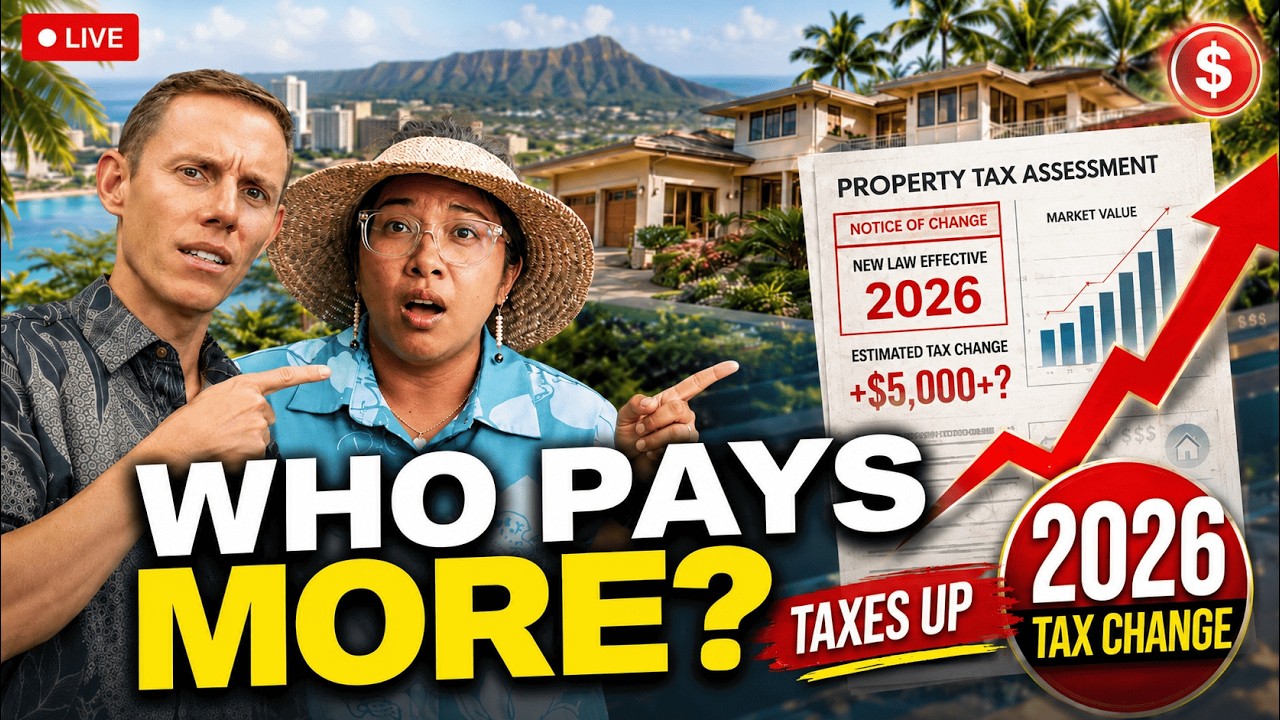
Hawaii Property Tax Changes for 2026: Island-by-Island Breakdown & Who Pays More
When people think about moving to or investing in Hawaii real estate, one of the first pleasant surprises they encounter is the nominal property tax rate. On paper, Hawaii boasts some of the lowest effective property tax rates in the nation—roughly a third of the national average for primary homeowners. However, property taxes in Hawaii are set at the county level and change regularly based on local council votes and fiscal needs.
For the upcoming fiscal year (which runs from July 1 through June 30), significant adjustments across all four major counties take effect. The overarching trend across the state remains clear: lower tax burdens for local residents and owner-occupants, offset by higher rates for non-resident investors, second-home buyers, and short-term vacation rental operators.
Why Are Hawaii Property Taxes Structurally Lower Than the Mainland?
To understand Hawaii’s tax landscape, you first have to understand how island infrastructure is funded. On the mainland, municipal property taxes usually fund local public school districts, county road networks, and major social service programs. In Hawaii, the state government assumes the financial burden for all public schools, state highways, and major social services.
Because county budgets do not need to cover public education, local property tax rates can remain lower for primary residents. To compensate, the state and counties rely heavily on other revenue sources:
- General Excise Tax (GET): Applied to virtually every business transaction in the state, including grocery purchases, professional services, and real estate transactions.
- Transient Accommodations Tax (TAT): A tax levied on hotel stays and short-term vacation rentals, shifting a major portion of the tax burden directly onto visiting tourists.
- County-Specific Surcharges: Dedicated local funds generated through fuel taxes, vehicle registrations, and specific county GET surcharges for public transit and emergency services.
Property Tax 101: How Your Hawaii Tax Bill Is Calculated
Your annual Hawaii property tax obligation is determined by a simple formula, though the specific variables shift depending on which island your property is located on:
Net Taxable Value = (County Assessed Market Value) − (Qualified Exemptions)
Annual Tax Bill = Net Taxable Value × (County Tax Rate per $1,000)
County assessors re-evaluate real property annually at 100% of estimated market value based on comparable neighborhood sales. However, assessed values frequently lag behind real-time market surges. Tax rates are quoted as a dollar amount per $1,000 of net taxable value. How you use the property—whether as your primary residence, a long-term rental, a second home, or a short-term vacation rental—determines which tax tier applies to you.
2026 Island-by-Island Property Tax Rate Snapshot
Each county operates independently, resulting in vastly different tax burdens across islands for the exact same property purchase price. Below is a breakdown of what owners can expect across the state.
1. Oahu (City and County of Honolulu)
Oahu remains a relatively stable tax environment for primary homeowners, with recent adjustments made to higher-value non-owner-occupied tiers.
- Owner-Occupied Rate: $3.50 per $1,000 of assessed value.
- Standard Homeowner Exemption: $120,000 subtracted from assessed value (increases for seniors aged 65 and older).
- Non-Owner Occupied: $4.00 to $11.40 per $1,000, escalating on higher-value tiers.
- Short-Term Rentals: $9.00 to $11.50 per $1,000.
2. Maui County
Maui features the lowest owner-occupied base rate in the state, paired with some of the steepest penalty rates for short-term vacation rentals.
- Owner-Occupied Rate: $1.65 to $5.00 per $1,000 (tiered based on property value).
- Long-Term Rental Rate: Starts at $2.90 per $1,000 to encourage housing for local workforce families.
- Non-Owner Occupied: $6.25 to $17.00 per $1,000.
- Short-Term Vacation Rentals: $13.00 to $17.00 per $1,000.
3. Hawaii Island (Big Island)
Hawaii County introduced targeted incentives aimed at creating long-term rental supply while offering relief to local residents.
- Owner-Occupied Rate: Reduced to $5.75 per $1,000 (down from $5.95).
- Long-Term Rental (LTR) Class: $7.75 per $1,000—a major discount for investment property owners who rent to long-term residents rather than short-term vacationers.
- Non-Owner / Vacation Rentals: $13.60 to $15.00 per $1,000.
4. Kauai County
Kauai maintains consistent rates focused on protecting its kupuna (elderly residents) and managing tourism growth.
- Owner-Occupied Rate: $2.59 to $3.50 per $1,000.
- Non-Owner / High Tiers: Escalates sharply above $1.3 million in value.
The Winners and Losers Under the 2026 Rules
Who Wins:
- Owner-Occupants: Primary homeowners continue to pay the lowest rates in the country, bolstered by increased basic exemptions.
- Kupuna (Seniors): Expanding senior exemptions across islands significantly reduce tax bills for retired residents living on fixed incomes.
- Long-Term Landlords: Real estate investors who pivot away from vacation rentals and lease out properties to local island residents enjoy preferential property tax classifications on Maui and the Big Island.
Who Pays More:
- Short-Term Vacation Rental (STR) Owners: High carrying costs on STRs continue to climb, forcing operators to closely re-calculate their net cash flows.
- Out-of-State Second Home Owners: Properties left vacant or used strictly as personal holiday homes face non-owner-occupied rate tiers that can be two to four times higher than owner-occupied rates.
Critical Pitfalls & How to Avoid Paying Unnecessary Property Tax
1. You Must Manually File Your Homeowner Exemption
The single biggest mistake new Hawaii buyers make is assuming that escrow, title companies, or real estate agents will file their homeowner tax exemption automatically upon closing. They do not.
Every county requires the property owner to submit an application verifying primary residency. Furthermore, if you change title ownership—such as transferring the deed into a living trust or inheriting property after a spouse passes away—your exemption can automatically drop off. You must re-verify your status with the county tax office immediately following any title change.
2. Beware the Closing Date “Tax Trap”
Tax classifications are tied to strict annual cutoff dates. For instance, on Oahu, homeowner exemption paperwork must be filed by September 30 for the fiscal year starting the following July 1. On the Big Island and Maui, property owners have two filing windows per year (June 30 and December 31).
If you purchase a home from an out-of-state investor who was paying the non-owner-occupied tax rate, and your escrow closes after the county’s filing deadline, you will inherit the previous owner’s higher tax classification for the entire upcoming tax cycle. You will have to pay the higher tax rate until the next filing window takes effect.
3. Challenging Your Assessed Value
If you receive your annual county assessment notice in the mail and feel the value significantly exceeds recent neighborhood sales, you have a formal right to file an appeal. On Oahu, assessment notices arrive around December 15, and property owners have 30 days (until January 15) to submit an appeal with supporting market evidence.
4. Strict Agricultural Exemptions
In years past, buyers on the Big Island or Maui could secure low agricultural tax rates simply by having a few fruit trees or a small garden patch on their acreage. Today, county rules require strict proof of active commercial production, including income statements or tax schedules, to maintain agricultural property status.
Key Takeaways for Buyers and Homeowners
Understanding Hawaii’s evolving property tax landscape is essential whether you are relocating your family, purchasing a retirement home, or managing an island investment portfolio. Carrying costs differ dramatically depending on how title is held, how the property is utilized, and whether you meet county filing deadlines.
Before closing on any parcel of island real estate, evaluate the existing tax classification, verify historical assessed values, and ensure your exemption applications are submitted to the county tax office on day one.
Leave A Comment