
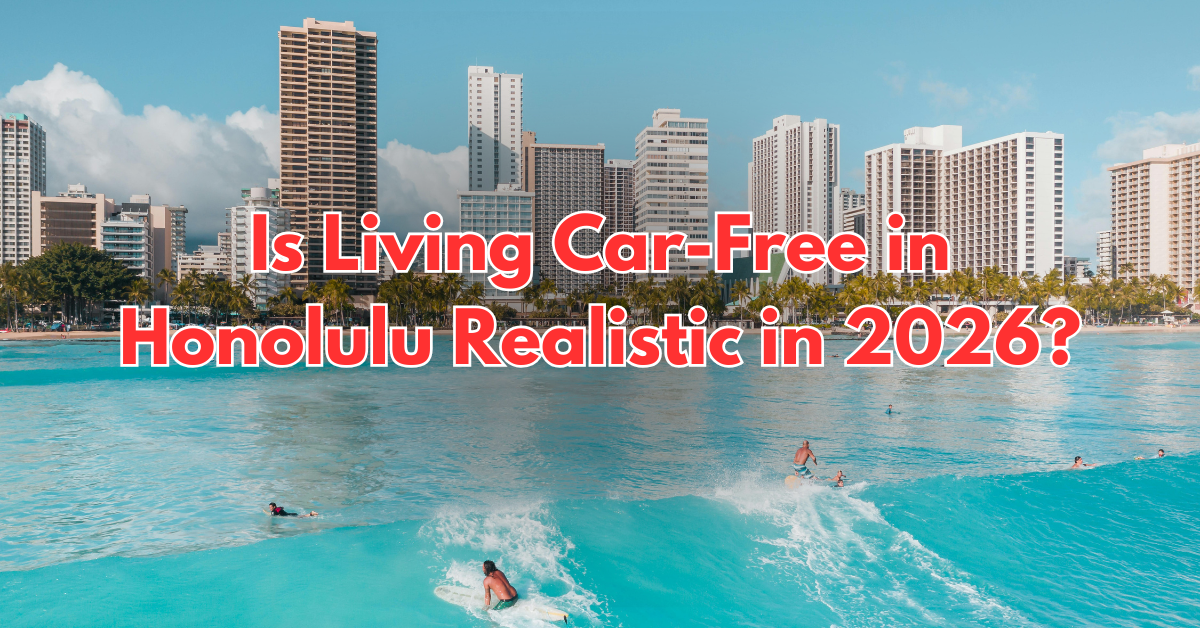
Is Living Car-Free in Honolulu Realistic in 2026? A Complete Guide
When planning a relocation to Oahu, one of the biggest budget line items is whether to ship a vehicle across the Pacific Ocean or buy one upon arrival. Given elevated shipping rates, steep local gas prices, and monthly condo parking stall fees that frequently rival utility bills, many prospective residents find themselves asking a serious question: is living car-free in Honolulu realistic in 2026?
Take the Quiz: Is Hawaii Right For You? Meet with a Living in Hawaii Expert!
The short answer is yes, but only under specific circumstances. Unlike most of the Neighbor Islands or suburban Oahu where vehicle ownership is practically mandatory, urban Honolulu offers a surprisingly robust multimodal transit landscape. Between the evolving segments of the Skyline light rail network, the nationally recognized TheBus system, the dense footprint of Biki bike share stations, and car-sharing platforms like Hui, you can navigate daily life without owning a set of wheels. However, choosing a car-free lifestyle requires trade-offs in convenience, neighborhood selection, and weekend mobility.
The Transit Infrastructure Powering Honolulu in 2026
To understand whether going car-free makes sense for your lifestyle, you first need to understand how Honolulu’s transportation puzzle pieces fit together. Over the past few years, the city has made deliberate investments to connect residential pockets with business and recreation districts.
Skyline (Honolulu Rail Transit)
Honolulu’s elevated rail system, Skyline, represents the largest public infrastructure project in state history. Operating through the Ewa plain, Pearl City, Aloha Stadium, and extending toward urban employment centers, Skyline provides traffic-immune transit on a fixed schedule. For residents who commute between West Oahu communities and town, it eliminates the dreaded morning gridlock on the H-1 freeway. However, urban core residents should recognize that Skyline is primarily an east-west commuter spine rather than a neighborhood circulator. While it connects seamlessly with local bus feeder routes, it does not replace the foot-level mobility you need for everyday grocery trips or casual neighborhood hops within Honolulu proper.
TheBus and the HOLO Card System
Honolulu’s municipal bus system, known simply as TheBus, is consistently ranked among the best public transit operations in the United States. In 2026, TheBus operates dozens of express and local routes covering virtually every corner of the island. Crucially, fare collection is entirely integrated via the contactless HOLO card. Fares are capped on a daily and monthly basis, meaning once you hit the spending ceiling in a given calendar month, all subsequent rides on both TheBus and Skyline are free. High-frequency corridor lines along King Street, Beretania Street, Kapiolani Boulevard, and Ala Moana Boulevard run every 10 to 15 minutes during peak hours, making spontaneous cross-town travel genuinely dependable.
Biki Bike Share and Protected Lanes
Managed by Bikeshare Hawaii, the bright turquoise Biki bikes have become a fundamental fixture of urban Honolulu life. With over 130 stations spread from Downtown and Chinatown through Kakaako, Ala Moana, Makiki, Waikiki, and down to the University of Hawaii at Manoa, Biki covers the classic “first-mile, last-mile” transit gap. The city has continued to expand protected bike pathways, most notably along the King Street corridor and through key Kakaako arterials, creating safer routes for cyclists separate from heavy vehicular traffic.
Car-Sharing Services: Hui and Traditional Rentals
Going car-free does not mean you will never sit behind a steering wheel. For island residents, local car-sharing apps like Hui (powered by Servco Pacific and Toyota) offer round-the-clock, station-based vehicle rentals accessible via smartphone. You can reserve a hybrid sedan or compact SUV for two hours to complete a major warehouse club shopping run or rent one for twelve hours to spend Saturday on the North Shore. Because insurance, gas, and parking at the vehicle’s home station are included in the hourly rate, car-sharing eliminates the painful fixed monthly overhead of personal vehicle ownership while providing flexible access when public transit falls short.
The Financial Breakdown: Car-Free vs. Car Ownership
The primary motivator for ditching a vehicle in Honolulu is financial. Hawaii consistently carries some of the highest driving-related costs in the country. To see how the numbers balance, take a look at the estimated monthly comparison for an urban Honolulu resident in 2026.
Typical Monthly Cost of Owning a Car in Honolulu
-
Car Payment or Depreciation: $350 to $550
-
Auto Insurance: $130 to $190 (Hawaii insurance rates reflect high repair costs)
-
Gasoline: $150 to $220 (assuming moderate island driving at local pump prices)
-
Condo Parking Space Fee: $150 to $350 (many older urban condos do not include deeded stalls)
-
Maintenance, Safety Check, and Registration: $60 to $90 (weight taxes in Honolulu County are significant)
-
Estimated Total: $840 to $1,400 per month
When you consult our detailed guide on the cost of car ownership in Hawaii, you will see that recurring vehicle expenses consume a massive portion of the average household budget. Diverting those funds can dramatically improve your financial cushion when adjusting to the island’s higher baseline cost of living.
Typical Monthly Cost of a Car-Free Lifestyle in Honolulu
-
Monthly HOLO Card Transit Pass (TheBus & Skyline): $80
-
Biki Bike Share Unlimited Monthly Plan: $25 to $30
-
Occasional Rideshare (Uber/Lyft): $60 to $120
-
Car-Share Rentals (Hui or weekend car rental for excursions): $150 to $250
-
Estimated Total: $315 to $480 per month
By living car-free, an individual can easily pocket between $500 and $900 every month in avoided expenses. Over the course of a year, that equates to $6,000 to over $10,000 in direct savings, which can offset higher rent in a centrally located, walkable neighborhood.
Where Car-Free Living Works in Honolulu (and Where It Fails)
Your ability to comfortably live without a car depends almost entirely on your physical address. Urban Honolulu contains distinct micro-neighborhoods, and while some are designed for pedestrian transit, others quickly become frustrating transit deserts.
1. Downtown, Chinatown, and the Capitol District
This is the administrative and financial hub of Oahu, featuring dense vertical housing, rich dining options, and unmatched transit access. Every major bus route intersects through Downtown, and Chinatown offers affordable fresh produce markets, bakeries, and corner groceries right outside your door.
Pros:
-
Maximum bus connectivity; almost every express route passes through the district.
-
Immediate walking access to banks, government offices, medical clinics, and nightlife.
-
Significant savings on condo rentals, as units without dedicated parking stalls rent at noticeable discounts.
Cons:
-
Street-level noise and urban density can feel overwhelming.
-
Chinatown experiences persistent street safety concerns after dark.
-
Access to full-scale supermarkets requires a short bus or bike ride down into Iwilei or Kakaako.
2. Kakaako and Ala Moana
Kakaako and the Ala Moana district represent the premier live-work-play corridor on Oahu. Packed with modern residential towers, pedestrian boulevards, retail shops, and dining establishments, this area is widely celebrated among the best walkable towns in Hawaii for residents who prefer leaving their car parked for days at a time.
Pros:
-
Outstanding grocery access with Whole Foods, H Mart, Foodland Farms, and Don Quijote within walking distance.
-
Dedicated protected bike lanes running through Ward Village and along King Street.
-
Immediate access to Ala Moana Regional Park for ocean swimming, jogging, and sunset watching.
Cons:
-
Real estate and rental prices are among the highest in the state.
-
The area can feel commercialized and busy, with heavy pedestrian and vehicle cross-traffic.
3. Waikiki
While frequently dismissed as strictly tourist territory, Waikiki houses tens of thousands of full-time residents. It is exceptionally dense, flat, and walkable, with continuous bus service running along Kuhio Avenue around the clock.
Pros:
-
World-class beach access within a five-minute walk from almost any apartment building.
-
Incredible density of Biki stations, dining spots, pharmacies, and small neighborhood markets.
-
High frequency of bus transit connecting to Ala Moana Transit Center and Downtown.
Cons:
-
Everyday essentials come with elevated “resort area” pricing.
-
Persistent crowds, street performers, and late-night tourist noise.
-
Carrying surfboards on TheBus is prohibited unless the board is four feet or shorter and fits within a bag that can be placed upright between your legs.
4. McCully, Moiliili, and Makiki
Positioned just inland from Waikiki and Ala Moana, these established residential communities offer a more authentic local neighborhood atmosphere at comparatively lower price points. They are popular with university students, young professionals, and longtime residents.
Pros:
-
Central positioning between the ocean and the university campus.
-
Excellent local bakeries, noodle shops, and independent grocers.
-
Reliable east-west bus lines along South King, Beretania, and Wilder Avenue.
Cons:
-
Narrow sidewalks and aging infrastructure in older sections.
-
Makiki becomes hilly quickly as you move toward Round Top Drive, making bike commuting challenging without an e-bike.
Where Car-Free Living Completely Fails on Oahu
Attempting a car-free existence outside Honolulu’s urban rim is an uphill battle. If you choose to reside in East Oahu (Hawaii Kai, Kahala), the Windward side (Kailua, Kaneohe), Central Oahu (Mililani), or the North Shore, running basic errands on foot is rarely practical. While commuter bus lines exist to transport workers into downtown Honolulu, running daily errands, dropping children off at school, and managing appointments without a private vehicle in these areas quickly turns into an exhausting logistical exercise.
The Daily Realities: What Nobody Tells You About Going Car-Free
Living without a car on an island is distinct from living car-free in compact mainland metropolises like New York or San Francisco. You must account for Hawaii’s climate, culture, and outdoor recreation patterns.
The Weather Factor
Honolulu enjoys sunny, pleasant weather most of the year, but tropical living brings unique microclimates. Afternoon trade wind showers can appear without warning. Walking or biking five blocks in 85-degree weather with 70 percent humidity means arriving at your destination damp with perspiration if you do not pace yourself. Breathable performance fabrics, a durable rain shell, and comfortable walking sandals or shoes are essential daily gear.
Grocery Logistics and Island Shopping
Most longtime island residents rely on bulk buying at warehouse stores like Costco or Sam’s Club to keep household grocery bills in check. Trying to transport a 30-roll pack of paper towels, fresh produce, and a gallon of milk on a Biki bike is virtually impossible. Car-free residents typically handle this by utilizing delivery platforms, using personal folding shopping carts for visits to local markets, or reserving a Hui car-share vehicle once every few weeks for dedicated pantry stock-up runs.
Outdoor Recreation and Beach Access
Part of the magic of moving to Hawaii is exploring hidden tide pools, hiking mountain ridges, and catching morning surf breaks. While public transit can drop you near popular spots like Diamond Head, Ala Moana Beach Park, or Hanauma Bay, many of Oahu’s most iconic trailheads and windward beaches sit miles away from bus stops. If spending every weekend exploring remote coastlines is your primary motivation for living on Oahu, relying strictly on public transit will eventually feel restrictive.
For a broader look at inter-neighborhood mobility across all the islands, review our comprehensive Hawaii transportation guide to see how transit connectivity compares across the state.
The Compromise: The “One-Car Household” Strategy
For couples and families moving to Honolulu, going entirely car-free can feel like an intimidating leap. That is why many relocating households adopt the one-car strategy as the perfect middle ground.
In this model, one partner uses transit, a bicycle, or walks to work in the urban core, while the family retains a single, fuel-efficient vehicle for weekend road trips, Costco visits, and off-the-beaten-path adventures. This setup captures 80 percent of the financial benefits of car-free living by eliminating a second insurance premium, a second auto loan, and most importantly, the need to lease an expensive second condo parking space.
Final Verdict: Can You Pull It Off in 2026?
Living car-free in Honolulu in 2026 is entirely realistic, provided your daily footprint aligns with the urban transit core. If you work remotely or commute within Downtown, Kakaako, or Waikiki, and you are comfortable using rideshares or hourly car services for weekend outings, ditching a personal vehicle is one of the single most effective ways to lower your monthly overhead in Hawaii.
However, if your lifestyle centers around carrying longboards to different surf breaks at dawn, trail running along the Koolau mountains multiple days a week, or managing complex family school schedules outside the urban core, having a reliable personal vehicle remains well worth the expense. Evaluate your daily routine honestly, examine your neighborhood’s transit map, and decide which lifestyle matches your island goals.
Leave A Comment