
Living in Kāneʻohe, Oʻahu: The Lush Windward Side Explained
If you have ever stared at a postcard of Oʻahu featuring towering, emerald-green mountain cliffs wrapped in mist, you were likely looking at Kāneʻohe. Situated on the windward side of the island, this expansive community offers some of the most dramatic natural landscapes in all of Hawaii. For those planning a move to Oʻahu, Kāneʻohe represents a unique balance of breathtaking scenery, suburban convenience, and a deep connection to the outdoors.
Take the Quiz: Is Hawaii Right For You? Meet with a Living in Hawaii Expert!
The Geography and Vibe of Kāneʻohe
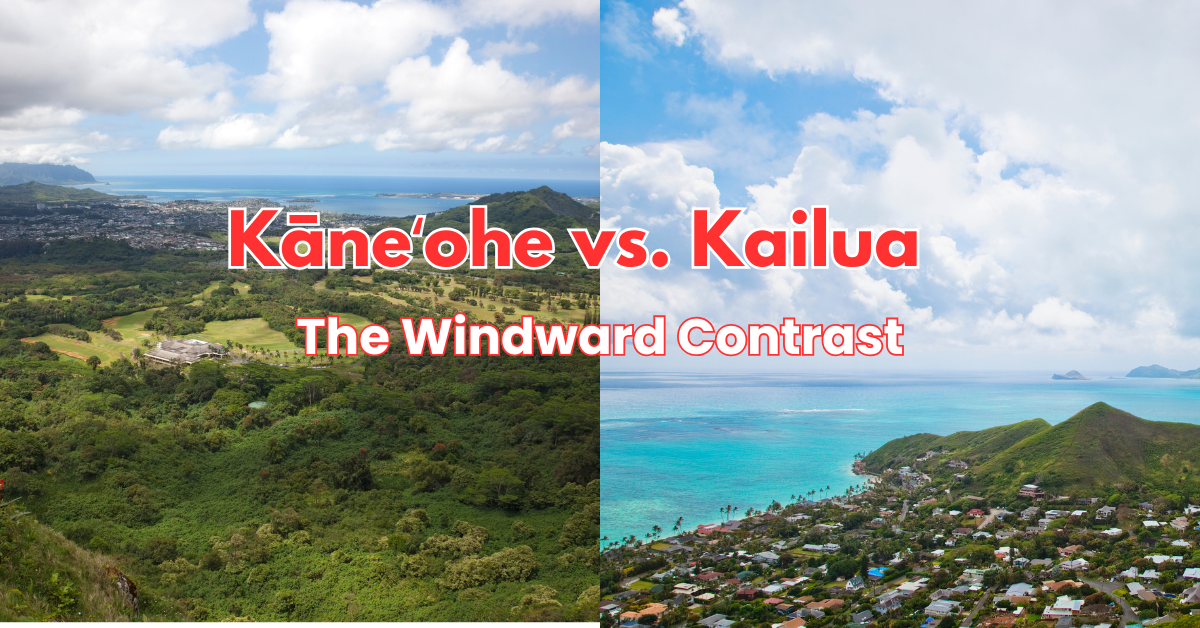
To understand Kāneʻohe, you must first understand its geography. Spanning from the majestic Koʻolau Range down to the calm waters of Kāneʻohe Bay, this town is the larger, more rugged sibling to neighboring Kailua. While Kailua is famous for its white-sand beaches and bustling, tourist-friendly town center, Kāneʻohe is defined by its dramatic vertical cliffs, quiet residential valleys, and active marine environment.
The overall vibe here is distinctly local and family-oriented. You will not find the trendy boutiques or high-end tourist resorts of Waikīkī here. Instead, Kāneʻohe is a place of quiet neighborhoods, backyard gardens, local eateries, and strip malls that serve the everyday needs of residents. It is a town where people wave to their neighbors, spend their weekends working on their yards, and head out onto the bay when the weather is clear.
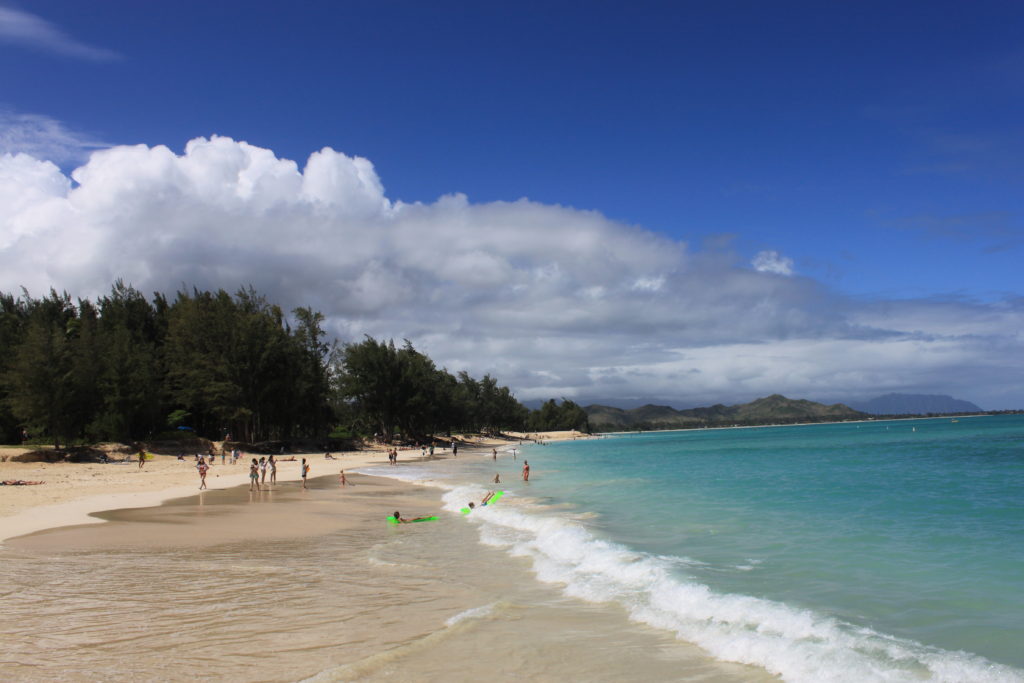
Playing in the gentle surf in Kailua bay
Kailua Bay by JamesZ_Flickr is licensed under CC BY 2.0. Image may have been resized or cropped from original
Kāneʻohe vs. Kailua: The Windward Contrast
Many prospective residents find themselves torn between Kāneʻohe and Kailua. It is a natural comparison, as the two towns sit side by side on the Windward coast, separated only by the Castle Junction area and the H-3 highway. However, the lifestyle in each town is surprisingly different.
If you are looking for a classic, walkable beach town where you can ride your cruiser bike to the shore, you may want to explore living in Kailua, Oʻahu. Kailua is flatter, drier, and heavily geared toward beach recreation.
Kāneʻohe, on the other hand, is a boating and mountain town. It does not have the wide, sandy ocean beaches of Kailua. Instead, its coastline is dominated by Kāneʻohe Bay, which is protected by a massive barrier reef. This makes the bay ideal for sailing, kayaking, and fishing, but not for traditional beach lounging. The trade-off is that Kāneʻohe offers much more dramatic mountain views, larger residential lots, and generally lower home prices than its neighbor.
The Logistical Advantage: A Commuter’s Dream
One of the biggest practical reasons people choose Kāneʻohe is its unparalleled transit connectivity. While living on the Windward side can sometimes feel isolated from the economic engine of Honolulu, Kāneʻohe is the ultimate gateway.
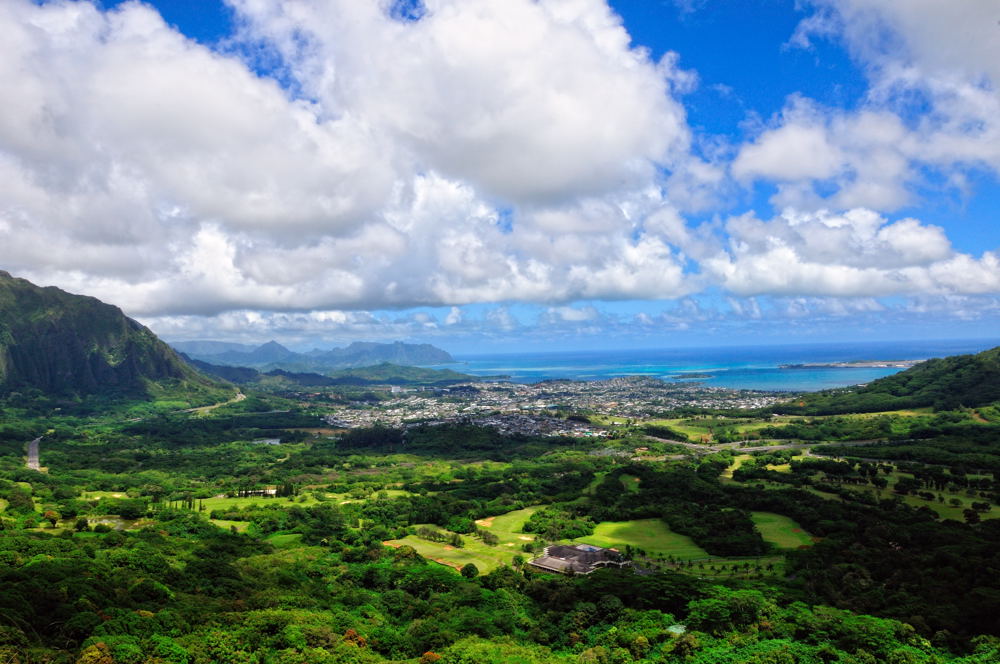
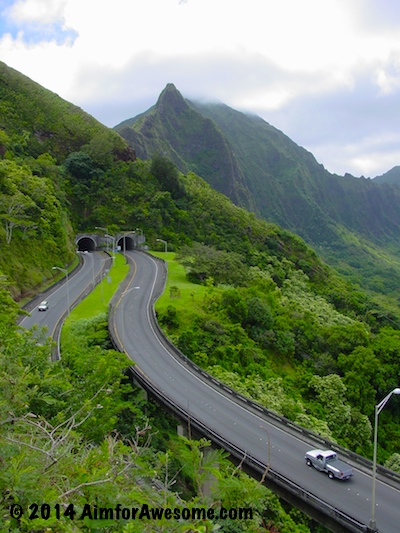
DSC_6535 by 37195641@N03 is licensed under CC BY 2.0. Image may have been resized or cropped from original.
The town is uniquely positioned at the intersection of three major trans-island highways:
- The H-3 Freeway: Widely considered one of the most scenic highways in the world, the H-3 cuts through the Koʻolau Mountains, providing a direct, fast link to Halawa, Pearl Harbor, and the West Side.
- The Likelike Highway: This route takes you through the Wilson Tunnel directly into Kalihi and the Honolulu airport area.
- The Pali Highway: Located just south of Kāneʻohe, this scenic highway connects the Windward side directly to Downtown Honolulu.
Because of these three routes, a resident of Kāneʻohe can often reach Downtown Honolulu or Joint Base Pearl Harbor-Hickam in 25 to 35 minutes, depending on traffic. This is a significantly easier commute than what residents of Kapolei or the Ewa Plain face on the West Side, where commuters must battle a single, heavily congested freeway corridor every morning.
The Rain, the Green, and the Reality of Windward Weather
You cannot talk about Kāneʻohe without talking about the rain. The northeast trade winds push moist ocean air directly against the steep cliffs of the Koʻolau Range. As the air rises over the mountains, it cools and condenses, resulting in frequent, heavy rainfall.
This constant moisture is the reason Kāneʻohe is so incredibly green. The waterfalls that cascade down the mountain cliffs after a heavy downpour are a daily spectacle for residents. However, this weather pattern requires a realistic lifestyle adjustment. Kāneʻohe is consistently ranked among the best rainy day towns in Hawaii, which is wonderful for gardeners but challenging for home maintenance.
The insider reality of this moisture is that you will battle humidity, mold, and rust. Wooden structures rot faster here, metal rusts quickly, and keeping your home well-ventilated is a constant chore. Many homes in the deeper valleys, such as Temple Valley or Haʻikū, do not have air conditioning because the mountain breezes keep things cool, but they do require dehumidifiers to protect electronics, clothing, and leather goods. In terms of data, while coastal Oʻahu might get 20 inches of rain a year, the upper valleys of Kāneʻohe can easily receive 60 to 80 inches annually.
Exploring Kāneʻohe’s Diverse Neighborhoods
Kāneʻohe is not a monolith. It is made up of several distinct neighborhoods, each offering a different microclimate, view, and lifestyle.
Ahuimanu and Temple Valley
Located at the northern end of Kāneʻohe, Ahuimanu and Temple Valley sit directly under the sheer cliffs of the mountains. This area is incredibly lush, quiet, and wet. It is home to the famous Byodo-In Temple, a beautiful replica of a Japanese Buddhist temple set against the mountain backdrop. Homes here often have larger lots and stunning mountain views, but they also receive the most rainfall.
Haʻikū
Tucked away in the valley below the famous and closed Haʻikū Stairs, this neighborhood is historic, peaceful, and highly desirable. The homes here are a mix of older plantation-style houses and large, modern custom homes. It feels world’s away from the city, yet it is only minutes from the windward shopping centers.
Lilipuna and Bayview
If you prefer ocean views over mountain walls, the neighborhoods along Lilipuna Road and near the Bayview Golf Course are excellent choices. These areas look out over Kāneʻohe Bay. Homes here are built on hillsides, offering dramatic views of the water and the Kaneohe Yacht Club. It is slightly drier than the deep valleys, but still benefits from the cool trade winds.
Kāneʻohe Town
The central core of the town is busier and more commercial. Here you will find the Windward Mall, numerous grocery stores, and local businesses. The housing stock here consists of older single-family homes, low-rise townhomes, and a few condominium complexes. Living here means you can run your errands in minutes, though you sacrifice some of the quiet peace found in the valleys.
. Image Copyright CyberCom, Inc.
Real Estate, Cost of Living, and Local Infrastructure
Moving to Kāneʻohe requires a clear-eyed look at the numbers. Like all of Oʻahu, real estate here is expensive, but it generally offers more square footage and larger lot sizes for your money than Honolulu or Kailua.
As of 2026, the median price for a single-family home in Kāneʻohe hovers between $1,050,000 and $1,300,000, depending on the neighborhood and the condition of the home. Condominiums and townhouses are more affordable, typically ranging from $550,000 to $750,000.
When budgeting for your move, you must also factor in the unique expenses of island living. For example, the damp environment means you may spend more on home maintenance and pest control. Additionally, because Kāneʻohe is a suburban, spread-out community, public transit is limited. You will absolutely need a reliable vehicle to get around, making the cost of car ownership in Hawaii an essential part of your monthly budget. Gasoline, insurance, and vehicle registration are all higher here than on the Mainland.
Schools and Family Life in Kāneʻohe
For families relocating to the Windward side, understanding the local educational landscape is a top priority. Kāneʻohe is home to a variety of public, charter, and private school options. The public schools in the area belong to the Castle Complex, anchored by James B. Castle High School, which is known for its strong agricultural and performing arts programs.
If you are navigating the educational landscape for the first time, our Hawaii school system 2026 update provides a comprehensive look at enrollment procedures, charter school options, and what to expect when transitioning your children to island schools. Additionally, private schools like Windward Nazarene Academy and nearby options in Kailua offer alternative educational paths for families seeking private instruction.
Life on the Water: Kāneʻohe Bay and the Sandbar
While Kāneʻohe may lack sandy beaches along its shoreline, it boasts one of the most incredible marine playgrounds in the Pacific: Kāneʻohe Bay.
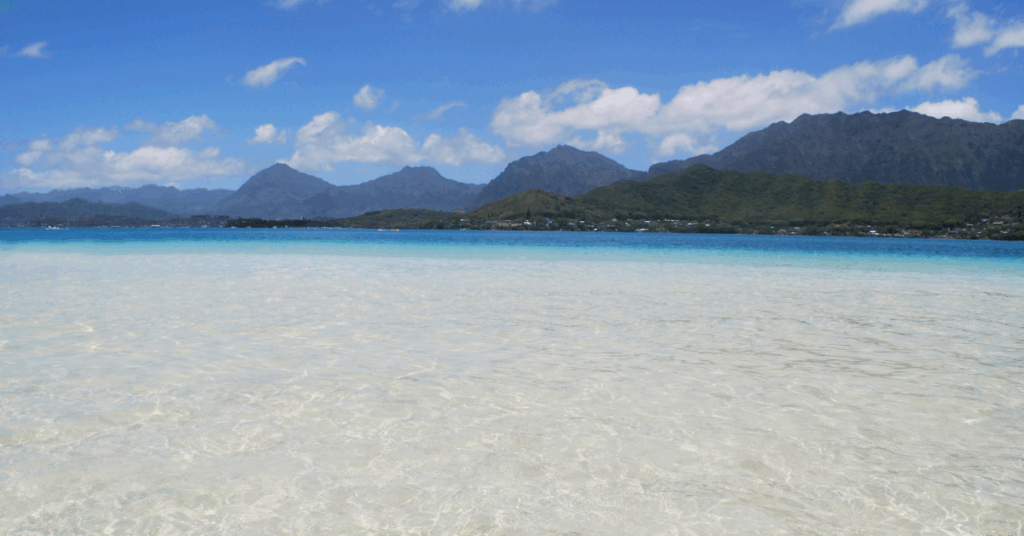
The bay is protected by the only barrier reef in the Hawaiian Islands, creating a calm, sheltered body of water that is perfect for ocean recreation. The crown jewel of the bay is the Kāneʻohe Sandbar, known locally as Ahu o Laka. This raised strip of sand is exposed at low tide, creating a temporary beach in the middle of the bay.
On weekends, local residents load up their boats, kayaks, and stand-up paddleboards to head out to the sandbar. It is a social hub where families set up pop-up tents, play volleyball in ankle-deep water, and enjoy picnics with 360-degree views of the Koʻolau Mountains. If you do not own a boat, you can easily launch a kayak from Heʻeia Kea Boat Harbor to explore the bay’s pristine patch reefs and marine life.
Pros and Cons of Living in Kāneʻohe
To help you decide if this Windward gem is the right fit for your relocation, let’s break down the major advantages and drawbacks of making Kāneʻohe your home.
The Pros
- Stunning Natural Beauty: The mountain views in Kāneʻohe are unmatched. Living under the green cliffs of the Koʻolau Range is a daily reminder of Hawaii’s raw beauty.
- Excellent Commuter Access: With three highways connecting you to town, your commute is far more manageable than from the West Side.
- Spacious Properties: Homes in Kāneʻohe often feature larger yards and more privacy than similarly priced homes in Honolulu.
- An Authentic Community: The town has a stable, long-term resident population, giving it a warm, neighborly feel.
The Cons
- High Rainfall and Humidity: The frequent rain means dealing with mold, rust, and dampness. If you prefer dry, sunny days year-round, this is not the town for you.
- Lack of Sandy Beaches: You cannot easily walk to a sandy swimming beach. You will have to drive over to Kailua or Waimānalo for a traditional beach day.
- Older Housing Stock: Many homes in Kāneʻohe were built in the 1960s and 1970s. Unless they have been recently renovated, they may require significant updates.
- Commercial Traffic: Kamehameha Highway, the main artery through town, can get heavily congested during morning and afternoon rush hours.
Is Kāneʻohe Right for You?
Living in Kāneʻohe offers a lifestyle that is deeply connected to the natural rhythms of the Windward side. It is a place for people who appreciate the majesty of the mountains, the calm of the bay, and the quiet comfort of an established suburban community.
If you are willing to trade constant sunshine for dramatic waterfalls, and sandy beaches for a calmer, boat-friendly bay, Kāneʻohe may be the perfect place to plant your roots on Oʻahu. It is a town that forces you to slow down, appreciate the rain, and enjoy the incredible green landscape that makes Hawaii so special.
Leave A Comment