Kapolei is one of those places that sticks with you, even if you haven’t been there forever. I lived on Oʻahu for a while—not decades—but long enough to see this side of the island blossom into its own community. Known locally as the “Second City,” Kapolei has its own rhythm, its own pace, and especially for families, it’s where life feels a bit more balanced and grounded.
Kapolei at a Glance
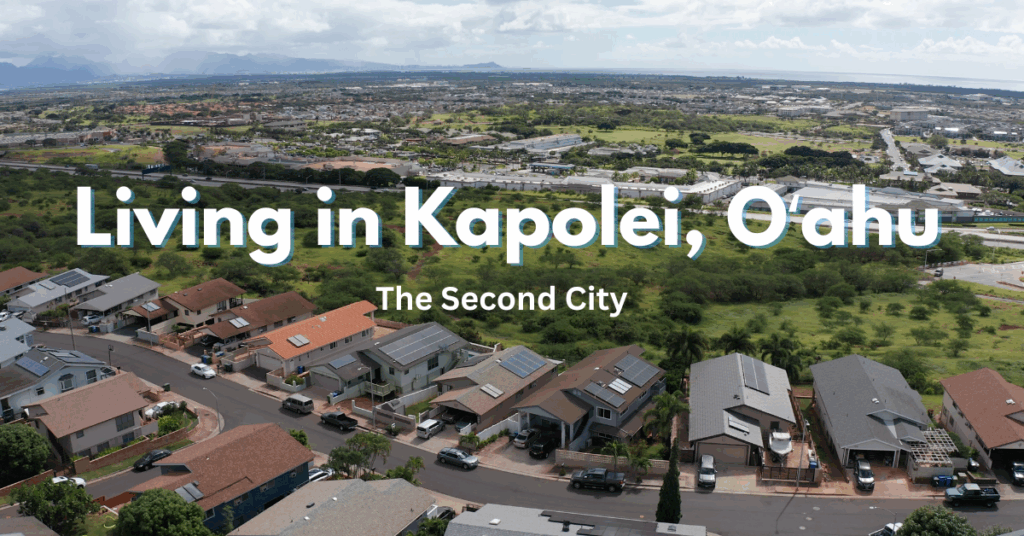
Originally planned to be Oʻahu’s Second City, Kapolei has grown from open plantation fields into a thriving suburban hub with thousands of residents. Homeownership rates are high, and the community continues to attract families looking for a fresh, master-planned alternative to the busier urban areas. The area is designed with wide sidewalks, modern infrastructure, and an intentional balance between residential neighborhoods, business districts, and community spaces.
Growth & Infrastructure
Kapolei’s development isn’t random—it follows a clear plan. Streets are laid out for walkability, parks are built into neighborhoods, and the community blends Hawaiian garden city concepts with modern needs. Major roads like Kualakaʻi Parkway connect residents to the freeway with ease, and commercial hubs like Ka Makana Ali‘i mall provide retail, dining, and entertainment options right in town.
The Skyline rail system is already operating in Kapolei, with more extensions to come. This transit option will eventually streamline the daily commute into Honolulu, making Kapolei even more self-sufficient. If you’re curious to see what homes are currently on the market and get a feel for neighborhood living, you can check out listings here.
Family‑Friendly Lifestyle
Kapolei feels built for families. The homes are newer, many with low-maintenance yards, but still offer enough space for backyard gatherings and family life. Schools, both public and private, serve the community, along with a local university campus. The overall vibe here is more laid-back and neighborly, where kids can play outside, and families gather for local events and sports.
Commute & Connectivity
Commuting into Honolulu is still a daily reality for many Kapolei residents, and depending on traffic, it can be a smooth 30-minute drive or a longer trek during peak hours. The introduction of the Skyline rail has started to ease this burden, giving people an alternative way to get into town. Until the rail extends all the way to downtown, many residents plan their workdays around traffic flow, aiming to beat the rush hours.
Pros & Cons: Is Kapolei Right for You?
Pros:
-
More affordable housing compared to Honolulu
-
Family-oriented neighborhoods and newer homes
-
Expanding infrastructure with intentional city planning
-
Strong community feel with local amenities
Cons:
-
Still largely dependent on cars for now
-
Commutes into Honolulu can be time-consuming during peak hours
-
Some areas are still under development
Looking Ahead: Kapolei’s Future
Kapolei isn’t slowing down. Housing and retail developments are actively underway, and as Skyline rail stations continue to open, the area will become even more connected. Long-term plans aim to make Kapolei a fully self-sustaining city, with job centers, residential communities, and public amenities all within reach.
Conclusion
Living in Kapolei feels like being part of Oʻahu’s next chapter. It’s where families settle down, where modern conveniences meet island-style living, and where the community is growing at its own thoughtful pace. Whether you’re thinking of moving or just curious, Kapolei offers a fresh perspective on what life in Oʻahu can be. If you’re ready to see what homes are like in this growing community, start exploring here.