


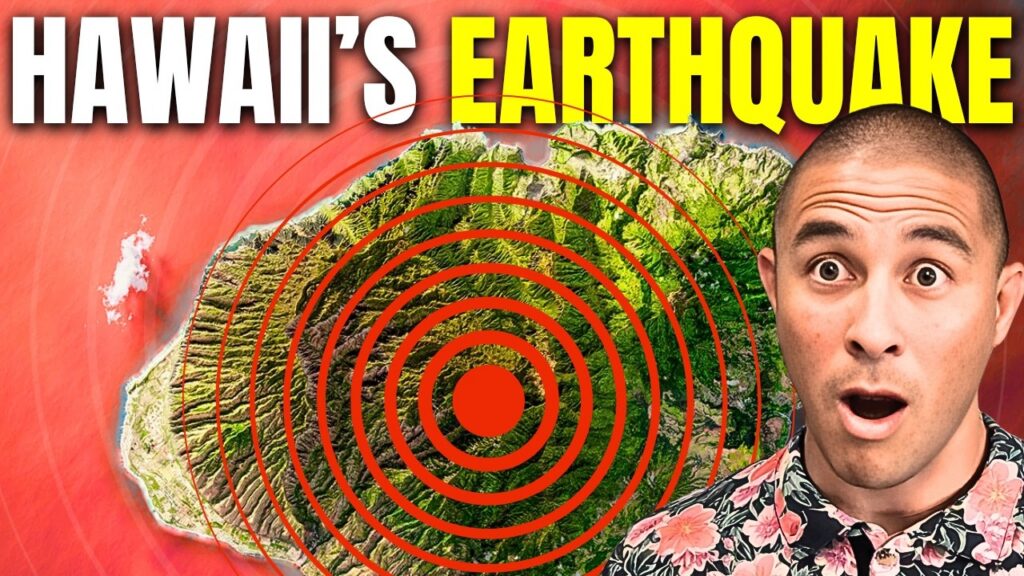
If you live in Hawaii, or are planning a move to the islands, you quickly learn that our beautiful landscape is constantly in motion. We recently experienced a 6.0 magnitude earthquake in South Kona, which naturally has many prospective home buyers asking: How dangerous are earthquakes in Hawaii, and how much should they factor into your decision to buy property here?
As a fourth-generation Hawaii resident, I have experienced my fair share of rumbles. In this guide, we will look at the history of seismic activity in the islands, analyze what actually causes our earthquakes, and provide some practical, boots-on-the-ground perspective on how to assess this risk as a property owner.

What Causes Earthquakes in Hawaii?
On paper, Hawaii is classified as a high-risk seismic zone, with hazard levels comparable to California. However, the geological forces driving our earthquakes are fundamentally different from those on the mainland.
In places like California, Indonesia, or Japan, earthquakes are caused by the grinding and shifting of tectonic plates. In Hawaii, we sit squarely in the middle of the Pacific Plate, far from any plate boundaries. Instead, our seismic activity is driven by two unique local factors:
- Magma Movement: Because we have active volcanoes—primarily on the Big Island—magma is constantly moving beneath the surface. This movement creates thousands of tiny, daily micro-earthquakes. Most of these are completely imperceptible to residents, but they are constantly tracked by the U.S. Geological Survey (USGS) at Volcanoes National Park.
- The Weight of the Islands: This is a fascinating geological detail that many people overlook. The Big Island of Hawaii is the tallest mountain mass on Earth when measured from the ocean floor. The sheer, immense weight of this volcanic mass exerts incredible gravitational pressure on the Earth’s crust. This causes the crust to flex and adjust, resulting in localized earthquakes.
“It is almost like a flexing of the Earth’s crust. While these events can be significant, they generally do not cause the widespread, catastrophic structural collapses associated with major tectonic plate boundaries.”
A History of Major Seismic Events in Hawaii
While minor tremors are a daily occurrence, major, damaging earthquakes are historically rare in Hawaii. In fact, there have only been about 12 significant, major earthquakes recorded since the 1800s. When you spread that over more than 150 years, it becomes clear that these are not everyday worries for local residents.
The Historical Record (1868–1983)
- 1868 (7.9 Magnitude): The largest recorded earthquake in Hawaii’s history. This event triggered localized tsunamis and landslides, which caused the majority of the casualties associated with the event.
- 1938 (6.9 Magnitude): Centered north of Maui, showing that while the Big Island is the epicenter of most activity, neighbor islands can still feel the effects.
- 1975 (7.7 Magnitude) & 1983 (6.7 Magnitude): Both occurred on the Big Island, causing millions of dollars in localized damage to roads and older structures, but without the widespread urban devastation seen in continental quakes.
Recent History (2006–Present)
In the last 40 years, we have only experienced a handful of earthquakes that caused noticeable property damage:
- 2006 (6.7 Magnitude): Centered in Kealakekua Bay on the west side of the Big Island. This caused power outages across the state and moderate structural damage to older buildings and rock walls.
- 2018 (6.9 Magnitude): This quake occurred on the East Rift Zone of Kilauea and famously kicked off the historic lower Puna eruption, which eventually claimed around 300 homes due to lava flow.
- Recent South Kona Quake (6.0 Magnitude): Centered just 10 miles from my own home in South Kona. We experienced significant shaking, with pictures falling off walls and items tumbling from pantry shelves. However, across the region, the damage was almost entirely cosmetic, with only a few isolated reports of foundational issues.
What Does Earthquake Damage Look Like on the Ground?
In my experience living and working across all the major Hawaiian islands, the actual day-to-day risk to life and property from earthquakes is relatively moderate. Because of how our islands are built, the shaking is usually highly localized to the Big Island. While neighbor islands like Maui, Oahu, and Kauai may feel the vibrations of a larger quake, they rarely experience structural damage.
When a larger earthquake does strike, the most common issues we see on the ground include:
- Cosmetic Damage: Cracked plaster, broken drywall, and fallen household items.
- Rockfalls: Boulders and debris sliding onto coastal or mountain roads, which can temporarily disrupt local traffic.
- Utility Disruptions: Temporary power outages as safety systems automatically shut down grids to prevent fires.
- Water Tank Damage: In rural areas of the Big Island where homes rely on catchment water systems, older or poorly secured water tanks can occasionally shift or crack.
How Buyers Should Approach the Risk
If you are considering purchasing real estate in Hawaii, earthquakes should be understood as a natural part of the island environment, but they shouldn’t be a source of panic. Every region in the world has its own natural hazards—whether it is wildfires in the West, tornadoes in the Midwest, or blizzards in the Northeast. In Hawaii, our volcanic landscape comes with occasional seismic activity.
Here is how we advise our clients to prepare and protect their investments:
- Inspect the Foundation: During your physical home inspection, have a professional look closely at the post-and-pier or concrete slab foundation, especially on older homes, to ensure it is structurally sound and properly tied down.
- Secure Heavy Items: Just as residents do in California, secure tall bookshelves, heavy art, and water heaters to the wall studs.
- Review Your Insurance: Standard homeowners insurance policies do not cover earthquake damage. If you are buying on the Big Island, ask your insurance agent about adding a separate earthquake rider to your policy to ensure peace of mind.
- Keep an Emergency Kit: Living in the middle of the Pacific means you should always have a basic emergency supply kit on hand, including fresh water, non-perishable food, and a backup power source.
Navigating the Hawaii Market with Confidence
Ultimately, earthquakes are a matter of “when, not if” in Hawaii, but they are highly manageable. The vast majority of our seismic events pass by without notice, and even our larger quakes rarely result in severe structural damage or risk to life. It is simply part of the trade-off for living in one of the most beautiful, geologically active places on Earth.
If you have questions about seismic zones, lava zones, home insurance, or any other aspect of buying property in Hawaii, my team and I are here to help. We represent buyers and sellers across all four major islands, bringing local expertise and a steady, analytical approach to your real estate journey.
Feel free to reach out to me directly at dylan@buybigisland.com, or visit our website to book a video consultation with us. We would love to help you navigate the market safely and confidently. Aloha!
@keyframes cfspin{to{transform:rotate(360deg)}}
@keyframes cfSlideUp{from{opacity:0;transform:translateY(40px)}to{opacity:1;transform:translateY(0)}}
Have Questions? Let’s Talk
Connect with Dylan Nonaka and the Living in Hawaii team
Secure & Private
No Spam, Ever
Quick Response
Mahalo! Message Received
We’ve received your message and will get back to you shortly.
A member of the Living in Hawaii team will be in touch soon.
(function() {
var form = document.getElementById(‘contributor-blog-contact-form’);
if (!form) return;
form.addEventListener(‘submit’, async function(e) {
e.preventDefault();
var btn = document.getElementById(‘contributor-form-btn’);
var statusEl = document.getElementById(‘contributor-form-status’);
var originalHTML = btn.innerHTML;
// Collect form fields
var formData = new FormData(form);
var d = Object.fromEntries(formData.entries());
// Build flat payload (Shape A) for the form processor
var payload = {
firstName: d.firstName || ”,
lastName: d.lastName || ‘-‘,
email: d.email || ”,
phone: d.phone || ”,
source: ‘livinginhawaii’,
tag: ‘Dylan Nonaka,team lead’,
collaborator: ‘dylan@buybigisland.com’,
note: (d.message ? d.message : ”) + ‘\n\nSubmitted from: ‘ + window.location.href
};
try {
btn.disabled = true;
btn.innerHTML = ‘ Sending…’;
btn.style.opacity = ‘0.85’;
statusEl.style.display = ‘none’;
var response = await fetch(‘https://living-in-hawaii-form-processor.vercel.app/api/submit’, {
method: ‘POST’,
headers: { ‘Content-Type’: ‘application/json’ },
body: JSON.stringify(payload)
});
var result = await response.json();
if (result.success) {
var modal = document.getElementById(‘contributor-form-modal’);
if (modal) { modal.style.display = ‘flex’; }
form.reset();
statusEl.style.display = ‘none’;
} else {
statusEl.style.display = ‘block’;
statusEl.style.background = ‘linear-gradient(135deg,#fee2e2,#fff1f2)’;
statusEl.style.color = ‘#991b1b’;
statusEl.style.border = ‘1px solid #fca5a5’;
statusEl.textContent = ‘Something went wrong. Please try again.’;
}
} catch (error) {
statusEl.style.display = ‘block’;
statusEl.style.background = ‘linear-gradient(135deg,#fee2e2,#fff1f2)’;
statusEl.style.color = ‘#991b1b’;
statusEl.style.border = ‘1px solid #fca5a5’;
statusEl.textContent = ‘Network error. Please try again.’;
} finally {
btn.disabled = false;
btn.innerHTML = originalHTML;
btn.style.opacity = ‘1’;
}
});
})();